The shriek of a train horn. Not just any train, mind you, but one groaning under the weight of containers trundling south of the border. It’s the soundtrack to what the industry’s been whispering about for years: nearshoring is real, and it’s putting freight on the rails.
And it’s not just whisper-level talk anymore. The Association of American Railroads (AAR) is finally spitting out numbers that align with the glossy PowerPoint decks. For the week ending April 18th, Mexican railroads moved a staggering 13,310 carloads, a 47.3% jump year-over-year. Intermodal units? Up a cool 14,644. This isn’t some incremental uptick; this is a seismic shift, folks.
Lazaro Cardenas, Mexico’s second-largest Pacific gateway, is smack in the middle of this surge, angling for a bigger piece of the pie. Expansion plans are underway, ostensibly to make it a more attractive hub. You’ve heard the pitch: bring manufacturing closer, slash shipping times, cut costs. The data, for once, seems to back it up.
Is This Nearshoring Gold Rush Sustainable?
But here’s the kicker, the part that always gets my hackles up: who’s actually making bank, and for how long? The nearshoring hype has been a cash cow for consultants and software vendors for ages, promising efficiency gains that rarely materialized for the grunt-level logistics operator. Now, we’re seeing the tangible effects – more trains, more cargo, more revenue for the rail companies. That’s good, I guess, for them. But the real question bubbling beneath the surface is whether Washington has the good sense to let this positive momentum continue.
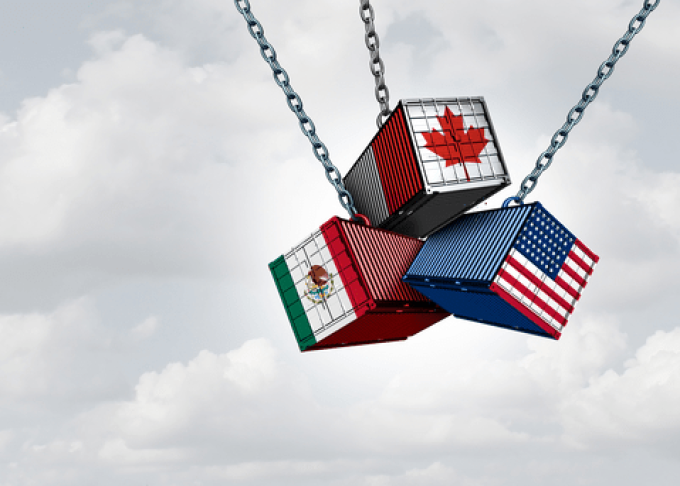
The specter of the USMCA (United States-Mexico-Canada Agreement) review hangs heavy. Remember, this trade deal is the scaffolding for a lot of this cross-border activity. If politicians, driven by whatever agenda du jour, decide to tinker with it—think tariffs, new regulations, or simply throwing up more bureaucratic roadblocks—all these impressive rail numbers could go up in smoke faster than you can say ‘protectionism.’
The hard data is finally showing up in the AAR numbers. The question is whether Washington will let it continue.
This isn’t just about Mexico’s booming rail sector; it’s a bellwether for the entire North American supply chain. For years, we’ve talked about reshoring and nearshoring as abstract concepts, as the next big thing on the horizon. Now, it’s in the freight manifests, in the carload counts. It’s moving. The nearshoring thesis, once a fanciful notion, is now being proven by actual, physical movement of goods.
The expansion at Lazaro Cardenas is a prime example. It’s not just about building more track; it’s about positioning the port as a critical node in a reconfigured global supply network. The ambition is clear: to make it a direct competitor to some of the established players, leveraging Mexico’s growing manufacturing base and its strategic location.
Will the USMCA Review Derail Mexico’s Rail Progress?
The USMCA review is scheduled for 2026, giving everyone a front-row seat to what could be a nail-biting political drama. Any significant alteration to the agreement could send ripples—or tidal waves—through the logistics ecosystem. Will trade hawks in Washington see this burgeoning cross-border freight volume as a threat rather than an opportunity? It’s a distinct possibility, and one that seasoned observers of Beltway policy aren’t dismissing lightly.
The potential for increased customs delays and border friction, should the USMCA landscape shift, is immense. For a system that’s just starting to hum with newfound efficiency, this could be catastrophic. It’s like finally getting a finely tuned engine running, only to have someone threaten to yank out half the parts. The interconnectedness of the North American economy means any significant disruption in trade policy will inevitably affect rail freight volumes. It’s the same old story: political expediency often trumps sound economic logic.
This booming rail activity is a tangible sign that nearshoring isn’t just a buzzword anymore. It’s a reality reflected in the freight volumes moving across borders. The challenge now is to ensure that policy doesn’t trip up progress. The hope, of course, is that sanity prevails and the trade agreement is seen as the enabler it’s proven to be. But after two decades covering this beat, I’ve learned to never bet on sanity alone. Someone’s always got an angle.