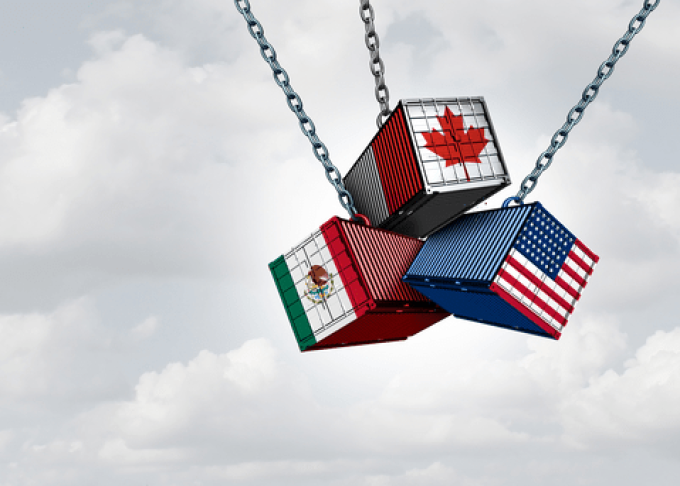
Truckers staring at endless border lines. Factory floors in Michigan idling without Mexican parts. That’s the human cost lurking in USMCA negotiations—the quiet storm brewing while everyone’s glued to oil spikes and tariff tweets.
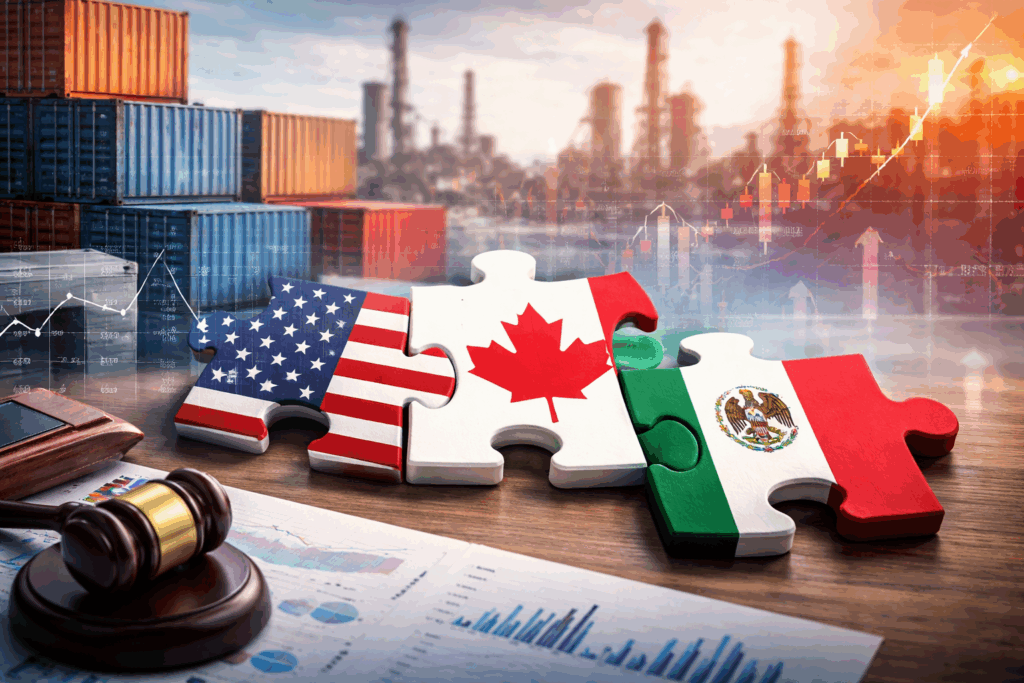
It’s not hype. July 1, 2026, hits like an inflection point, forcing the U.S., Mexico, and Canada to either renew this trade pact or watch it unravel over the next decade. And here’s the kicker: talks have kicked off between the U.S. and Mexico, but Canada’s playing coy, leaving everyone guessing.
Why Is Nobody Talking About USMCA Right Now?
Oil from Iran. Steel tariffs tweaking again. Pharma duties biting big. Sure, those scream headlines—but USMCA? It’s the elephant in the room for anyone moving goods across North America. Your average logistics manager isn’t sweating it yet, because, well, 2026 feels distant. But distance breeds disaster in supply chains.
Picture this: under Article 34.7, the trio must confirm extension by that date. Say no? Annual reviews kick in, and poof—full expiration by 2036. No drama on July 1 itself, just the clock starting its countdown. Or resetting, if they play nice.
“Under Article 34.7 of the USMCA, the three governments [U.S., Mexico, and Canada] must decide by July 1, 2026, whether to extend the agreement for another 16 years. If any party declines to confirm, the USMCA enters a cycle of annual reviews and, absent resolution, expires in 2036.”
That’s straight from the Center for Strategic & International Studies—cold, hard mechanics of a deal that props up $1.2 trillion in annual trade.
U.S.-Mexico chats are rolling. But Canada? Radio silence, or close to it. As Jordan Gowling noted in the National Post back in April: uncertainty reigns, with trade analysts bracing for hostility.
What Happens If USMCA Crumbles—Really?
Analysts love their scenarios. Boston Consulting Group sketches three paths. Oxford Economics ups it to four, pegging a full backout at 10% odds—tariffs surging, Canada slapping counters, uncertainty spiking permanently.
CSIS? Six flavors of chaos, from smooth renewal to total fracture. But let’s cut through the consulting fluff. The real why: architectures baked into modern supply chains assume USMCA’s low-friction borders. Autos ping-ponging parts from Tijuana to Toronto. Electronics assembling in waves across the map. Disrupt that? You’re not just delaying trucks—you’re forcing a full redesign.
And my take—the one you won’t find in those reports? This echoes the 2018 NAFTA-to-USMCA scramble, but worse. Back then, uncertainty froze investments for 18 months; factories hedged, routes doubled up. Today, with nearshoring fever from China risks, a USMCA flop could reverse it all. Bold call: expect a 2027 rush to Vietnam or back to Asia if tariffs bite, undoing years of Mexico’s manufacturing boom. Corporate PR spins it as ‘manageable risk’—nah, it’s a potential gut punch.
Supply chain leads, listen up. This isn’t wait-and-see. It’s stress-test-your-asset-now time.
Map every lane dependent on USMCA prefs—duty-free steel from Canada, auto parts from Mexico. Run sims: what if tariffs jump 10%? 25%? How fast can you reroute via Laredo alternatives or stockpile in U.S. warehouses?
But.
It’s deeper than tactics. The how: decision triggers. Nail down internals—who greenlights a Mexico pivot to Central America? Partners aligned on intel sharing? Inventory buffers sized for six-month fog?
Leaders who thrive won’t guess the outcome. They’ll own the prep. Because clarity drops like a guillotine post-July 1, and the slow ones pay.
Is Canada the Wild Card Here?
Absolutely. While U.S.-Mexico huddle, Ottawa’s stance? Murky. Analysts whisper hostility—echoes of dairy fights in the original deal. If Canada balks, Mexican optimism crumbles fast.
Why the lag? Politics, probably. Elections loom, priorities shift. But for you: dual contingencies. Plan U.S.-Mexico renewal sans Canada? Risky—full triad matters for smoothly flows.
Short para punch: Diversify yesterday.
Longer view: This forces architectural rethink. Chains built on just-in-time? They’ll crack first. Winners go agile—multi-node networks, AI-driven scenario modeling (without the hype), partner pacts locked in.
Oxford’s nightmare: U.S. tariffs soar sans exemptions, Canada retaliates, Mexico holds back but uncertainty lingers. Probability low, they say. But low-odds events—like that one port strike—wreck quarters.
How Should Supply Chains Prepare for USMCA Scenarios?
Start simple. Inventory audit: what’s USMCA-tied? 40% of your North American flow? More?
Then, model. Free tools from CBP data, layer tariff calcs. Shift sourcing feasibility—Vietnam viable for widgets in 90 days? Test it.
Internals: war rooms with clear triggers. ‘If Canada signals no by Q4 2025, activate Plan B.’ Partners looped—don’t solo this.
Unique edge: lean into data lakes you’ve ignored. Real-time border wait times, predictive tariff models. It’s not tech porn; it’s survival.
Look, companies that nailed COVID pivots? Same playbook. Predict less, adapt more.
🧬 Related Insights
- Read more: FedEx Freight Eyes Diversification Bets While Panama Canal Drought Looms Anew
- Read more: Trump’s Steel Tariffs Blindside European Machinery Giants Overnight
Frequently Asked Questions
What is the USMCA renewal deadline?
July 1, 2026—decide to extend or enter review cycle leading to possible 2036 expiration.
Will USMCA failure mean higher tariffs on Mexico and Canada?
Yes, exemptions vanish, effective rates rise—Canada likely retaliates, spiking costs across borders.
How can companies prepare for USMCA uncertainty?
Stress-test networks, set decision triggers, diversify sourcing—act now, don’t predict.