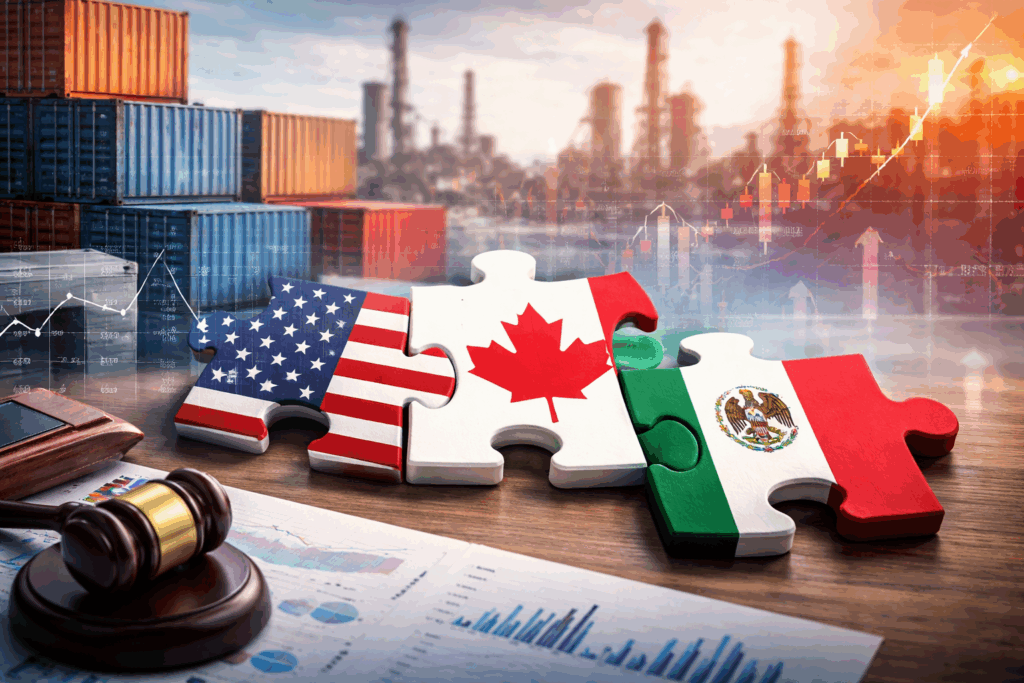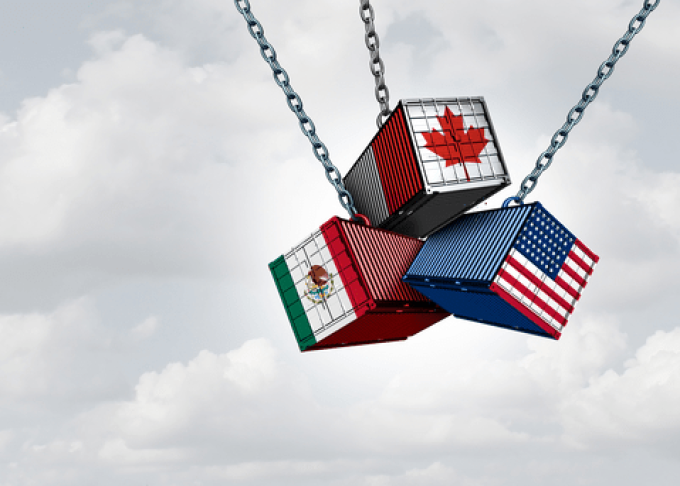
Look, the numbers alone should be enough to send shivers down the spines of anyone who moves goods across borders. We’re talking $1.93 trillion in annual commerce. That’s not some abstract market cap; it’s the blood coursing through the arteries of the US, Mexican, and Canadian economies. And here we are, mere weeks from a July 1 deadline, and the dominant sentiment in the logistics trenches isn’t panic, or even urgency, but a sort of low-grade, bewildered apathy. It’s as if everyone expects a clean extension, a polite nod, and business as usual. But the architect of this particular trade architecture — the USMCA itself — has a built-in trigger, Article 34.7, mandating a convening of the Free Trade Commission to decide whether to extend the agreement. This isn’t a formality; it’s a cliff edge with a very real possibility of a significant drop.
The silence isn’t golden; it’s the eerie quiet before a storm, and the storm, in this case, is the potential unraveling of a framework that has, for all its flaws and Trump-era renegotiation angst, become deeply embedded in how goods flow. The supply chain consequences are already materializing, not in dramatic pronouncements, but in the subtle shifts, the increased costs, the gnawing uncertainty that infects planning cycles. Companies have built supply chain strategies, manufacturing footprints, and inventory management systems assuming this deal would simply… endure. Now, it looks like a clean extension is looking increasingly unlikely.
Why the Snooze Button on the USMCA?
Here’s the thing that keeps me up at night: The utter lack of preparedness. We’ve seen this movie before. Remember the lead-up to the original NAFTA renegotiation? The hand-wringing, the endless think pieces, the last-minute scrambling? This feels eerily similar, except the stakes are arguably higher now, given how integrated the supply chains have become since then.
“A signal has been sent regarding Mexico’s willingness to engage in renegotiations on the terms of the agreement, and the country is reportedly prepared to present a series of proposals aimed at strengthening bilateral trade relations with its North American partners.”
That quote, buried in the context of Mexico’s proactive stance, is a stark contrast to the general inertia from the other side of the border. Mexico’s government is approaching these looming renegotiations with a certain trade strength, buoyed by its own economic performance and its critical role in regional supply chains. They’re not just passively waiting; they’re preparing to negotiate. What are the US and Canadian sides doing? Beyond the perfunctory meetings and the polite diplomatic dances, where’s the deep-dive stress-testing of alternative scenarios?
The “how” and the “why” of this complacency are multifaceted. Part of it is sheer inertia. When a system works reasonably well, we tend to ignore it until it breaks. Another part is political distraction. Washington, in particular, is a maelstrom of competing priorities, and a trade deal review, however massive its implications, can easily get sidelined by more immediate, politically charged issues. And then there’s the sheer complexity. Untangling $1.93 trillion in trade dependencies isn’t a weekend project; it’s an undertaking that requires massive coordination across government agencies, industry sectors, and corporate behemoths.
The Spectre of Tariffs and Reshoring Backlash
What happens if the USMCA isn’t simply extended? A failure to agree on terms, or a significant renegotiation that introduces new barriers, could trigger a cascade of unwelcome consequences. Think tariffs reappearing on key components, sudden shifts in customs procedures, and the chilling effect on cross-border investment. For industries that have optimized for just-in-time delivery and lean inventories across North America, this could mean a swift return to the bad old days of warehousing excess stock, paying punitive duties, and facing the agonizing complexities of rebuilding supply chains on the fly.
The narrative around reshoring and nearshoring has been gaining traction, often framed as a response to supply chain fragility exposed by the pandemic. But a weakened USMCA could accelerate these moves out of necessity, not just strategic preference. Manufacturers might be forced to pull operations back to the US or Mexico to avoid new trade friction, but without the established ecosystem that the USMCA facilitated, this “reshoring” could be vastly more expensive and disruptive than proponents admit. It’s a double-edged sword: pressure to localize production, but without the established trade architecture to make it economically viable.
This is where the skepticism truly kicks in. Is this a carefully orchestrated dance, where the US is subtly signaling its intentions, or a genuine failure of foresight? Given the cyclical nature of trade politics and the persistent calls for recalibrating North American economic ties, it’s more likely the latter, amplified by the sheer busyness of the global economic agenda. Companies that are not actively stress-testing their USMCA dependencies — running simulations for tariff impacts, exploring alternative sourcing, and mapping out contingency plans for border disruptions — are, frankly, playing with fire. The architecture of North American trade is too critical, and too susceptible to political winds, to be treated as a static, immutable force.
What’s Mexico Really Asking For?
Mexico’s proactive stance isn’t just about maintaining the status quo. They’re likely looking to use their current trade strength to secure more favorable terms, particularly around labor provisions, environmental standards, and perhaps even dispute resolution mechanisms. They’ve seen how regulatory shifts in the US can impact their economy, and they’ll want greater predictability and a stronger voice in shaping the rules of engagement. This isn’t just about extending a deal; it’s about redefining a partnership. The question is whether the US is in a place to seriously engage with these proposals, or if domestic political imperatives will lead to a more protectionist, less collaborative approach.
The near-$2 trillion trade deal nobody’s stress-testing is a ticking clock. And time, as always in these matters, is the one commodity that can’t be replenished. For Supply Chain Beat, this isn’t just another trade story; it’s a stark warning about the fragility of interconnected systems when strategic foresight falters.
**
🧬 Related Insights
- Read more: Amazon’s 1-Hour Delivery Push Hits Hundreds of Cities – But at What Cost?
- Read more: Nigerian Kit EVs Target Food Spoilage — A Pragmatic Bypass to Tariffs and Blackouts
Frequently Asked Questions**
What does USMCA stand for?
USMCA stands for the United States-Mexico-Canada Agreement. It’s the trade pact that replaced NAFTA.
Will the USMCA be renegotiated?
The USMCA mandates a review every six years, with the first review due by July 1. The governing body, the Free Trade Commission, must convene to decide on extending the agreement, which opens the door to potential renegotiations.
What happens if the USMCA isn’t extended?
If the USMCA is not extended or is significantly altered, it could lead to the re-imposition of tariffs, increased customs complexities, and major disruptions to existing supply chains across North America, potentially increasing costs and leading to significant shifts in manufacturing and sourcing strategies.