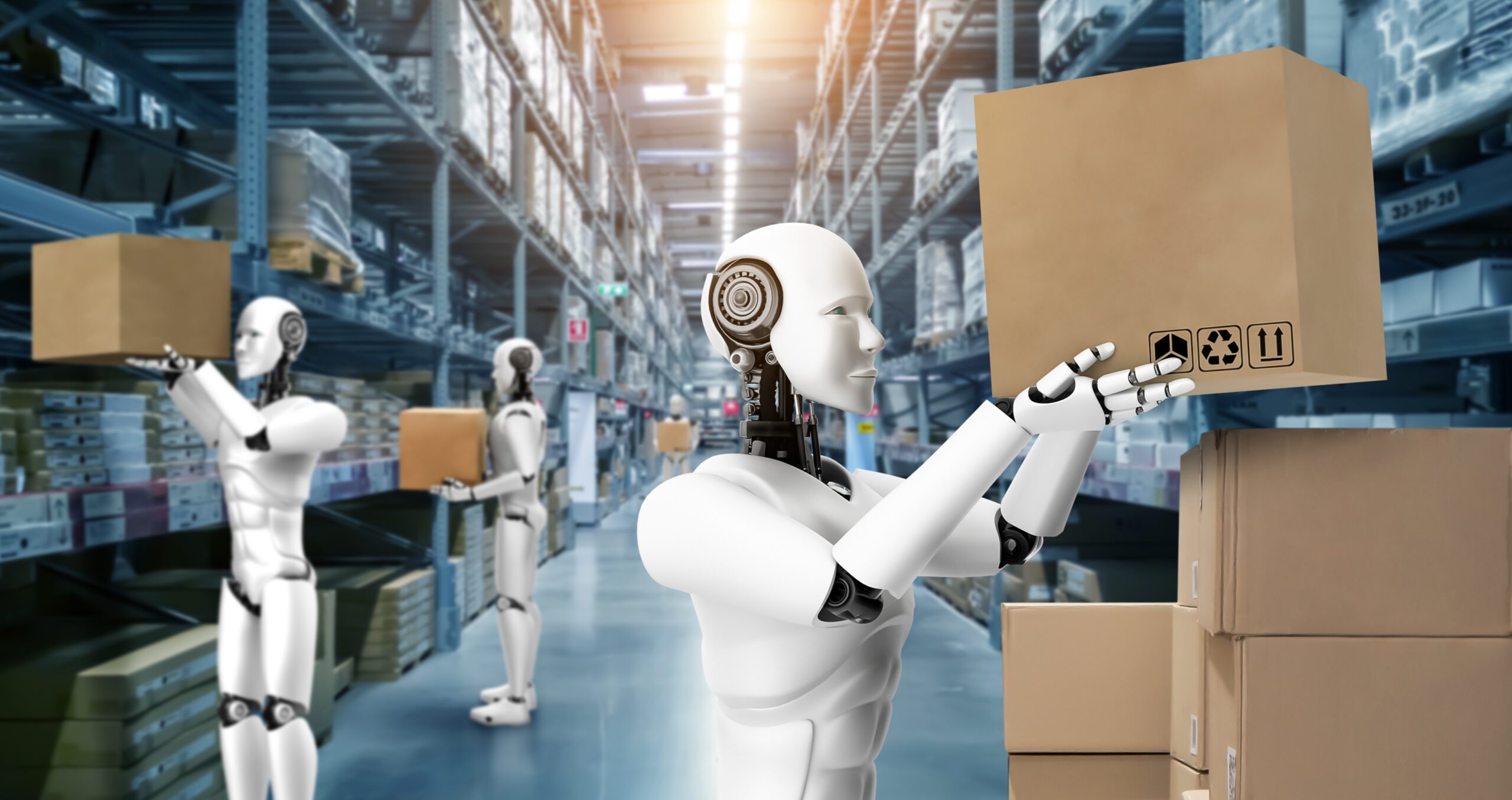
Warehouse robotics has evolved from a niche technology deployed only by the largest fulfillment operations into a mainstream solution accessible to mid-market companies. Labor shortages, rising wages, e-commerce growth, and the need for faster throughput have accelerated adoption. The global warehouse robotics market is projected to exceed $10 billion annually, driven by continuous advances in perception, manipulation, and autonomy.
This guide covers the major categories of warehouse robots, profiles leading vendors, and provides a framework for evaluating the return on investment.
Categories of Warehouse Robots
Autonomous Mobile Robots (AMRs)
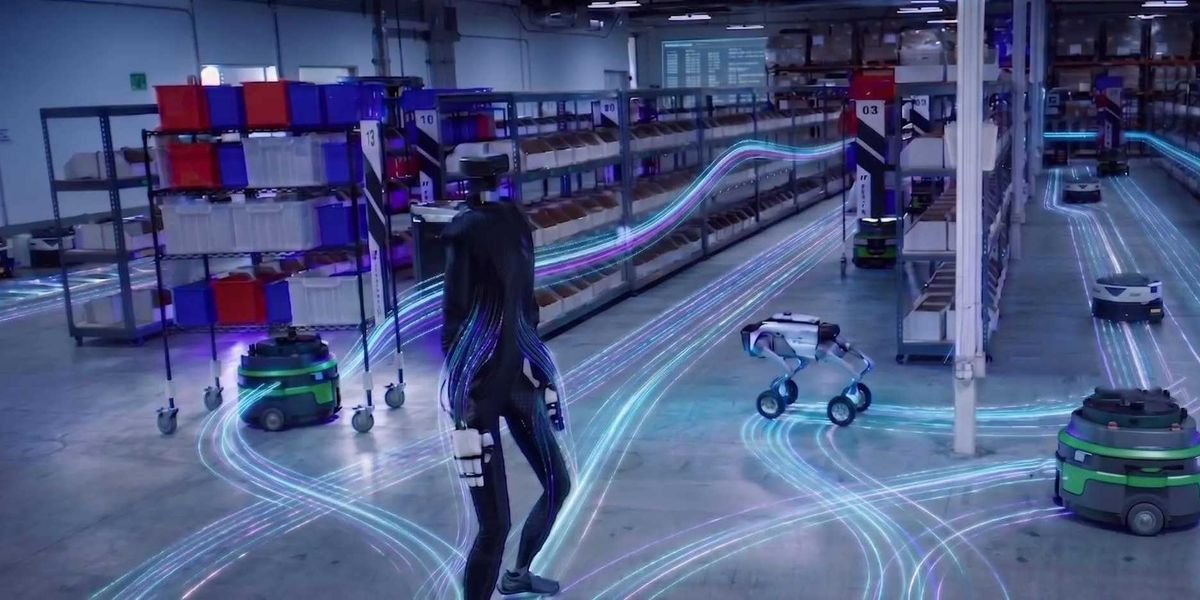
AMRs navigate warehouse environments independently using onboard sensors, cameras, and LiDAR. Unlike their predecessors, automated guided vehicles (AGVs), which follow fixed paths such as magnetic tape or painted lines, AMRs dynamically plan routes around obstacles, people, and other robots.
AMRs are used for goods transportation (moving totes, carts, or pallets between zones), collaborative picking (guiding workers through pick paths and transporting picked items), and sortation. Their flexibility makes them relatively easy to deploy without modifying warehouse infrastructure.
Key AMR vendors include Locus Robotics (collaborative picking robots used by DHL and GEODIS), 6 River Systems (owned by Shopify, offering the Chuck robot), and Fetch Robotics (now part of Zebra Technologies).
Automated Storage and Retrieval Systems (AS/RS)
AS/RS systems store and retrieve goods from dense, multi-level storage structures using automated cranes, shuttles, or robotic cubes. They maximize vertical space utilization and provide high throughput with minimal labor.
AutoStore is the dominant player in cube-based AS/RS. Its system uses a grid of bins stacked on top of each other, with robots moving on top of the grid to retrieve bins and deliver them to workstations. AutoStore installations achieve storage densities 4x greater than conventional shelving.
Dematic offers a range of AS/RS solutions including shuttle systems, mini-loads, and unit-load cranes integrated with its broader warehouse automation portfolio.
Swisslog (owned by KUKA) provides AS/RS systems combined with goods-to-person workstations and conveyor integration.
Goods-to-Person (G2P) Systems
G2P systems bring inventory to stationary workers rather than sending workers to walk through the warehouse. This approach eliminates the travel time that typically accounts for 50-60% of a picker's day.
Amazon's Kiva (now Amazon Robotics) pioneered the pod-based G2P model, where mobile robots slide under shelving pods and transport them to pick stations. While Amazon uses this technology exclusively for its own fulfillment, similar systems from GreyOrange, Geek+, and HAI Robotics are available to third parties.
G2P systems can increase pick rates from 60-80 units per hour (manual picking) to 200-400 units per hour, depending on the system design and order profile.
Robotic Picking Arms
Robotic picking arms use computer vision and grasping technology to pick individual items from bins or shelves. This is one of the most technically challenging applications in warehouse robotics because of the enormous variety of item shapes, sizes, weights, and packaging types.
RightHand Robotics offers the RightPick system, which uses a combination of suction and mechanical gripping to handle a wide range of SKUs. Covariant applies deep-learning AI to robotic manipulation, enabling its systems to handle items they have never seen before.
Berkshire Grey provides integrated robotic picking and sortation systems designed for e-commerce fulfillment and parcel handling.
Pick success rates for the best systems now exceed 99% across diverse SKU profiles, though performance varies significantly with item characteristics.
Autonomous Forklifts
Autonomous forklifts handle pallet movements including unloading trucks, putaway, replenishment, and loading. They operate in the same aisles as manual forklifts and can switch between autonomous and manual modes.
Vecna Robotics offers autonomous pallet jacks and counterbalance forklifts. OTTO Motors (now Rockwell Automation) provides heavy-load AMRs for pallet transport. Fox Robotics specializes in autonomous trailer unloading.
ROI Analysis Framework
Cost Components
The total cost of a warehouse robotics deployment includes hardware (robots, charging stations, infrastructure modifications), software (fleet management, WMS integration, analytics), implementation services (system design, installation, testing, training), and ongoing costs (maintenance, software subscriptions, spare parts).
Benefit Quantification
Primary benefits to quantify include:
- Labor savings: Calculate the number of full-time equivalents (FTEs) replaced or redeployed, multiplied by fully loaded labor cost (wages, benefits, training, management overhead).
- Throughput improvement: Higher picks per hour or pallets per hour translates to either reduced labor needs or the ability to handle higher volumes without adding staff.
- Accuracy improvement: Reduced mispick rates lower the cost of returns processing, reshipping, and customer credits.
- Space savings: Dense storage systems like AS/RS can defer or eliminate the need for warehouse expansion or additional leased space.
Payback Period Calculation
Most warehouse robotics deployments target a payback period of 2-3 years. AMR-based collaborative picking systems, with lower capital costs and faster implementation, often achieve payback within 12-18 months. AS/RS systems, which require higher upfront investment, typically have longer payback periods but deliver greater long-term value through space savings and higher throughput.
Robotics-as-a-Service (RaaS) models offered by vendors like Locus Robotics and 6 River Systems convert capital expenditure into operating expense, reducing upfront investment and accelerating time-to-value. Under RaaS, companies pay per robot per month or per pick, aligning costs with actual usage.
Implementation Considerations
Successful robotics implementations require careful attention to warehouse layout, floor conditions, Wi-Fi coverage, WMS integration, and change management. Involve frontline workers early in the process to address concerns about job displacement and to leverage their operational knowledge for system optimization.
Start with a pilot in a single zone or shift to validate performance assumptions before scaling across the facility. Use pilot data to refine the full deployment plan and business case.
Warehouse robotics is not an all-or-nothing decision. Most operations benefit from a hybrid approach that combines robotic automation for repetitive, high-volume tasks with human workers for complex, exception-heavy activities that require judgment and dexterity.