Picture a Vancouver kid in 1985, eyes wide at the TV screen, heart pounding as Jonah’s dad rockets into the drink in a gleaming bubble sub to foil disaster on Danger Bay.
That wasn’t Hollywood cheese.
It was Deep Rover, the real-deal submersible crashing the party of stiff, prone-pilot subs — and yeah, it transformed underwater exploration starting right there in the 80s.
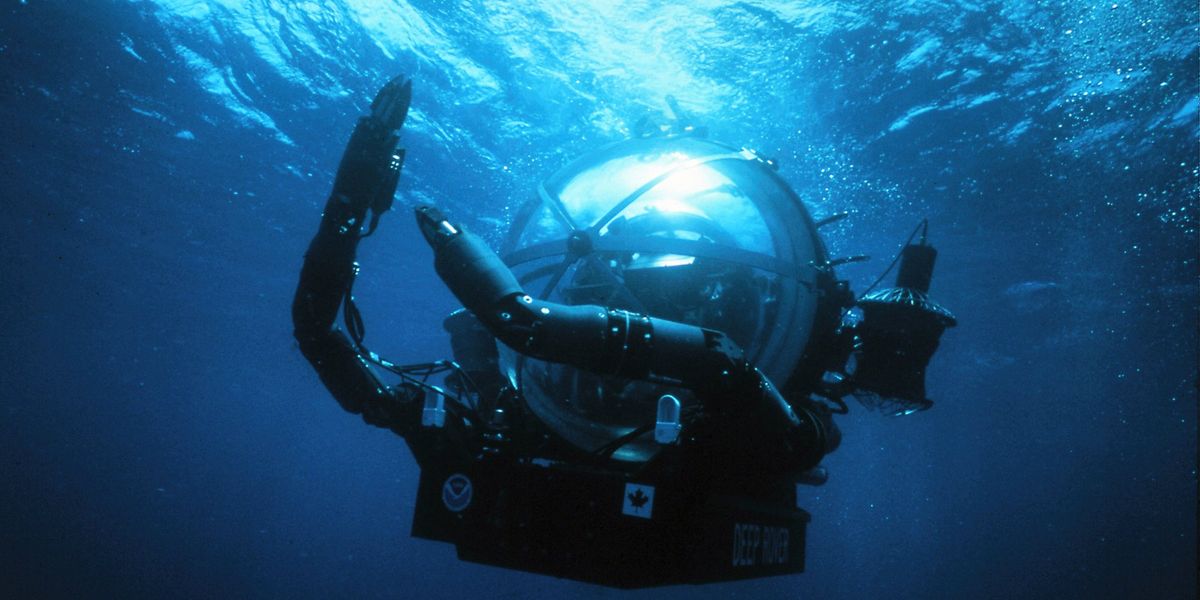
Look, here’s the thing: back then, diving deep meant flattening yourself like a sardine in a can, peering through peepholes while chained to mommy ship. Deep Rover? You sit up, king of your aquarium dome, 13 centimeters of acrylic between you and the crushing black. An inverted fishbowl — you’re the exhibit, sea life’s the gawker. Launched in 1985, it plunged to 1,000 meters, untethered, for four to six hours at a leisurely 1.5 knots.
The Garage Wizards Who Built a Sub-Sea Revolution
Sylvia Earle — marine biologist with fire in her belly — gripes to Graham Hawkes about the ‘stupid’ arms on some diving suit called Jim. Doesn’t know he’s the designer. He listens. Months later, boom: a manipulator arm that scribbles like Shakespeare underwater.
“Earle complained to Hawkes about the “stupid” arms on Jim, an atmospheric diving suit; she didn’t realize she was complaining to one of Jim’s designers.”
That’s the spark. 1981, they pool cash in her Oakland garage, birth Deep Ocean Technology. Funding flops for their crewed dream, so pivot to ROVs — remotely operated vehicles for oil-rig grunt work. Ten contracts later, flush enough to hire Phil Nuytten, Canadian dive legend who’d slung gear as a teen, founded Can-Dive, birthed the Newtsuit.
Nuytten gets it. Grew up salty, dreamed big. Together, Deep Rover hatches — not for show, for scouting oil frontiers off Newfoundland, backed by Petro-Canada, Husky, provincial bucks.
Oil crash mid-80s? Pivot again. Science calls.
And man, did it deliver.
Deep Rover’s Guts: Thrusters, Batteries, and Bubble Magic
Power from two 170-kg lead-acid beasts. VHF radio, through-water chatter, beacons to ping home. Four thrusters — two fixed aft, two wing-spinners — flicked by armrest switches. Navigate via gyro, sonar, depth gauge.
No more belly-crawling. Panoramic views. Comfort. Freedom.
From 1987-89, it prowls Crater Lake — deepest U.S. lake. Biologists snag rock samples, map the abyss. Records tumble: deepest solo dive, longest bottom time. But here’s my take — Deep Rover wasn’t just a vehicle; it was the personal computer of the deep. Before, subs were mainframes — clunky, crew-heavy, surface-tethered. Deep Rover democratized the dive, one pilot at a time. And get this: its DNA swims in today’s AUV swarms, AI-brained bots that’ll harvest seabed nodules for EV batteries, rerouting supply chains from Congo cobalt to ocean floors.
Bold call? Yeah. But picture fleets of mini-Deep Rovers, neural nets dodging currents, vacuuming rare earths while humans sip coffee topside. That’s the platform shift — AI turning abyss into assembly line.
Oil rigs first tasted it: inspection, maintenance, repair. No diver risk. Faster fixes. Cheaper uptime.
Supply chain pros, take note.
Why Did Big Oil Bail — And Should We Care Today?
Newfoundland gig sours on cheap crude. Uneconomic.
But science laps it up. Earle logs 70 dives. Hawkes pushes envelopes. Nuytten refines.
Records: first woman to 1,000m solo (Earle). Deepest freshwater dive. It trained pilots, proved concepts — manipulator arms evolved, thruster tech iterated.
Critique time: corporate spin back then painted it as oil savior. Hype. Reality? Broader. It seeded unmanned fleets that now eyeball pipelines, scout wrecks, map for wind farms. In supply chains? Underwater drones cut downtime on subsea cables, fiber optics carrying your Netflix — that’s logistics, baby.
And the wonder: you’re not observing the ocean. You’re in it. Fish dart inches away. Pressure sings on the dome. Pure magic.
How Deep Rover Echoes in Tomorrow’s Ocean Supply Chains
Fast-forward — wait, no, can’t say that.
But think: deep-sea mining booms for green tech. Critical minerals locked in Clarion-Clipperton Zone. Robots needed — can’t send humans. Deep Rover’s free-swim ethos? Blueprint.
AI amps it. Swarms communicate, adapt, self-heal. Like iPhone apps on subsea steroids.
Prediction: by 2035, 20% of battery metals seabed-sourced, via Deep Rover heirs. Supply chains untethered from land wars, volatile mines. Stable. Scalable. Oceanic.
Skeptics scoff — environment? Yeah, tread light. But tech trajectory screams yes.
Is Deep Rover’s Legacy Still Relevant for Robotics Fans?
Absolutely.
It proved small, smart beats bulky brute. Pilots racked 400+ hours. Zero fatalities. Tech trickled to NOAA, parks, privateers.
One dive: Crater Lake, Mark Buktenica plucks samples from 580m. Crystal clarity. Volcanic secrets.
Today? AUVs like Orca inspect tankers, map wrecks for salvage chains. Amazon’s underwater? Nah, but Maersk dreams it for port scans.
Energy transition demands it. Offshore wind arrays sprawl. Turbines beg inspection.
Deep Rover whispered: humans plus machines conquer deep.
Now AI shouts it.
🧬 Related Insights
- Read more: Trump Blasts Iran’s Strait of Hormuz Tolls as Tankers Rot and Prices Spike
- Read more: 26% of Carriers Eye AI to Boot Freight Brokers
Frequently Asked Questions
What was Deep Rover used for?
Primarily offshore oil exploration, rig inspections, then scientific dives like Crater Lake sampling — all while comfy in its acrylic bubble.
How deep did Deep Rover dive?
Up to 1,000 meters, with 4-6 hour missions powered by beefy batteries and precise thrusters.
Will underwater subs like Deep Rover transform supply chains?
Yes — paving for AI-driven fleets mining seabed minerals, slashing reliance on land-based rare earths for batteries and tech.