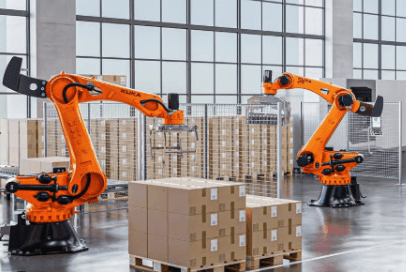
Factory workers, brace yourselves. Robot density just smashed records across Europe, Asia, the Americas — and it’s your paycheck on the line.
Sure, execs cheer about productivity. But here’s the thing: when Western Europe clocks 267 robots per 10,000 employees in 2024, that’s not just stats. That’s shifts vanishing, towns hollowing out, families scrambling.
Why Robot Density Matters More Than You Think
Robot density. There, said it twice already. It’s the IFR’s clever yardstick — robots divided by manufacturing workforce, normalized for size. Western Europe leads at 267 units. North America trails with 204. Asia? A surprising 131, despite China’s robot horde.
And it’s climbing. Europe up 3% year-over-year. North America 4%. Asia exploding 11%. Korea’s at 1,220 per 10k — absurdly high. Singapore 818. Germany 449. Feel the squeeze yet?
“The country [China] counts around 2 million units—approximately 4.5 times more than Japan, which is in second place,” according to the report. “The annual installation numbers are impressive too: 54% of all robots installed worldwide in 2024 were deployed in China (295,000 units).”
China’s got sheer volume, sure. But density? Lags at 166. Raw numbers dazzle PR flacks. Density tells the real automation story — how saturated those floors are.
Which Countries Dominate Robot Density?
Top 10? Korea reigns supreme. Then Singapore, Germany, Japan. Sweden, Denmark, Slovenia — yeah, Slovenia — U.S. at 307, Taiwan, Switzerland.
Europe’s got eight in the global top 20. Germany, Switzerland, Netherlands, Austria, Italy, Belgium/Luxembourg, France, Spain. EU-27 averages 231, crushing the global 132.
U.S. eighth worldwide. Canada’s 241. Mexico? A measly 62. North America’s no slouch, but Europe’s the pace car.
Here’s my hot take — one you won’t find in the IFR fluff. This echoes the 1980s auto plant automations in Detroit. Back then, robots gutted jobs, but cheap labor in Mexico softened the blow. Now? With AI brains in those bots, reshoring’s the rage. No escape hatch. Factories here, jobs nowhere.
Is This a Productivity Party or Job Apocalypse?
Execs spin it as efficiency heaven. Robots don’t unionize, don’t sue for carpal tunnel, work 24/7. Fine. But productivity? Show me the output charts matching these installs.
Western Europe’s density grew 3%. Sounds modest. Asia’s 11%? That’s panic-button automation, betting bots beat tariffs and wages. China’s 17% jump to 166 — still behind the leaders, but volume king with 2 million units.
Look, I’m skeptical. Robot density measures installs, not smarts. A dumb arm welding fenders isn’t displacing coders. Yet. But pair these with generative AI? That’s the cocktail. Predict this: by 2030, mid-skill manufacturing roles crater 30% in high-density zones. Europe first. U.S. next.
Dry humor alert: If you’re a welder in Stuttgart, start that barista side-hustle. Robots don’t tip.
And the PR spin? IFR President Takayuki Ito calls it a “uniform basis for comparison.” Cute. Uniform like a factory uniform — disposable.
Asia’s Robot Surge: Volume vs. Saturation
Asia’s the wildcard. Korea, Singapore, Japan, Taiwan crush density charts. China? Plays quantity over quality — or density, anyway.
54% of 2024 installs? China. Impressive. But spreading 295,000 bots thin across millions of workers means less per-factory punch. Europe’s tighter integration? That’s where humans feel it most.
Question for CEOs: Why chase density if output lags? Because stock prices love robot headlines. Workers? Not so much.
What Happens to the Humans Left Behind?
Real people. That’s you reading this, maybe eyeing a plant job. Or holding one.
Density surges mean fewer hires. Retraining? Laughable. Governments promise it — remember that from the ’80s? Most end up in gig hell.
Europe’s ahead, so watch there. Germany’s 449 density — third globally. Plants humming sans humans. Spain, lower at top 20, but climbing.
U.S. at 307. Solid eighth. But 4% growth? Accelerating. Mexico’s 62 screams opportunity — for bots, not migrants.
Bold call: This isn’t the Luddite panic. It’s real. Unlike textile smashers, modern workers can’t unplug server farms. Prediction — union revolts in high-density Europe by 2027. Mark it.
Europe’s Edge: Ahead, But for How Long?
Eight countries top 20. EU at 231. Global average 132.
Why? Labor costs. Skills shortage. Green mandates pushing precision bots. Smart.
But here’s the rub — density doesn’t guarantee dominance. Japan fourth at 446, but aging workforce means bots fill gaps, not just cut costs.
Skeptic’s view: Hype oversells. IFR data’s solid, but misses bot downtime, programming costs, the human oversight still needed.
🧬 Related Insights
- Read more: Netanyahu’s Sudden Lebanon Thaw: Supply Chain Savior or Strait of Hormuz Trap?
- Read more: Project44 Gobbles LunaPath.ai: Second AI Bet in Four Years
Frequently Asked Questions
What is robot density?
Robots per 10,000 manufacturing employees. Standardizes comparison across countries.
Which country has the highest robot density?
South Korea, at 1,220 per 10,000 employees in 2024.
How does US robot density compare globally?
United States ranks 8th worldwide with 307 units per 10,000 employees.