Here’s the thing: the trucking industry, particularly the Original Equipment Manufacturers (OEMs), has always been a bit of a walled garden. They control the narrative, they tout their own innovations, and frankly, they’d rather you not poke too deeply. So when the Insurance Institute for Highway Safety (IIHS) announced it was bringing its rigorous third-party safety rating system to heavy-duty trucks, the collective yawn was deafening. Or, so one might have assumed.
But no. The reaction at the ACT Expo was less a yawn and more a standing ovation. Truck makers and tech providers are apparently thrilled that someone else is going to tell everyone how safe their rigs actually are. Who saw that coming?
Why All The Sudden Love for Scrutiny?
Executives are practically falling over themselves to praise this development. Why? Because independent ratings, much like those in the passenger car world, are seen as a golden ticket. A ticket to what? Improved driver acceptance of those fancy new Advanced Driver Assistance Systems (ADAS) that have been languishing in the ‘optional extra’ category. A ticket to reduced ownership costs. And crucially, a ticket to lower insurance premiums. Safer fleets mean fewer accidents, which, by extension, means less cash bleeding out of everyone’s pockets.
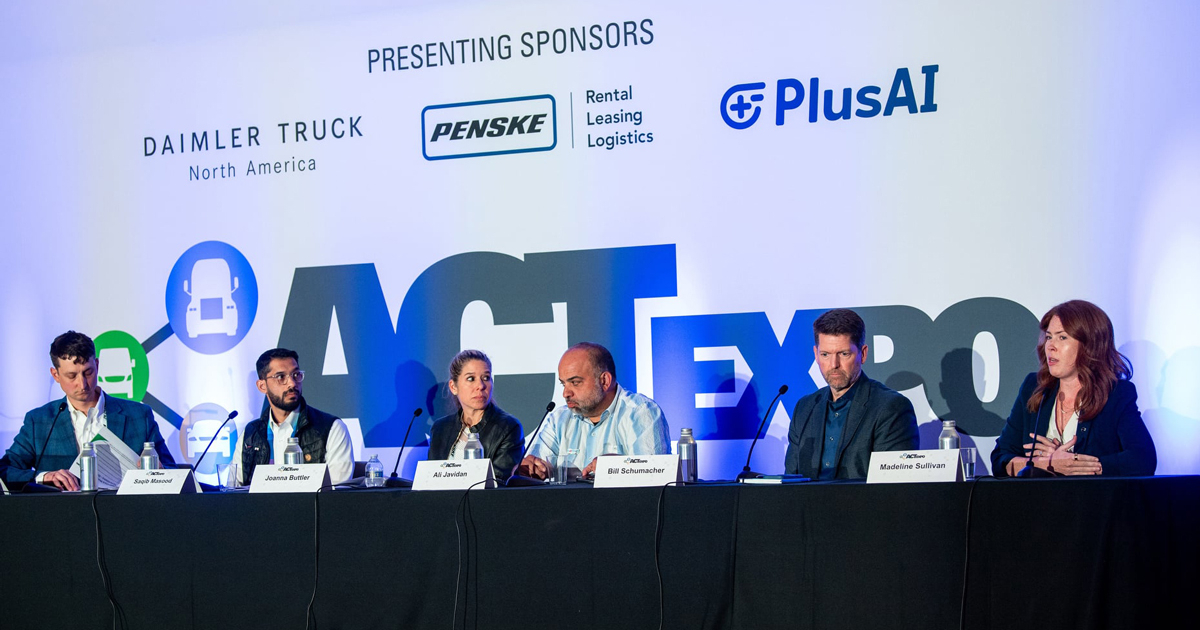
“ADAS can help boost fleets’ uptime and reduce total cost of ownership,” Volvo Trucks North America Product Marketing Manager Madeline Sullivan blithely stated during an ACT Expo panel. You know, because the OEMs themselves couldn’t possibly have figured out the cost-saving benefits of not crashing.
Bosch Senior Acquisition Manager Saqib Masood chimed in, adding that these ratings would serve as a potent selling point. Imagine: instead of vague marketing speak, fleets could boast, “Hey, my whole fleet of vehicles are a four-star rating.” It’s almost as if objective data might actually matter.
“When you start to look at your fleet of vehicles, and it may be a mixed fleet, perhaps 10 years from now, you will be able to say, ‘Hey, my whole fleet of vehicles are a four-star rating,’ or whatever the rating category is going to be.”
This isn’t just some pipe dream. IIHS is rolling out its plans. They’re starting with Class 2B and 3 vehicles – think vans and pickups – with awards slated for 2027. By 2030, they aim to have evaluated Class 8 trucks and tractors. This includes testing for side underride guards, a nod to the perennial safety concerns that have plagued heavy haulage for decades. It’s a stark contrast to their initial foray in 2010 with trailer underride guards, where only one OEM qualified initially. Now? Almost every dry van trailer makes the cut.
The ADAS Arms Race Just Got Real
What’s driving this sudden embrace of transparency? Advanced Driver Assistance Systems, of course. Forward collision mitigation, automated emergency braking – these aren’t sci-fi fantasies anymore. They’re becoming standard, and increasingly sophisticated. Sullivan pointed out that while legacy trucks had rudimentary systems, today’s offerings can see farther, identify more objects, and even pick out pedestrians and cyclists.
We’re moving beyond just forward-facing sensors. The industry is eyeing 360-degree awareness, especially for those urban and worksite environments where blind spots are death traps. Daimler Truck North America is already factory-producing exterior cameras for vocational models, and Mack Trucks unveiled its CommandView 360-degree system. It stitches multiple camera feeds into a bird’s-eye view. Fancy.
It’s easy to dismiss this as just another corporate initiative. But consider this: passenger car safety ratings, particularly from the IIHS and NHTSA, have profoundly reshaped the automotive landscape. They’ve driven innovation, forced manufacturers to prioritize safety, and frankly, made our roads a lot safer. If this plays out similarly in the commercial vehicle sector, we’re looking at a significant shift.
The real insight here? OEMs are recognizing that consumer-grade safety advocacy, as seen with passenger cars, is now bleeding into the commercial space. They can either fight it and look obstructionist, or they can lean in and claim leadership. Given the enthusiastic reception, they’re choosing the latter. It’s a smart move, if a slightly belated one. Better late than never, I suppose.
What Does This Mean for the Average Driver?
For the driver behind the wheel, this could mean two things. First, more confidence in the technology. When an independent body vouches for a system, it carries more weight than a marketing brochure. Second, potentially fewer stressful situations. Better ADAS, backed by rigorous testing, should theoretically lead to fewer close calls and ultimately, fewer accidents. It’s a win for everyone involved – except perhaps the ambulance chasers.
🧬 Related Insights
- Read more: Customs and Trade Compliance: A Guide to International Shipping Regulations
- Read more: Amazon Opens Warehouses: Is This Logistics or Just Empire?
Frequently Asked Questions
What exactly are IIHS safety ratings?
The IIHS (Insurance Institute for Highway Safety) is a non-profit organization that conducts independent crash tests and safety evaluations on vehicles, assigning ratings based on performance. For commercial vehicles, they will assess active safety systems like automatic emergency braking and passive systems like airbags and underride guards.
Will these new ratings affect my insurance costs as a fleet owner?
That’s the hope. By demonstrating that fleets are equipped with demonstrably safer vehicles, OEMs and fleet owners anticipate reduced insurance premiums due to a lower risk of accidents.
When will these ratings be available for Class 8 trucks?
IIHS plans to evaluate Class 8 trucks and tractors by 2030.