Imagine a world where your car truly sees. Not just a blurry outline, but a crystal-clear, 3D map of everything around it, all the time, even in a blinding blizzard. That’s the future MicroVision is building, and they’re not waiting around.
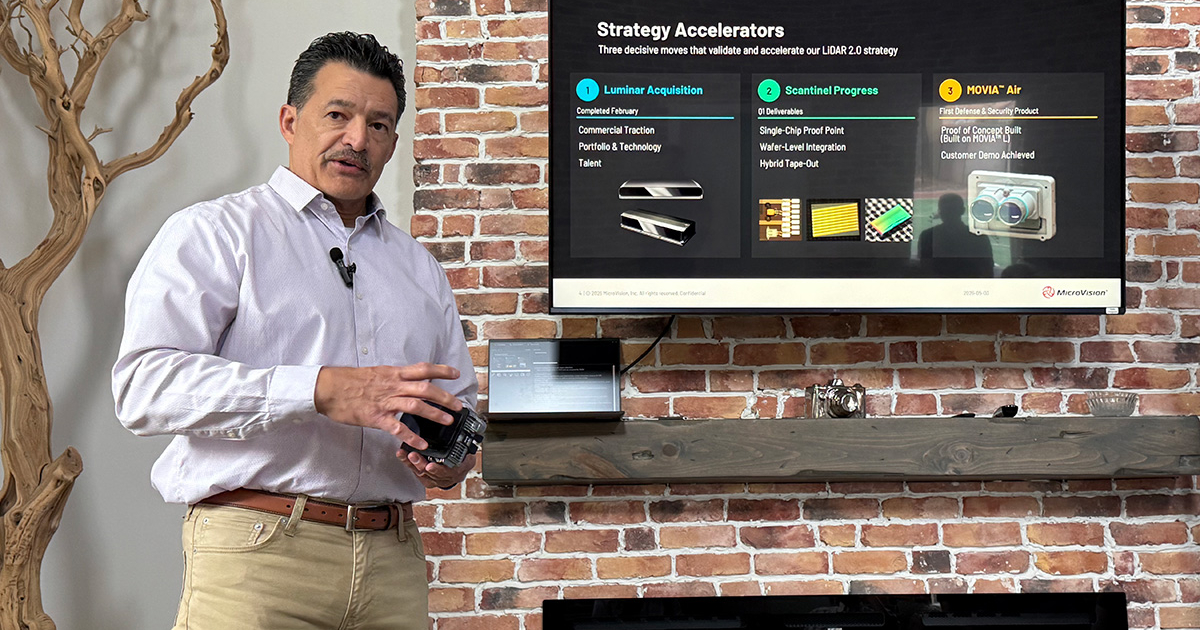
They just made a massive play, snapping up key lidar assets from Luminar and Scantinel Photonics. This isn’t just about adding more blinking lights to their product catalog; it’s a fundamental platform shift, a bold declaration that the era of prohibitively expensive, niche lidar is over.
Why does this matter for you, the person who just wants to get to work or have their package delivered on time? Because cheaper, more capable sensors mean more intelligent vehicles, more efficient logistics, and ultimately, a safer, more connected world. Think of it like the leap from dial-up internet to fiber optics – suddenly, new possibilities explode into existence.
The “Lidar 2.0” Revolution is Here
MicroVision isn’t just rebranding; they’re defining what comes next. They call it “lidar 2.0,” a philosophy built on reusability and aggressive cost reduction. The old guard of lidar was amazing, sure, but it was like trying to buy a supercar to commute to the grocery store – overkill and wallet-busting.
“We’re going to design to cost,” declared Greg Scharenbroch, MicroVision’s VP of Global Engineering. The target? A staggering $200 price tag for lidar sensors within the next few years. That’s not just an aggressive goal; it’s a seismic shift that cracks open the door for widespread adoption far beyond high-end luxury vehicles.
This aggressive cost-cutting isn’t happening in a vacuum. It’s coupled with an audacious vision for where this technology can go. Passenger cars, of course, but also commercial trucks lumbering down the highway, industrial robots navigating busy warehouses, and even military drones mapping treacherous terrain. The underlying tech, they argue, is universally applicable.
“All of this is reusable for commercial vehicles,” Scharenbroch explained. “The foundational and fundamental ways and techniques to detect objects, track objects, classify, and then make an intelligent decision about whether a countermeasure is needed or whether you ignore it is really powerful.” It’s like building a universal translator for the physical world.
Beyond the Hype: Real-World Vision
MicroVision wants you to see it to believe it. They’re not just talking about it; they’re showing it off. Imagine a ride-along, not just watching the road ahead, but seeing a live, detailed 3D rendering of your surroundings. Pedestrians, other vehicles, cyclists – all painted with laser precision.
And here’s a detail that really makes you pause: this lidar tech is so advanced, it can generate maps of your route and pinpoint your location without relying on GPS. That’s a massive leap for navigation in urban canyons or remote areas where satellite signals falter. It’s like having an internal compass that never gets lost.
This isn’t just about ADAS features getting fancier. This is about building the sensory nervous system for a future where machines understand their environment as well as we do, if not better. The acquisition of Luminar’s long-range sensors and Scantinel’s ultra-long-range FMCW technology creates a potent combination, bridging different sensing modalities for a more complete picture.
Is This Truly “Lidar 2.0”?
It feels like it. Previous generations of lidar were impressive proofs of concept, but the sticker shock kept them in the realm of R&D labs and exclusive prototypes. MicroVision’s aggressive push towards affordability, combined with a strategy that use existing, adaptable core technologies, feels like the key that finally unlocks mass adoption. It’s the difference between a museum exhibit and a tool you use every day.
While corporate PR often dabbles in hyperbole, MicroVision’s aggressive pricing targets and the sheer breadth of applications they’re pushing for suggest a genuine ambition to democratize advanced perception technology. They’re not just building a better lidar; they’re building the foundation for an entire ecosystem of intelligent machines.
This move by MicroVision is more than just a business expansion; it’s a signal flare for the entire autonomous systems industry. The cost barrier is about to crumble, and the world is about to get a lot more aware.
**
🧬 Related Insights
- Read more: Free Shipping’s Free Ride Ends: Retailers Send the Bill
- Read more: Digital Twin Technology in Supply Chain: Virtual Models for Real Operations
Frequently Asked Questions**
What does MicroVision’s acquisition of Luminar lidar assets mean?
It means MicroVision now has access to Luminar’s long-range lidar sensor technology and certain employees, significantly boosting its sensor portfolio and ability to deliver advanced perception systems.
Will this make self-driving cars cheaper?
MicroVision’s goal is to dramatically reduce lidar hardware costs, which is a major component of self-driving system expense. Cheaper sensors could indeed lead to more affordable advanced driver-assistance systems and autonomous capabilities.
Is lidar still the primary sensor for autonomous vehicles?
Lidar is a key sensor, providing precise distance and depth information, but most autonomous systems rely on a suite of sensors including cameras and radar for a comprehensive understanding of their surroundings. MicroVision’s expanded portfolio aims to enhance this multi-sensor approach.