Look, what this means for real people is simple: that package from your favorite online retailer might just get here a smidge faster, and at a slightly less eye-watering price. It’s not a tidal wave of change, but it’s a definite easing of pressure on the global arteries of commerce. Think of it like a traffic jam on the information superhighway finally starting to clear, allowing data—and goods—to flow with a bit more freedom.
And that’s precisely what DHL Global Forwarding is signaling from the Middle East: a market that’s finding its footing. All those sky-high fuel surcharges? They’re starting to dip. Air freight capacity is actually increasing. It’s a scenario that few dared to predict just weeks ago, a welcome lull in what has been a seriously turbulent period.
This isn’t just some abstract market adjustment; it’s the re-knitting of global supply chains. For anyone who’s been holding their breath waiting for international shipping to normalize, this news from the Middle East, particularly concerning air freight, offers a concrete glimmer of hope. It’s about businesses being able to plan with a touch more certainty, about consumers facing fewer phantom delays, and about the complex dance of global trade finding its rhythm again.
Are We There Yet? Almost.
Tobias Maier, DHL Global Forwarding’s CEO for the Middle East and Africa, painted a picture of cautious optimism. “Overall, we have noticed a further increase in air freight capacity being available and a first softening of rate levels, but they are still at significantly elevated levels versus pre-crisis,” he noted in a webinar. It’s a sentiment that rings true across much of the logistics world – progress, yes, but the scars of recent disruptions linger.
But here’s the really exciting part for those of us who love seeing the gears of global commerce churn: DHL is actively re-routing and expanding its own operations. They’ve brought Qatar and Kuwait back into their air network, established new collection routes from Italy, and are reinforcing connections between the Middle East and Africa via Nairobi. They’re essentially rebuilding bridges in the sky, linking Europe, Asia, and Africa back to this crucial Middle Eastern hub.
“Most importantly this week, we have brought Qatar and Kuwait back into the air network, as well as establishing collections from Italy to the Middle East, and connecting the Middle East with Africa through Nairobi. So, once again we are linking Europe, Asia, and Africa to the Middle East.”
This isn’t just about bringing DHL’s operations back online; it’s about creating the infrastructure that others can use. It’s a positive feedback loop, where increased capacity begets more activity, which in turn can lead to further price stabilization. It’s like watching a city rebuild after a storm – first the essential services, then the businesses, then the return of normalcy, but with a potentially modernized infrastructure.
The Fuel Surcharge’s Slow Descent
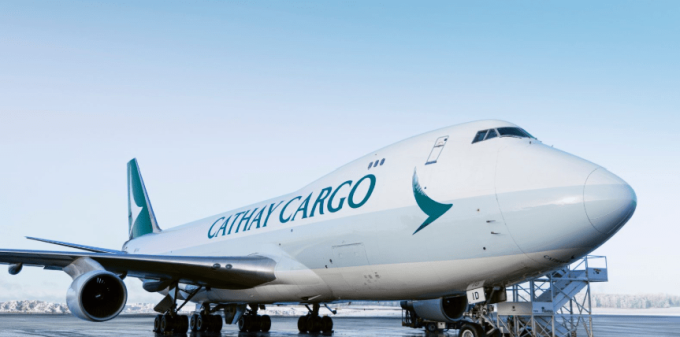
And the star of this particular show? The fuel surcharge. This beast has been wreaking havoc on shipping costs, a volatile multiplier that often felt like a runaway train. But Maier’s comments about airlines prioritizing international flights and the first signs of fuel surcharges coming down are incredibly significant. For Cathay Pacific, a major player in Asia, this translates into finding alternative mid-points in India for their European freighters. It’s a proof to the industry’s agility, finding workarounds when direct routes are too risky or expensive.
Toby Griffiths from Cathay Cargo explained their dynamic fuel surcharge mechanism. “Our now fortnightly cadence to our fuel surcharge mechanism means we more closely track the price of jet fuel. As a result, in mid-April, while still extremely high, the price of SINJET fuel – which itself is significantly higher than the price of crude, due to increased refinery costs – saw a slight drop in comparison with what we saw in late-March.” This is the subtle, yet powerful, shift we’re looking for: not a cliff dive in prices, but a steady, data-driven recalibration.
Why Does This Matter Beyond the Headlines?
This stabilization in Middle East air freight activity is more than just good news for DHL or Cathay Pacific. It’s a critical signal for the broader global economy. The Middle East is a linchpin. Its airspace, and the routes that traverse it, are vital arteries connecting East and West. When these arteries are clear and flowing, the entire body of global trade benefits. It means manufacturers can source components more reliably, it means businesses can get their finished goods to market with less friction, and ultimately, it means more stable pricing for consumers.
Is the market completely out of the woods? Absolutely not. European carriers are still facing significant capacity constraints on Europe-Middle East routes, with another review set for mid-May. The price of jet fuel, while showing signs of softening, remains elevated due to refinery costs and the ongoing ripple effects of regional disruptions. It’s a complex web, and any single thread’s adjustment has wider implications. However, the direction of travel, particularly for air cargo in this key region, appears to be decidedly positive.
This is the fundamental shift we’re witnessing. AI is not just automating tasks; it’s fundamentally re-architecting how we perceive and manage global movement. This news from the Middle East, while seemingly specific, is a micro-example of a macro-trend: AI-powered platforms are becoming the operating system of global logistics, enabling faster adaptation, more efficient resource allocation, and ultimately, a more resilient and responsive supply chain for everyone. We’re moving from a system that reacts to disruptions to one that anticipates and navigates them with unprecedented intelligence.
It’s a fascinating, often overlooked, aspect of our increasingly interconnected world. The air freight market in the Middle East, once a hotbed of uncertainty, is now showing the first signs of a much-needed thaw, and that’s a story worth telling.