Amazon’s Supply Chain Offensive
So, Amazon’s moving into the supply chain services business. Not just for itself, mind you, but for other companies. This isn’t just a slight pivot; it’s like the digital titan decided it wanted to own not just the checkout counter, but the entire delivery truck, the warehouse, and the charting of the shipping lanes themselves. It’s a fundamental platform shift, folks, and it’s happening right now.
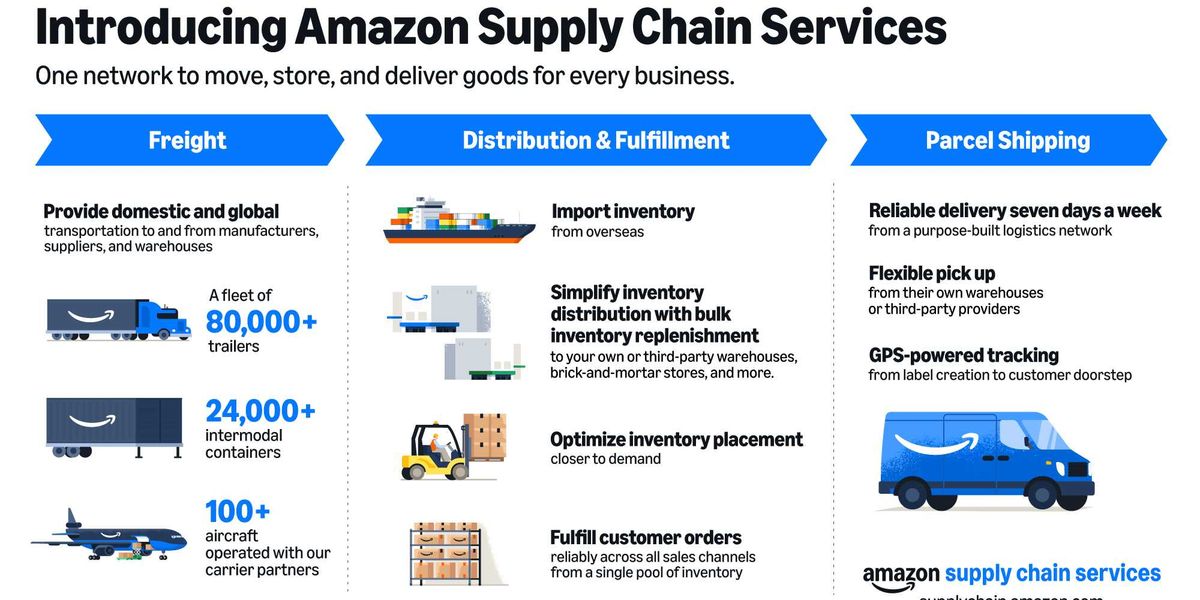
We’re talking about Amazon’s vast network of warehouses, its sophisticated logistics technology, its delivery fleet – all now theoretically available to anyone willing to pay. Think of it as Amazon opening up its incredibly efficient engine room to the rest of the fleet. It’s akin to Apple deciding to license its operating system to every phone manufacturer on the planet, or Google opening its search algorithms to power every news aggregator. This kind of platform play changes the game, creating new ecosystems and disrupting existing ones with astonishing speed.
Shipping stocks, predictably, took a nosedive following the announcement. It’s the natural, almost primal, reaction to a dominant player entering your turf with superior infrastructure and a relentless drive to dominate. It’s like the local artisanal baker suddenly facing a new competitor: a colossal industrial bakery with a distribution network that stretches across continents and a marketing budget that could fund a small nation.
What’s Really Driving This?
This move isn’t born out of pure altruism (sorry, Bezos fans). Amazon has always been about data, efficiency, and scale. By offering its services externally, it gains several crucial advantages. First, it creates a new revenue stream, leveraging its existing, massive infrastructure. Why let all those trucks, planes, and warehouses sit idle when they can be generating income 24/7? Second, it generates even more data. The more goods it moves, the more insights it gains into global trade flows, consumer demand patterns, and logistical bottlenecks – intelligence that can then be fed back into its own retail operations and future platform developments. It’s a virtuous cycle of dominance.
“We’re now offering our capabilities to other sellers and businesses who want to benefit from our network,” Amazon said in a statement. It sounds simple, almost understated, but the implications are anything but.
This is where the real fascination lies. We’ve spent years watching Amazon build its own incredibly complex and efficient supply chain, a marvel of modern engineering and data science. Now, it’s essentially packaging that know-how, that infrastructure, and that sheer operational might into a service. It’s like a chef who has perfected a Michelin-star recipe and then decides to open a food truck using the exact same, highly refined process. The potential for disruption is enormous.
Is This Just Another Amazon Fad?
This isn’t just about Amazon expanding its existing services. It’s about creating a new category of logistics provider, one that is intrinsically linked to the world’s largest online retailer. The company has long been a customer and operator within the logistics space, but this marks a significant step towards becoming a third-party logistics (3PL) giant. It’s an ambitious play, certainly, but given Amazon’s track record, dismissing it would be a fool’s errand. They don’t just enter markets; they redefine them.
What Does This Mean for the Future of Shipping?
The immediate impact is felt by publicly traded shipping companies. Their stock prices are the canary in the coal mine, signaling the seismic shift. But the long-term implications are far broader. We could see a consolidation within the logistics sector, with smaller players struggling to compete against Amazon’s scale and technological prowess. Established giants will be forced to innovate at an accelerated pace, perhaps looking for their own platform plays or strategic alliances to counter the threat. Or, they might find themselves relegated to niche markets that Amazon can’t, or chooses not to, serve efficiently.
This is the dawn of AI-powered logistics on a massive scale, and Amazon is planting its flag. It’s not just about moving boxes; it’s about optimizing every inch of the supply chain, predicting demand with uncanny accuracy, and dynamically rerouting shipments based on real-time global events. It’s a future where logistics isn’t just a cost of doing business, but a competitive advantage powered by intelligent systems. And Amazon, with its unparalleled data and infrastructure, is poised to lead the charge.
🧬 Related Insights
- Read more: Rail Merger Bid Roars Back, Opposition Intensifies
- Read more: Shipping’s Green Revolution: Biofuels and Hydrogen Defy Policy Headwinds
Frequently Asked Questions
What services will Amazon offer? Amazon is offering its extensive network of fulfillment centers, transportation services, and logistics technology to external businesses, aiming to provide end-to-end supply chain solutions.
Will this impact small businesses? Potentially, yes. While Amazon’s services could offer new efficiencies for small businesses, established logistics providers might face increased competition, which could lead to pricing shifts for all market participants.
Is this related to AI? Absolutely. Amazon’s existing logistics operations are heavily data-driven and employ advanced AI for optimization. Offering these services externally means leveraging that same sophisticated AI for a broader client base.