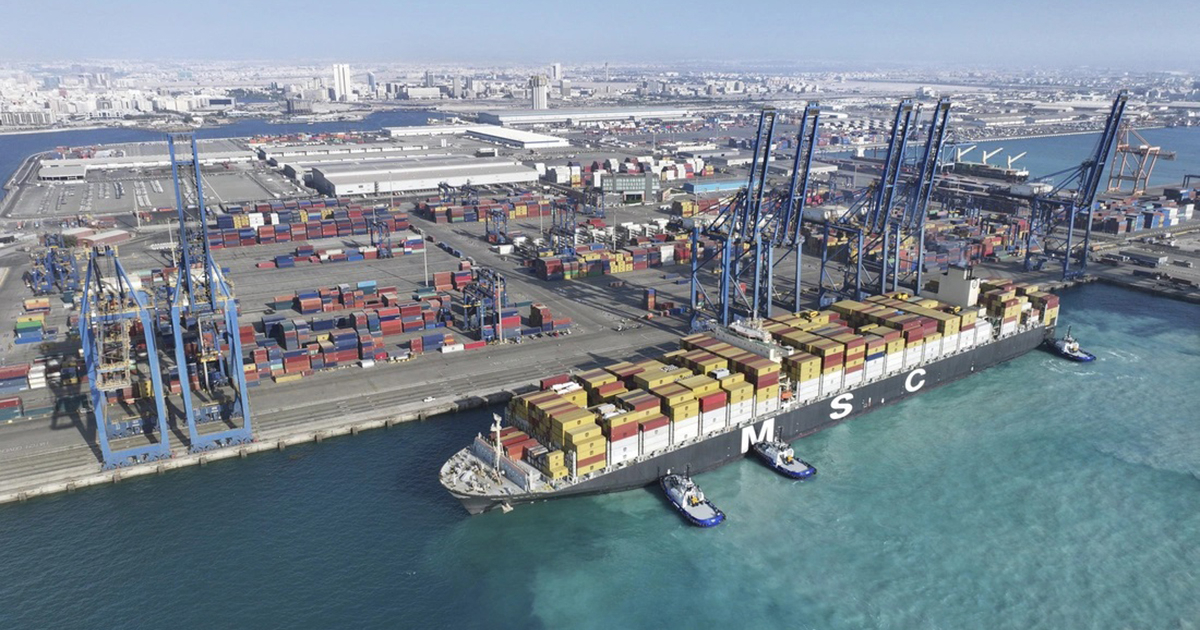
The narrative, for so long, was simple: efficiency meant cost-effectiveness. Operators across the Middle East and Africa have been laser-focused on shaving pennies off every shipment, optimizing routes, and squeezing margins to the absolute limit. That was the expected playbook, the accepted wisdom etched into every boardroom strategy deck. But here’s the thing: the ground has shifted.
Beneath the surface of glossy industry reports and forward-looking pronouncements, a tectonic plate of risk has begun to grind. The geopolitical tremors, the supply chain disruptions that were once sporadic but are now a persistent hum, they’re forcing a reckoning. What was once a ‘nice-to-have’ — flexibility, coordination, real-time visibility — is rapidly becoming non-negotiable.
Operators are adapting to disruption in the Middle East by building flexible, coordinated systems. This isn’t just PR spin; it’s a fundamental re-architecting of how supply chains function. Think less about a single, hyper-efficient assembly line and more about a network of interconnected nodes, each capable of stepping in if another falters. It’s about redundancy, yes, but also about intelligence — the ability to sense trouble miles away and reroute assets before a crisis even hits.
What does this actually look like in practice? It means investing in technology that provides granular, real-time data, not just on where a shipment is, but on its condition, its environmental parameters, and its predicted arrival time, factoring in a dozen potential disruptions. It means fostering deeper collaboration with partners — not just transactional relationships, but true strategic alliances where information flows freely and contingency plans are developed jointly. This is the essence of building resilience, and it’s a stark departure from the cost-optimization era.
The Electric Van Effect: A UK Glimpse
While the Middle East grapples with resilience, other markets are facing their own evolutions. The UK’s Department for Transport’s £1 billion funding boost for electric vans and trucks, for instance, signals a significant push toward sustainability. Caroline Peachey’s analysis highlights the industry’s reaction, noting how intensifying cost pressures are forcing companies to weigh the upfront investment in EVs against long-term operational savings and regulatory compliance. It’s a complex equation, and one that many in the logistics sector are still trying to solve.
Why Does Cold Chain Matter More Than Ever?
And then there’s the cold chain. Rising global temperatures aren’t just a distant headline; they’re a tangible threat to perishable goods. Reuben Henry-Fellows reports that real-time monitoring and precise thermal control are no longer luxuries but necessities. Imagine the cascade of issues if temperature-sensitive pharmaceuticals or high-value food products are compromised mid-transit. The cost of a single failure can far outweigh the investment in advanced monitoring systems. This is a direct consequence of climate shifts impacting operational realities on the ground.
The Big Sheds Question
Even the seemingly stable world of industrial and logistics property is feeling the tremors. The “big shed” market—those colossal warehouses essential for modern e-commerce fulfillment—shows positive indicators for 2026. However, Kirstie Pickering points out that geopolitical instability remains a significant wildcard. The ability to secure and maintain these massive assets, often strategically located near ports or major transport hubs, is increasingly tied to a broader assessment of regional stability. A new warehouse is a long-term bet, and long-term bets are hard to place when the geopolitical map is in flux.
Recruitment: The Human Factor in a Digital World
Amidst all this technological and geopolitical upheaval, the human element remains critical. Caroline Peachey explores how digitalization is reshaping roles within logistics, presenting both opportunities and significant recruitment challenges. As the sector becomes more data-driven and automated, the demand for skilled personnel who can manage, interpret, and use these new systems grows. Yet, attracting and retaining this talent is proving to be an uphill battle, with many companies struggling to bridge the skills gap.
Ultimately, the message emanating from the Middle East and beyond isn’t about a simple upgrade to existing systems. It’s about a fundamental re-evaluation of priorities. Resilience, driven by smart technology, agile operations, and strategic partnerships, is the new currency. The era of chasing the cheapest option at all costs is giving way to a more mature, more strong approach to supply chain management. It’s a necessary evolution, a hard-won lesson delivered by the turbulent realities of the 21st century.