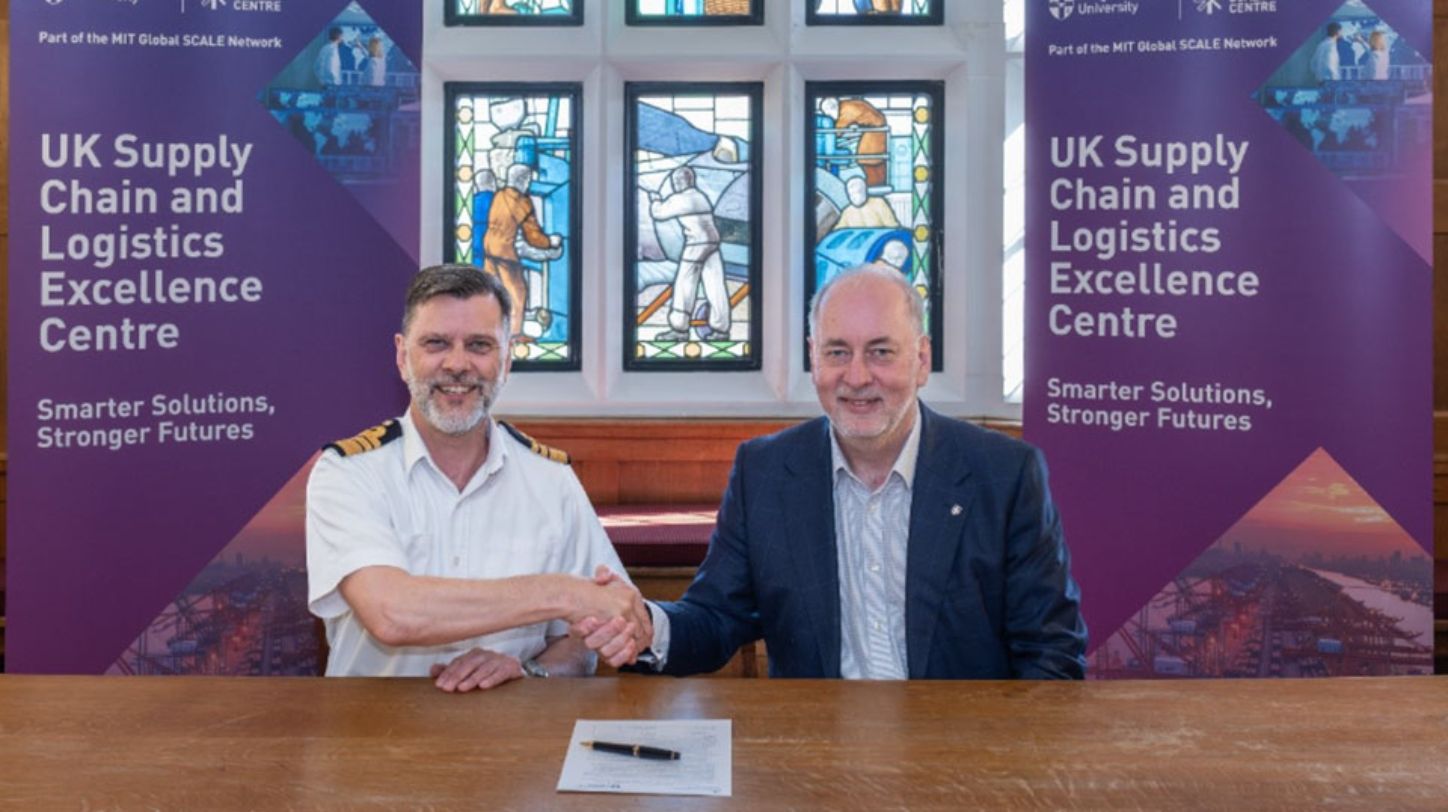
The clatter of crates and the hum of forklifts are the backdrop to a much larger strategic play unfolding within the UK. The Ministry of Defence (MoD) and the UK Supply Chain and Logistics Excellence (SCALE) Centre have formally inked a collaboration, a move designed not just to improve efficiency, but to fundamentally fortify the backbone of the nation’s defense capabilities. This isn’t a minor tweak to procurement; it’s a strategic alliance aiming to translate academic rigor into battlefield-ready resilience.
This partnership promises to bridge the often-cited chasm between theoretical research and the gritty reality of operational deployment. By embedding SCALE’s academic prowess alongside the MoD’s hard-won operational intelligence, the initiative targets critical areas. Think strategic base resilience – ensuring vital hubs can withstand disruption – and the burgeoning field of digital manufacturing, where the ability to produce essential components rapidly and reliably is paramount. Data, analytics, and artificial intelligence are also squarely in the crosshairs, suggesting a future where decision-making is not just informed, but predictive and hyper-adaptive.
But here’s the rub, and it’s a significant one: the stated goal is to ensure research is directly aligned with “real-world challenges.” This sounds reassuring, almost like boilerplate corporate speak, but in the context of defense, it carries substantial weight. The translation of research into “practical, deployable solutions” that strengthen readiness is the ultimate test. We’ve seen plenty of well-intentioned partnerships sputter out because the real-world integration proved too complex, too slow, or simply didn’t address the actual pain points. The MoD’s operational insight, therefore, will be the crucial acid test for SCALE’s academic output.
Why Is This Pact So Important for National Security?
Professor Jan Godsell, the director of the UK SCALE Centre, articulated the core mission with a stark clarity that cuts through the usual diplomatic fog. She highlights the increasing global volatility and the imperative for defense supply chains to function flawlessly. “In a more contested world, their ability to operate smoothly from source to front line is fundamental to protecting the UK and sustaining Defence readiness.” This isn’t hyperbole; it’s a sober assessment of contemporary geopolitical realities. The ability to maintain a consistent flow of materiel, from the rawest material to the soldier in the field, is no longer a logistical nicety – it’s a strategic imperative.
Godsell’s statement also offers a critical insight into the expected outcomes: enhanced decision-making, broader supply base resilience, and tangible operational advantage. This suggests a shift away from reactive problem-solving towards a proactive, data-driven approach. The implications for defense procurement and logistics are profound. If successful, this model could set a new benchmark for how governments use specialized academic expertise to solve complex national security challenges. It’s a proactive bet against future disruption.
Can Academia Really Deliver Defense-Grade Solutions?
This collaboration isn’t just about improving the flow of spare parts or fuel. It’s about fundamentally recalibrating the defense supply chain for a future that is decidedly less predictable than the past. The focus on the energy transition, for instance, signals an understanding that traditional fossil-fuel dependencies are a vulnerability. Integrating sustainable energy solutions into military operations, from powering bases to refueling vehicles, requires innovation at the highest level. This isn’t a task for a single company or a standalone research paper; it demands a systemic approach – exactly what this partnership aims to provide.
The true success of this endeavor will hinge on its ability to overcome the inherent inertia within large governmental organizations and translate research into adaptable, deployable technologies and processes. The MoD’s historical track record in adopting new technologies is, shall we say, varied. For SCALE, the challenge will be to move beyond theoretical models and produce solutions that can be integrated into existing, often aging, defense infrastructure without creating further complications. It’s a high-stakes gamble, but one that’s arguably necessary given the evolving global threat landscape.
“Through UK SCALE, we are translating research into practical solutions that strengthen decision-making, enhance resilience across the Defence supply base, and deliver real operational advantage.”
This is the central promise. The question now is whether the execution will live up to the rhetoric. If this collaboration can indeed deliver on its ambitious objectives, it could represent a significant step forward not only for the UK’s defense capabilities but also as a model for other nations grappling with similar supply chain vulnerabilities. The alternative – continued reliance on outdated systems in an increasingly volatile world – is simply not an option.
🧬 Related Insights
- Read more: CMA CGM Shifts Ships to India: Why Now?
- Read more: P&G’s Demand Signal Discipline: AI’s Next Frontier?
Frequently Asked Questions
What is the primary goal of the MoD and SCALE collaboration? The primary goal is to strengthen the resilience of the UK’s defense supply chains by combining academic expertise with operational insights.
Which specific areas will the collaboration focus on? The focus areas include strategic base resilience, digital manufacturing, data and analytics, artificial intelligence, and the energy transition.
What does ‘strengthen readiness and resilience’ mean in this context? It means ensuring that defense supply chains can consistently operate and adapt to disruptions, ensuring that military forces have the necessary resources to carry out their missions effectively in any situation.