The air in the Maritime Administration’s press room crackled, not with anticipation, but the familiar hum of bureaucratic machinery churning out another list. This one, however, was different. It was a $774 million investment, spread across 37 port infrastructure projects nationwide, aiming to shore up the arteries of American commerce.
This isn’t just about throwing money at concrete and cranes, though there’s plenty of that. This latest tranche of funding from the U.S. Department of Transportation’s Port Infrastructure Development Program (PIDP) is a signal. It’s a declaration that the federal government, perhaps belatedly, recognizes the critical vulnerability of its port system – a system often taken for granted until a Suez Canal blockage or a pandemic-induced bottleneck brings everything to a grinding halt.
What’s particularly telling about this round of grants is the sheer diversity of projects being funded. We’re not just talking about expanding existing channels. The list includes everything from upgraded screening technology aimed squarely at reinforcing national security – a nod to the growing concerns over illicit cargo and cyber threats – to adaptable, two-tier docks designed to handle the capricious nature of weather. And then there’s the construction of entirely new cargo terminals, a move that speaks volumes about the long-term vision for increased throughput and efficiency.
Look, the American Association of Port Authorities (AAPA) is, predictably, thrilled. “Our nation’s ports are an economic lifeline to the world,” chirped John Bressler, AAPA’s Vice President of Government Relations, in a statement that’s as carefully worded as it is true. He went on to laud these projects as “tangible investments.” And, in a way, they are. But the real question isn’t if these investments are tangible, but how they’re architecting the future of American logistics.
This isn’t a story about a single company or a flashy new app. This is about the bedrock. It’s about the foundational shifts happening at the edge of our supply chains, the points where goods transition from water to land, or vice versa. The funding is distributed across coastal seaports, Great Lakes ports, and inland river ports, a deliberate effort to weave a more strong, interconnected network.
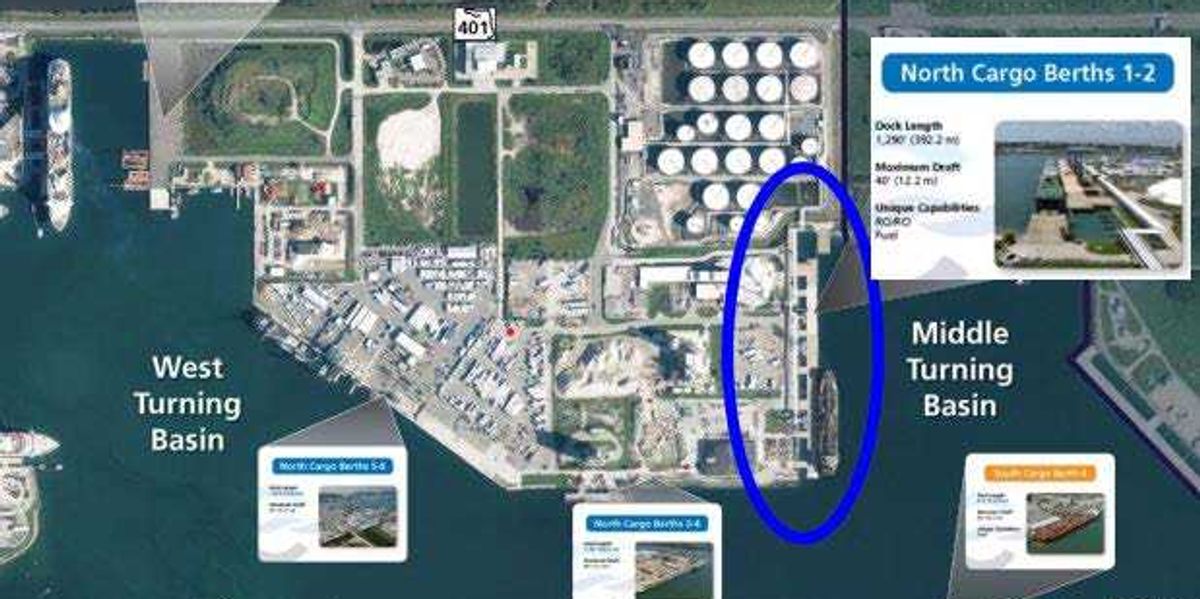
Consider the Port of Canaveral’s $20.21 million grant. That money is earmarked for upgrading North Cargo Berths 1 and 2, facilities that predominantly handle refined petroleum products. This project isn’t just about patching up aging bulkheads to extend their life by two or three decades; it’s about expanding the port’s capacity for bulk cargo, specifically fuels that already constitute over half of its annual tonnage. The timeline is ambitious, with construction slated to begin in early 2027 and completion expected about 16 months later. This granular detail—the specific berth numbers, the product focus, the projected construction start date—underscores a micro-level planning that, when aggregated across 37 projects, paints a macroscopic picture of strategic infrastructure development.
But what does this really mean, beyond the dollar figures? It means a concerted push to diversify the points of entry and exit for goods. It signals a move away from an over-reliance on a few choke points. It’s about building redundancy and resilience into a system that has been stress-tested and found wanting in recent years. The specter of those empty shelves and skyrocketing shipping costs still looms large in the collective memory, and these grants are, in part, a direct response to that.
The underlying architectural shift here is towards a more distributed, more secure, and more adaptable port ecosystem. It’s a recognition that the old ways — often characterized by single-purpose terminals and static infrastructure — are no longer sufficient in a world grappling with geopolitical instability, climate change, and the relentless march of technological advancement. The inclusion of upgraded screening tech, for instance, isn’t just about customs; it’s about a broader vision of integrated port security, where physical and digital defenses work in concert.
This federal investment is, undeniably, a positive development for the ports involved and for the broader U.S. economy. However, the true test won’t be in the announcement of the grants, but in the execution. Can these projects be completed on time and on budget? Will they truly enhance the flow of goods, or will they become monuments to bureaucratic ambition that never fully realize their potential? The devil, as always, is in the details – and in the dust that will eventually settle on these newly renovated docks.
The $774 Million Question: Why Now?
The timing of this significant funding injection isn’t coincidental. It follows a period of unprecedented disruption for global supply chains. From the COVID-19 pandemic to the ongoing geopolitical tensions, the fragility of the existing infrastructure has been laid bare. Ports, the critical nodes where international trade meets domestic distribution, have been at the forefront of these challenges. Congestion, labor shortages, and aging facilities have all contributed to delays and increased costs for businesses and consumers alike. This funding represents a federal commitment to addressing these systemic weaknesses, aiming to build a more strong and efficient transportation network that can better withstand future shocks.
Beyond the Berths: What Else Is Being Funded?
While the upgrades to docks and terminals are significant, the PIDP grants are also targeting other vital areas. The mention of “upgraded screening tech” points to a growing emphasis on cargo security and integrity. This could involve everything from advanced X-ray scanners to AI-powered anomaly detection systems designed to identify high-risk cargo more effectively. Furthermore, projects focused on multimodal exchanges, like improved rail connections or enhanced intermodal yard operations, aim to streamline the transfer of goods between different modes of transport, reducing bottlenecks and increasing overall supply chain fluidity. These are the less visible, but equally critical, components of a modern port infrastructure.
“These 37 PIDP projects, from refurbished terminals to upgraded multimodal exchanges, and new state-of-the-art equipment, are tangible investments in our nation’s infrastructure.”
My Take: A Calculated Bet on Physical Infrastructure
What’s fascinating here, and frankly, a bit of a counter-narrative in our current tech-obsessed world, is the emphasis on physical infrastructure. We’re awash in talk of AI, blockchain, and digital twins for supply chains. And while those technologies are undoubtedly important, this $774 million injection is a powerful reminder that without the physical arteries – the ports, the roads, the rails – those digital innovations have nowhere to flow. It suggests a recognition at the highest levels that the foundational elements of trade require concrete, steel, and smart engineering, not just algorithms. This is a pragmatic, boots-on-the-ground investment in resilience, a signal that the U.S. isn’t just chasing the next digital frontier, but also reinforcing the very ground upon which its economic might is built.
🧬 Related Insights
- Read more: Sustainability in Supply Chain: ESG Reporting and Green Logistics
- Read more: Decision Latency: Supply Chain’s Silent Profit Eater
Frequently Asked Questions
What does the Port Infrastructure Development Program (PIDP) do? The PIDP provides grants to U.S. ports to support projects that improve safety, efficiency, and reliability of the movement of goods.
Will this funding improve shipping times? While the ultimate goal of these projects is to improve efficiency and reduce delays, the impact on shipping times will vary depending on the specific projects funded and their successful implementation.
Are these grants only for large seaports? No, the PIDP funds projects at coastal seaports, Great Lakes ports, and inland river ports, reflecting a broad approach to national port infrastructure development.