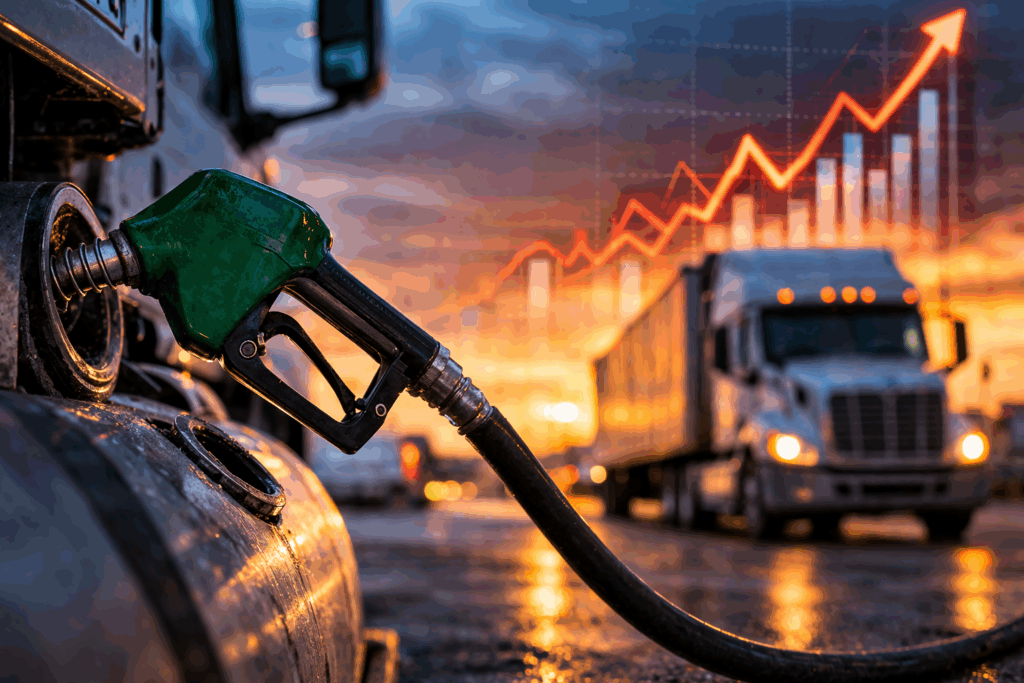
Oil prices. They’re spiking—CNBC’s screaming ‘sky’s the limit’ this morning—and supply chain pros are sweating bullets. Everyone expected steady energy costs post-Ukraine war cooldown, maybe a gentle drift toward EVs smoothing it all out. Wrong. Geopolitics, OPEC cuts, and red-hot demand flipped the script overnight.
This changes everything for freight haulers and logistics czars. No more coasting on cheap diesel dreams.
Remember 2008? Yeah, Don’t.
Back then, headlines blared $200 oil inevitability—ABC News, May ‘08. Months later? Financial crisis tanks it to $40s. Sound familiar? Today’s frenzy echoes that perfectly, but with a twist: we’re not just guessing peaks; we’re blind to the valleys too.
“Oil Hits New Record; Is $200 a Barrel Coming?” That old ABC screamer. History doesn’t repeat—it squawks the same tired tune.
And here’s my take, the one nobody’s saying loud enough: this volatility isn’t a blip; it’s the new normal baked into a world splitting between fossil holdouts and green dreamers. Look at trucking—diesel’s 30% of costs for some fleets. A 20% jump? That’s margins evaporating faster than summer asphalt.
Why Bother Predicting? You Won’t Win
Forecasts flop. Peak oil supply? Demand? Pundits flip-flopped for decades—‘Peak Oil Supply Is Back! (And Just As Wrong)’ nails it. Nobody knows if $150 or $60 hits next week.
So why chase ghosts? Execs waste hours in war rooms modeling Brent crude arcs. Pointless. Data shows forecast errors average 20-30% in commodities like this—Bloomberg terminals confirm it yearly.
Instead—sharp pivot—pre-build your playbook. Define triggers: diesel up 20%? Shift 15% of lanes to rail. At $4/gallon? Renegotiate surcharges with carriers, pronto. These aren’t hypotheticals; they’re your volatility firewall.
Short para for punch: Speed beats smarts here.
Transportation managers get this wrong most. They freeze when prices pop, scrambling routes mid-crisis. Pre-define, and you’re executing while rivals dither. We’ve seen it—firms with scenario plans cut response time by 40%, per McKinsey supply chain audits. That’s not hype; that’s math.
But wait—corporate PR spin calls this ‘resilience building.’ Cute. Really, it’s admitting you can’t predict jack, so fake preparedness instead. Call me skeptical, but if your C-suite’s touting ‘agile strategies’ without hard triggers, it’s boardroom theater.
What If Oil Hits $150? Your Move
Picture it: Brent at $150, diesel scraping $6/gallon. Air freight costs double—your Asia lanes? Screwed. Intermodal becomes king, but capacity’s tight; book now or cry later.
Or flip: crash to $60. Carriers slash rates, surcharges vanish—do you lock in long-term deals or hoard cash for the rebound? Pre-plan says: yes, with clauses for reversals.
One killer quote sums it:
The bottom line is that in uncertain environments, speed and clarity of response matter more than perfect forecasts. Oil prices will rise, fall, and surprise us again — they always do.
Bold prediction—unique to me: by Q4, with US elections and Middle East tinderboxes, we’ll see $120 swings in a quarter. Chains ignoring scenarios? They’ll bleed 5-10% EBITDA, while prepped ones gain share.
Is Scenario Planning Worth the Hassle for Small Fleets?
Absolutely—if you’re hauling more than 50 trucks. Start simple: three scenarios (high, base, low). Map cost impacts via spreadsheets—Excel’s fine, no fancy AI needed. Test quarterly. Big win: teams gain muscle memory, decisions snap into place.
Skeptical on scale? UPS did this post-2008; shaved millions in fuel chaos. You’re next—or irrelevant.
But here’s the rub—most don’t. Surveys show 60% of logistics firms still forecast-addicted (Deloitte data). Wake up.
Why Does Oil Volatility Hit Supply Chains Hardest?
Freight’s fuel hog. Trucking: 1 in 3 costs. Ocean? Bunker’s 50% variable expense. Air? Worse. EVs nibble edges, but 90% of global tonnage’s fossil-bound through 2030—IEA stats don’t lie.
Global trade amps it: tariffs, wars reroute everything, spiking miles burned.
Fragment: Chaos sells.
Build Your Oil-Proof Chain—Now
Step one: scenario workshops. High oil? Diversify modes—rail, nearshore sourcing. Low? Bulk buys, expand capacity.
Triggers galore: 10% diesel move? Alert board. 25%? Activate Plan B.
Tech helps—tools like FourKites track real-time fuel, but humans execute. Don’t outsource your spine.
My critique: too many execs PR this as innovation. Nah. It’s survival 101, dusted off from ‘73 embargo playbooks.
Punchy close para: Prep or perish.
🧬 Related Insights
- Read more: FedEx’s Reusable Boxes Hit the Road: From Pilot to Potential Supply Chain Overhaul
- Read more: Middle East Missile Dodge: Global Trade’s Risk Obsession Hits Fever Pitch
Frequently Asked Questions
What should supply chain managers do if oil prices spike?
Pre-define responses: shift to intermodal at +20% diesel, renegotiate surcharges immediately—don’t react, execute.
How accurate are oil price forecasts for logistics planning?
Poor—20-30% error rates typical; focus on readiness over predictions.
Will EV trucks end oil price worries for freight?
Not soon—90% volume fossil-dependent til 2030; volatility stays.