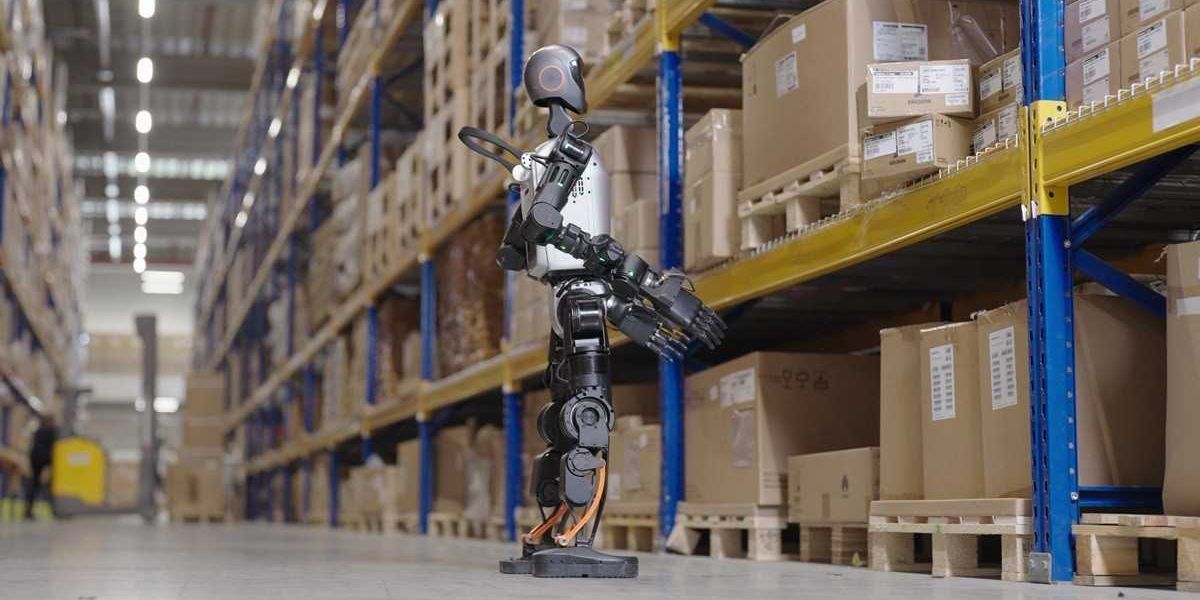
Let’s talk about Accenture. They’re not exactly known for getting their hands dirty, are they? Their bread and butter is consulting, strategizing, and — let’s be honest — often selling ambitious visions. So, when they announce a pilot project involving a humanoid robot running an actual warehouse inspection gig in Duisburg, Germany, alongside Vodafone and SAP, my BS detector goes into overdrive. But there’s a number here, a tiny 1.5% improvement in something, that makes you pause. Not a massive leap, but not nothing. This isn’t about replacing human workers en masse, at least not yet. This is about using a sophisticated — and frankly, still rather clunky — humanoid form to do visual inspections. Think of it as a highly mobile, AI-powered pair of eyes and a brain, tasked with finding misplaced widgets or wobbly pallet stacks.
The ‘Physical AI’ Proposition
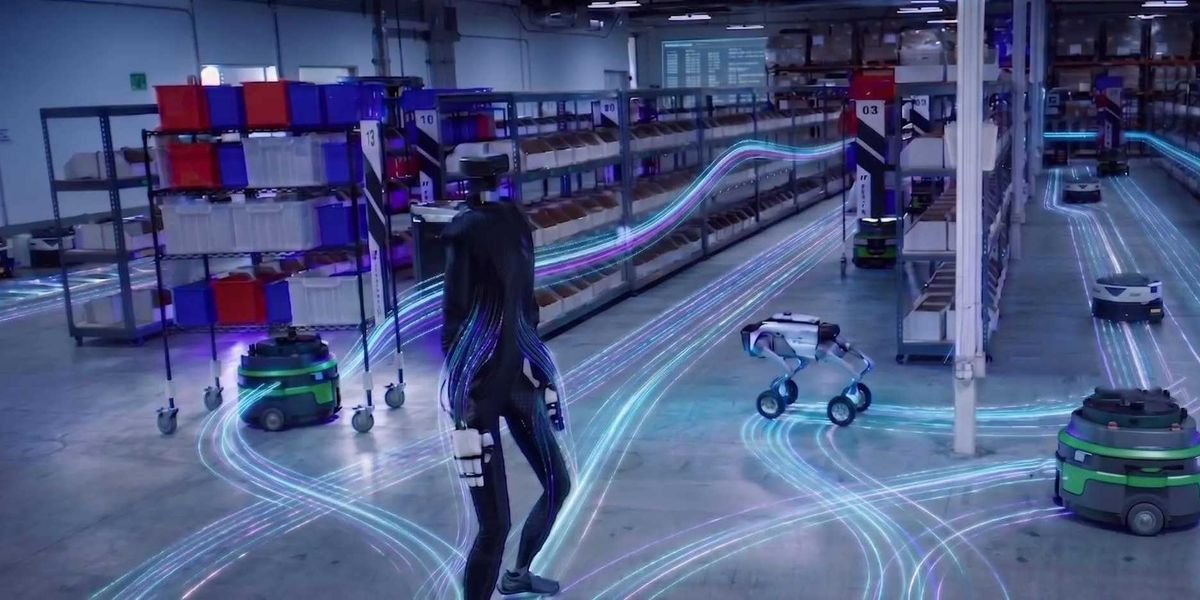
The core idea, dubbed ‘physical AI’ by Accenture’s Christian Souche, is to imbue these robots with enough intelligence and dexterity to navigate complex, real-world environments and perform tasks that require nuanced observation. The pilot at Vodafone Procure & Connect’s facility saw the robot receive assignments from SAP’s Extended Warehouse Management system. Its mission? To autonomously wander the aisles, not to pick and pack, but to see. It’s checking for damaged goods, assessing how pallets are stacked (weight distribution is key, apparently), spotting underutilized storage space, and flagging potential hazards like rogue obstacles or improperly aligned pallets. All of this information, all these observations, are fed back directly into the SAP system. Real-time visibility, informed decision-making, yada yada. The boilerplate is there, but the underlying architecture is what’s interesting. It’s a closed loop: digital instruction, physical action (observation), digital reporting, digital decision.
“Trained in digital twins and powered by physical AI, humanoid robots can reduce worker injuries and other warehouse safety incidents and lower overtime costs and the dependency on temporary labor.”
This quote from Souche hits on the usual suspects: safety, cost reduction, less reliance on temp labor. And sure, it’s plausible. A robot doesn’t get tired, doesn’t have bad days, and theoretically, doesn’t get injured tripping over a misplaced box. But let’s be real. The ‘dependency on temporary labor’ line always feels a bit like a dog whistle for automation enthusiasts. The real question isn’t if robots can do these things, but how well and at what cost, both financial and societal. The mention of ‘digital twins’ is also a tell. It suggests the training environment for these robots is entirely virtual, a simulated world where they learn the rules of the warehouse before stepping onto the actual concrete floor. This is where the true advancement lies – the ability to train complex AI agents in simulation and then have them perform reliably in the messy, unpredictable physical world.
Beyond the Hype: What’s Actually Happening?
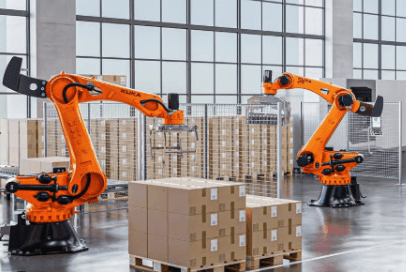
Here’s the thing: Warehousing is ripe for automation. It’s a high-volume, repetitive, often physically demanding environment. We’ve seen automated guided vehicles (AGVs), autonomous mobile robots (AMRs) for picking, and robotic arms on assembly lines for decades. But a humanoid robot, with its inherent flexibility in locomotion and manipulation, opens up new possibilities. It can navigate aisles designed for humans, interact with existing infrastructure that might not be AMR-friendly, and potentially perform tasks requiring finer motor skills than a simple conveyor belt system. This pilot isn’t about replacing forklift drivers or pickers. Not yet, anyway. It’s about augmenting the existing system. It’s a reconnaissance mission, an early warning system, a pair of tireless eyes.
What does this mean for the architecture of the modern warehouse? It’s an acceleration of the convergence between the digital and physical. You’re no longer just talking about a Warehouse Management System (WMS) controlling robots; you’re talking about AI agents, trained in simulated environments, interacting with physical reality, and feeding data back into sophisticated enterprise systems like SAP. This requires a whole new layer of integration, a strong digital thread connecting the virtual training grounds to the physical operational space. It demands advanced perception systems, sophisticated planning algorithms, and a human-robot collaboration framework that, frankly, we’re still very much in the early stages of figuring out.
Is This the Future, or Just Another Shiny Object?
Accenture is positioning this as a move from ‘experimentation to practical deployment at scale’. It’s a bold claim, and given the current state of robotics and AI, ‘at scale’ might be a few years off. But the trajectory is clear. These humanoid robots, powered by what they’re calling ‘physical AI,’ are getting smarter, more adaptable, and more capable of operating in environments not specifically built for them. The efficiency gains might be marginal now, but the potential for broader application — in maintenance, quality control, security, even complex assembly tasks — is significant.
The real innovation here isn’t just the robot itself, but the integration of a highly capable, physically embodied AI into existing enterprise software ecosystems. It’s about making the physical world’s data as accessible and actionable as its digital counterpart. And while Accenture’s PR machine is no doubt churning, this pilot suggests a genuine push towards bringing more sophisticated robotics into the operational fabric of supply chains. It’s not a revolution yet, but it’s a definite, tangible step on a long road.
What are the broader implications? For one, it ups the ante for how we think about AI training and deployment. If robots can learn in digital twins and then perform in the real world, the possibilities for rapid iteration and deployment of AI-driven physical tasks are immense. It also means supply chains will become even more data-rich, and the ability to analyze and act on that data will become paramount. The warehouse of the future might not be entirely staffed by robots, but it will undoubtedly be influenced by their increasing presence and capabilities.
🧬 Related Insights
- Read more: Last-Mile Delivery Optimization: Strategies to Reduce Costs and Improve Speed
- Read more: India Extends Cabotage Waiver 6 Months Amid Cargo Surge [Analysis]
Frequently Asked Questions
What does Accenture’s pilot project actually do with the humanoid robot? The humanoid robot in the pilot project visually inspects warehouse operations, identifies inefficiencies and safety risks like misplaced products or hazards, and reports its findings directly into the SAP system.
Will this type of robot replace human workers in warehouses? While the project aims to lower dependency on temporary labor and reduce worker injuries, the immediate goal appears to be augmentation rather than outright replacement. The robot is performing inspection tasks, not the full range of picking and packing duties.
How is ‘physical AI’ different from regular AI? ‘Physical AI’ refers to artificial intelligence that is embodied in a physical robot, enabling it to interact with and perceive the real world. It combines AI’s decision-making capabilities with a robot’s physical presence and ability to perform actions in a tangible environment.