Are you certain the ships carrying your goods will exist in five years?
That’s the question nobody in the C-suite seems to be asking. They’re busy haggling over spot rates, patting themselves on the back for shaving a few percentage points off this quarter’s contracts. Meanwhile, the foundation of global trade — financed maritime assets — is quietly crumbling. And when it finally collapses, watch those freight rates do a Roman candle impression.
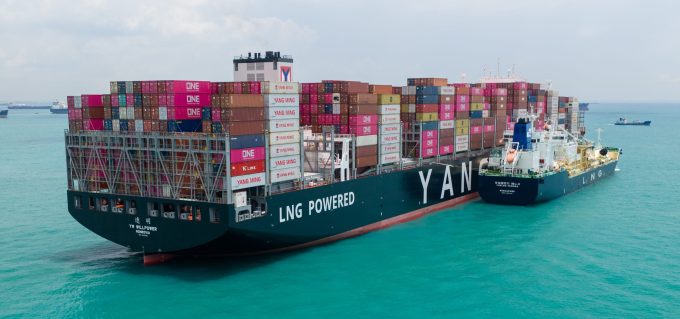
Here’s the dirt. Ships cost a fortune. Think $30 million to $150 million, minimum. Three years to build. Almost all of it is bank-financed, tied to future earnings. Pull the bank financing, and poof. No ship. No capacity. Simple, right?
Except it’s not.
Petrofin tracks this stuff. Their index of bank lending versus fleet size has tanked since 2008. It’s down to 63. Banks are still lending, but the fleet’s grown way faster. So, banks now cover only about 60% of ship finance. The rest? Leases, private equity, foreign coin. Whatever isn’t a traditional bank loan.
This isn’t evenly distributed. European banks, once the kings of shipping finance, have retreated. Basel III and IV – those bureaucratic nightmares – make long-term shipping loans expensive. Add ESG mandates pushing them away from tankers and dry bulk. Chinese and Asian leasing firms have picked up some slack. But they’re picky. They prefer big, new ships for big, established players. Smaller operators, those serving less glamorous routes with specialized cargo? They’re getting squeezed out. Capital access is drying up for them.
The timing is everything, and everyone misses it.
The ships on your trade lanes today were ordered three years ago, financed under then-current conditions. The ships for 2029? They’re being ordered now. If capital isn’t keeping pace with demand for fleet expansion, capacity will eventually — with that same maddening three-to-five-year lag — disappear. Your rate negotiations are happening in a vacuum, disconnected from the upstream capital decisions shaping future supply.
Remember the Red Sea detour? That wasn’t just a piracy problem; it was a symptom. UNCTAD says the extra mileage ballooned TEU-mile demand by 30%. Global ton-miles shot up 6% last year, nearly triple trade volume growth. Spot rates on Asia-Europe routes flirted with COVID-era highs. Why? Because the fleet had virtually no spare capacity buffer. When effective capacity vanished, rates exploded. This isn’t about Houthi attacks; it’s about structural fragility.
And then there’s decarbonization. The IMO’s tightening rules mean owners must either retrofit existing ships or build new, eco-friendly ones. Both require mountains of cash. Both are competing for the same shrinking pool of capital.
Sure, new financial structures are popping up. Tokenized assets, private credit, alternative funds. They’re patching the holes, not rebuilding the house. The trend is toward a more fragmented capital base because the old, concentrated model can’t keep up. It’s a sign of desperation, not innovation.
So, next time you’re in a negotiation, don’t just look at the rate. Look at who’s financing the ships. Because how they get paid determines if your goods actually reach their destination. And right now, that’s a gamble most supply chain execs aren’t even aware they’re taking. It’s a quiet risk, but it’s about to get very loud.
Is the Ship Financing Landscape Really That Bad?
Absolutely. European banks, historically the backbone of ship finance, are severely constrained by new capital requirements (Basel III/IV) and ESG mandates. This withdrawal leaves a significant gap, particularly for mid-market owners and specialized vessels. While Asian leasing and alternative financing are stepping in, they tend to favor large-scale, established operators and new builds, leaving a crucial segment of the market underserved.
Why Does Ship Financing Matter for Freight Rates?
It’s a matter of supply and demand, with a multi-year lag. Commercial vessels are capital-intensive assets ordered years in advance. If the financing to build or acquire new vessels isn’t keeping pace with the growth of global trade, fleet capacity will eventually fall short. This imbalance creates a scarcity that drives up ocean freight rates, often with a delay that blindside negotiators focused on present-day costs. The Red Sea crisis was a stark, if temporary, illustration of this principle.
What Are the New Financing Methods for Ships?
The industry is seeing the emergence of tokenized maritime assets, structured private credit, and various institutional alternative investment vehicles. These are attempts to supplement, not replace, traditional bank lending. They reflect a move toward a more distributed capital base, driven by the challenges of securing traditional bank debt in the current regulatory and market environment.
**
🧬 Related Insights
- Read more: AI Supply Chain Execution: Beyond Architecture
- Read more: AI-Driven Supply Chains: Robots Rewrite Global Logistics [5 Takeaways]
Frequently Asked Questions**
What does Petrofin Global Index measure? The Petrofin Global Index tracks bank lending relative to fleet size in the global shipping industry.
How has bank lending changed in ship finance? Bank lending as a percentage of total ship finance has decreased, falling from 67% to about 60%, with non-banking sources like leasing and private equity becoming more prominent.
Will new financing methods replace traditional bank loans for ships? These new structures are largely seen as supplementing, rather than replacing, bank finance, addressing a gap created by reduced traditional lending.