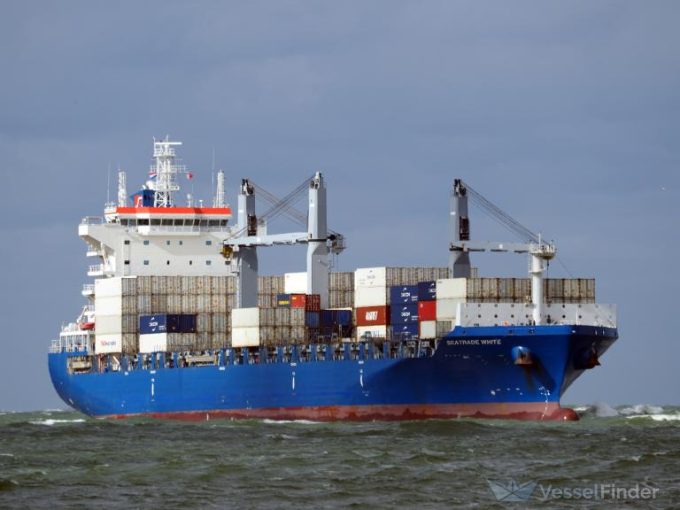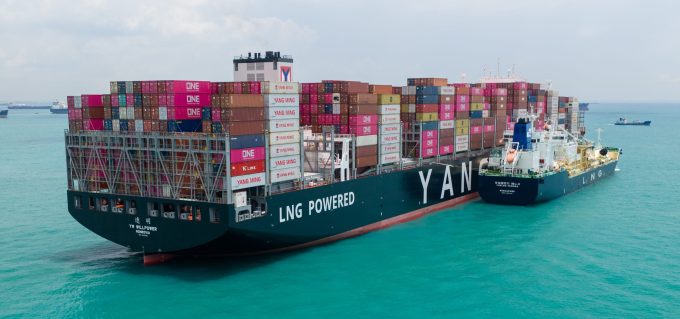
A lone container ship, silhouetted against a bruised dawn sky, navigates the tense waters of the Arabian Sea.
This isn’t the calm before the storm; it’s the storm itself, and it’s hitting the global shipping industry right between the eyes. The normally predictable rhythm of the container shipping market has been thrown into disarray, with the anticipated third-quarter peak season for Asia-Europe and transpacific routes kicking off weeks, if not months, ahead of schedule. The culprit? A potent cocktail of geopolitical instability and persistent capacity constraints, forcing mainline operators to jack up rates to reflect not just rising costs, but a fundamentally altered supply-demand equation.
Look, when you see freight indices ticking up week-on-week, it’s easy to dismiss it as just another quarterly fluctuation. But the data here tells a different story. The Shanghai Containerised Freight Index, our reliable canary in the coal mine, shows the Shanghai-North Europe rate jumping 4% week-on-week to a solid $2,584 per 40ft. The Shanghai-Mediterranean route isn’t far behind, nudging up 2% to $3,263. Across the Pacific, it’s a similar narrative: a 4% surge for the Shanghai-US West Coast route ($2,826) and a 3% climb for the East Coast ($3,812).
The Hormuz Effect: Capacity Squeeze in Action
Yang Ming chairman Chuck Tsai Feng-ming laid it out plainly during a recent Taipei Shipowners’ Association meeting. The traditional Q3 consumer goods dash to the US and Europe for Christmas? It’s been pulled forward. The reason? A direct consequence of the US-Israel-Iran conflict tying up a non-trivial 1.5% of global shipping capacity in the Strait of Hormuz. This bottleneck, coupled with the inevitable spike in oil prices, has created a perfect storm. Mainline operators, faced with higher operating expenses and a suddenly tighter market, are doing what any rational business would: adjusting their pricing upwards.
Tsai’s words are blunt and to the point: “We’re seeing bookings coming in for this month, and we see a recovery in cargo volumes. Therefore we believe that the container shipping market has entered the peak season ahead of schedule.” It’s a declaration that signals a fundamental shift, not just a temporary blip.
Consultancy firm Linerlytica paints an even starker picture. They’re reporting that Asia-North Europe cargo for the final two weeks of the current month is being quoted at a hefty $2,800-$3,200 per 40ft, a significant jump from the current $2,400-$2,500. This isn’t just about reflecting costs; it’s about testing the waters with a second round of rate hikes, a move often indicative of strong underlying demand and limited supply. The blame for this tightening space? Blanked sailings by Ocean and Premier alliance partners, and a more ‘flexible’ strategy from Gemini carriers Maersk and Hapag-Lloyd, who are moving away from the rigid, holiday-window-centric blanking of the past. It’s a signal that alliances are adapting their capacity management in real-time, not just following a calendar.
A Chokepoint Recreates Congestion
And the transpacific? It’s mirroring the Asia-Europe situation. Spot rates for Asia-US West Coast are touching $2,800 per 40ft, a figure that dwarfs the less-than-$2,000 full-year contract rates. This kind of disconnect between spot and contract pricing is a classic indicator of a market under pressure, where immediate needs trump longer-term commitments.
Linerlytica further highlights the dearth of new ship deliveries. With only 16 newbuildings slated for deployment on major Far East-North Europe, Far East-Mediterranean, and transpacific lanes between April and June, the market is facing a severe shortage of vessels. This scarcity is keeping charter rates on an upward trajectory and vessel space exceptionally tight. The expectation, as articulated by Linerlytica, is for continued freight rate increases through the latter half of May. It’s a stark reminder that while shipyards are building, the delivery pipeline is not aligned with immediate market demands or, as it turns out, sudden geopolitical disruptions.
Here’s the unique insight: This situation echoes the early 2000s, particularly the period following the September 11th attacks. While the drivers were different – terrorism fears and increased security rather than active conflict – the outcome was similar: a sudden, unexpected tightening of capacity, a surge in shipping costs, and an acceleration of supply chain shifts. What’s particularly telling now is the speed at which these geopolitical events are translating into hard economics. The supply chain, once seen as a relatively inert infrastructure, is proving to be astonishingly sensitive to global instability, forcing a constant state of agile response from carriers and shippers alike.
What Does This Mean for Shippers?
For shippers, this early peak season means a scramble for capacity and a brutal reassessment of logistics budgets. Those who locked in contracts at lower rates months ago might find themselves struggling to secure space, while others will be forced to pay premium spot market prices. It underscores the ongoing vulnerability of global trade to events far removed from port terminals and warehouses. It’s a market that demands constant vigilance and a willingness to adapt strategies on the fly. The era of predictable, leisurely peak seasons is over; the supply chain is now a hyper-responsive organism, reacting instantaneously to seismic shifts on the global stage.
🧬 Related Insights
- Read more: Freight Upcycle? Schneider Sees a Shift.
- Read more: Air Freight Stays Volatile Despite Ceasefire Hopes
Frequently Asked Questions
What causes the ‘peak season’ in shipping?
The peak shipping season typically occurs when demand for goods rises significantly, driven by consumer holidays like Christmas, prompting manufacturers to ramp up production and export goods. This usually leads to higher freight rates due to increased cargo volumes and limited vessel space.
How is the conflict in the Gulf affecting shipping rates?
The conflict has disrupted shipping routes, particularly through the Strait of Hormuz, a critical chokepoint. This disruption reduces available shipping capacity and increases transit times and fuel costs, forcing carriers to raise freight rates to maintain profitability.
Will freight rates continue to rise?
With ongoing capacity constraints due to geopolitical issues and limited new vessel deliveries, and continued demand as the early peak season progresses, freight rates are expected to remain elevated and potentially continue increasing through the immediate future.