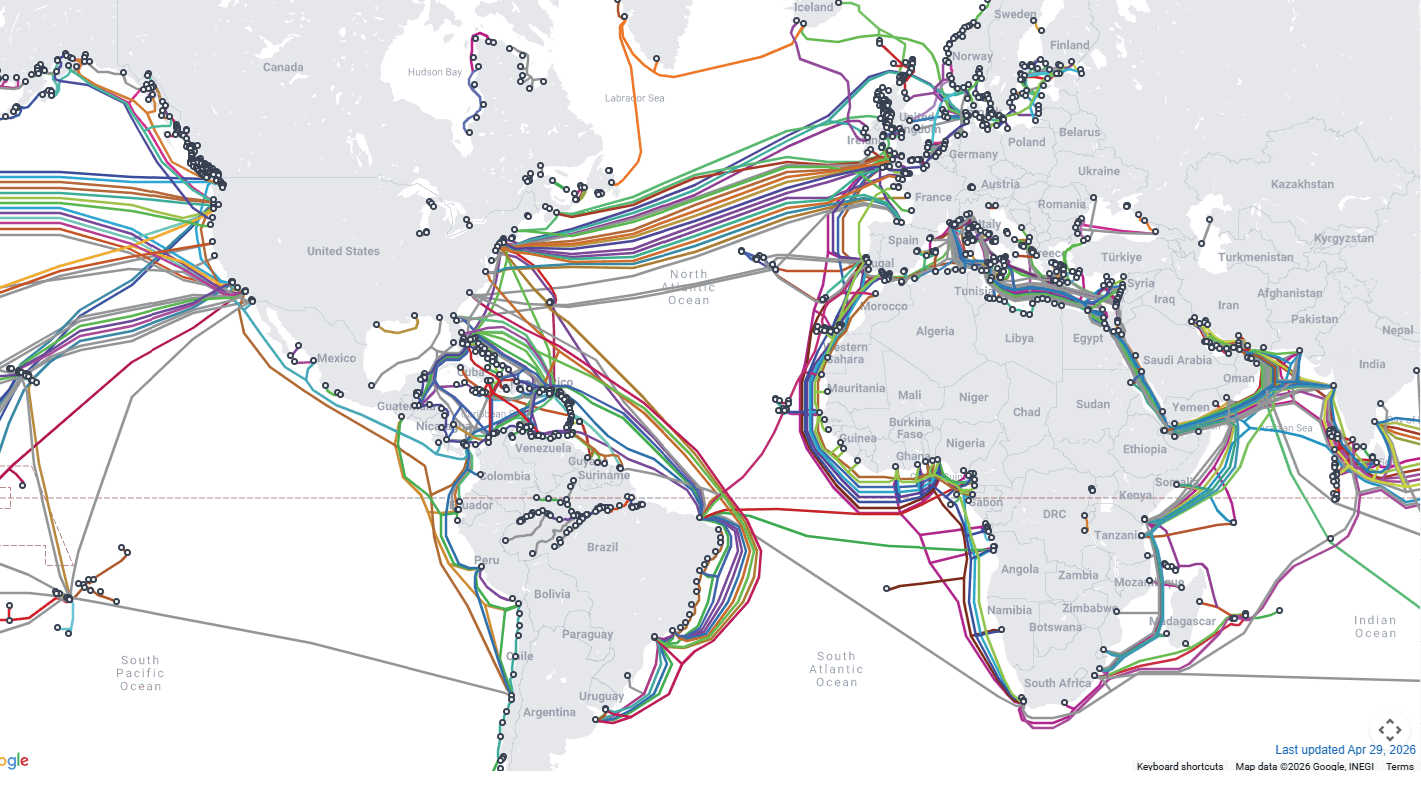
Data is the new oil, apparently. Or maybe it’s the new water? The tech PR machine never sleeps, does it? But set aside the breathless pronouncements for a second. Here’s the deal: the folks who keep the actual stuff moving – the ships, the warehouses, the trucks – are starting to sweat about something you can’t even see. Undersea internet cables. Yeah, those things you don’t think about until your Wi-Fi goes out for five minutes. Turns out, they’re now lumped in with the Suez Canal and the Strait of Hormuz in the ‘infrastructure risk’ conversation. Which, if you’ve been covering this beat for two decades like yours truly, is a pretty seismic shift.
Chokepoints Get Deeper
For most of modern logistics, a ‘chokepoint’ was a physical bottleneck. Think Strait of Hormuz, Panama Canal, a jammed port. The places where physical stuff grinds to a halt. Now, we’ve got to widen that definition. It seems our global trade depends just as much on the invisible flow of data as it does on physical routes. Beneath the waves, fiber-optic cables are the unsung heroes (or villains, depending on your perspective) carrying everything from financial transactions to customs paperwork, to the real-time updates that keep cargo containers from becoming perfectly immobile art installations.
So when Iranian-linked media starts rattling sabers about fees and control over cables in the Strait of Hormuz – a spot already infamous for oil tanker traffic – it’s not just geopolitical noise. It’s a flashing neon sign that the digital layer of supply chains is no longer a silent partner; it’s now a potential pressure point. Nobody’s saying a disruption is imminent, but it’s certainly forcing supply chain leaders to re-evaluate what ‘infrastructure’ even means.
It’s no longer just physical. It’s physical, financial, digital, and computational, all tangled up together. And if you ask me, that’s a whole lot more complicated.
The Invisible Engine of Trade
Modern supply chains are basically high-speed data operations. A container doesn’t just move; it’s accompanied by a digital ghost: booking data, customs forms, bills of lading, port notifications, bank payments, purchase orders, warehouse directives, customer pings. Forget a ship getting stuck; if the data stream gets choked, the whole operation can seize up. Visibility evaporates. Customs slow to a crawl. Payments falter. Cloud services, the backbone of so much planning and execution, become unreliable. Suddenly, those undersea cables aren’t just telecom accessories; they’re as vital as the ports and the ships themselves.
The significance is that undersea cables are being discussed in the same strategic vocabulary historically applied to oil tankers, naval transit, and regional trade.
This isn’t just about keeping the internet up. This is about the core functionality of global commerce. The sheer volume of data flowing through these cables is staggering, supporting everything from the smallest e-commerce transaction to the largest industrial manufacturing coordination. Their vulnerability, therefore, becomes a systemic risk.
Hormuz: A Digital Pressure Cooker?
The Strait of Hormuz is already a major energy artery. Now, add data cables to the mix. The fact that these digital routes overlap so neatly with traditional energy and maritime chokepoints is what’s making everyone sit up and take notice. It’s not about whether some government will actually implement a new cable tax; it’s that the conversation itself has shifted. Digital infrastructure is now on the geopolitical bargaining table, right alongside oil tankers and naval fleets.
A country doesn’t need to block a ship to disrupt trade anymore. They can mess with energy flows, interfere with port systems, disrupt payment networks, target cloud servers, or just apply legal and operational pressure on communications infrastructure. The end result? More uncertainty, higher costs, slower movement, and a general erosion of confidence in the predictability of trade. And given how much modern supply chains depend on instant information – those visibility platforms, TMS systems, supplier portals – this assumption of data availability is looking increasingly fragile.
Why Supply Chain Execs Should Care (Beyond the Buzzwords)
Most supply chain risk management plans still look like they were written in the 1990s: supplier defaults, port congestion, weather events, labor strikes, cyberattacks. All valid, of course. But they’re missing a huge piece of the puzzle. They don’t account for the deep, interconnected dependencies on infrastructure that we’ve built.
Think about it. We’ve got:
- Physical infrastructure: Ports, roads, rails, warehouses, canals, ships, trucks. The bones and muscles.
- Energy infrastructure: Fuel, electricity, LNG. The power grid.
- Digital communications infrastructure: Undersea cables, terrestrial fiber, satellites. The nervous system.
- Computational infrastructure: Cloud platforms, data centers. The brain.
When a geopolitical actor starts talking about control over undersea cables in a strategically vital strait, they’re not just threatening telecommunications. They’re threatening the nervous system of the entire operation. It’s the digital equivalent of cutting off the power grid or blocking a major canal, and the ripple effects through global commerce could be devastating. The old risk models are no longer sufficient for this multi-layered, interconnected reality. We need to think of undersea cables as core supply chain infrastructure, not just a background utility.
A New Kind of Vulnerability
This isn’t about a single cable break from an errant anchor – those happen, and resilience is built-in. This is about state-level or state-sponsored actors weaponizing digital pathways. The idea of a digital chokepoint in a place like the Strait of Hormuz, affecting not just physical transit but also the data streams powering global finance and logistics, is frankly terrifying. It’s a potent reminder that the digital realm, while invisible, is profoundly physical and, therefore, vulnerable.
The Money Question
Who stands to make a buck here? Well, the obvious players are the telecom companies laying and maintaining these cables – they’ll be in high demand. Governments that can exert influence or control will see strategic advantages. And, of course, consultants. There’s always a fresh consulting opportunity when a new risk emerges. For the rest of us, the cost of doing business will likely go up as companies factor in this new layer of digital risk into their supply chain strategies, potentially leading to higher prices for goods. It’s another way the digital world finds its way to your wallet.
🧬 Related Insights
- Read more: AI’s Supply Chain Power Plot Twist: It’s All About the Data Glue
- Read more: IMC Logistics Bets Big on Kuehne+Nagel CFO Import
Frequently Asked Questions
Will undersea cable disruptions halt global trade?
Complete, widespread, and prolonged disruption is unlikely. Undersea cable networks are designed with redundancy, and multiple cables serve most major routes. However, targeted disruptions or geopolitical maneuvering could cause significant delays, increase costs, and introduce uncertainty into specific trade lanes or sectors that rely heavily on those specific data routes.
What is the risk of China or Russia controlling undersea cables?
This is a concern that security analysts have raised. Nations with advanced maritime capabilities could potentially influence or physically control undersea cable landing points or routes. However, direct, overt control that halts global data flow is extremely complex and risky due to international law and the distributed nature of cable ownership. More subtle forms of influence or intelligence gathering are considered more plausible threats.
How can companies protect their supply chains from undersea cable risks?
Companies should diversify their digital infrastructure providers and communication routes where possible. Understanding the physical locations of critical data landing points and data centers is also important. Most importantly, integrating digital infrastructure risk into existing supply chain risk management frameworks, alongside physical and financial risks, is a necessary step. This might involve investing in more resilient cloud architectures or exploring alternative data transmission methods.