AI is here.
No, really. It’s not just a pilot project humming away in a corner of the R&D department. It’s out there, doing the heavy lifting, changing how the real world actually works. And what’s the biggest bottleneck, the great white whale holding back this tidal wave of intelligent automation? It’s not the AI models themselves, oh no. It’s the tangled mess of our enterprise systems, our logistics partners’ ancient databases, the scattered data layers, and the workflow spaghetti that just can’t talk to each other in real time. It’s the interop problem, reimagined.
Think about it. For ages, supply chain interoperability was just another IT headache. Could the TMS jab a data packet over to the WMS? Could the ERP grunt out an order to a supplier’s clunky portal? Could a carrier actually transmit, you know, useful updates instead of just a digital shrug via EDI? These are still valid questions, sure. But they’re like asking if your horse-drawn carriage has adequate ventilation for a cross-country trip. Cute, but missing the point.
Because the next wave? It’s all about AI-driven execution, watching the globe’s logistics pulse in real time, letting the machines handle exceptions with a calm, digital detachment, and orchestrating decisions across entire enterprises like a symphony conductor. In this new concert hall, interoperability isn’t just about one system nudging data at another. It’s about whether the entire darn supply chain can become a coherent, intelligent network of decisions. This distinction? It’s everything. You can have all the slick cloud platforms, all the shiny visibility tools, all the AI pilots you want – but if your data is siloed, your interfaces are fragile, your master data is a hot mess, and handoffs are slower than molasses in January, you’re still stuck. The result? More alerts, prettier dashboards, more dazzling analytics… and precious little improvement in how fast or how well things actually get done. AI, you see, doesn’t magically fix this. More often than not, it shines a blinding spotlight right on the cracks.
From Integration to Orchestration
We’ve been building pipes for decades. EDI, middleware, APIs, integration platforms – the goal was always to get data from point A to point B. And look, that was necessary. It built the electrical wiring of our digital supply chains. But wires carrying electricity aren’t the same as a sophisticated neural network firing with purpose. Connectivity is the plumbing; interoperability is the intelligent water purification and distribution system that actually delivers clean, usable water where and when it’s needed.
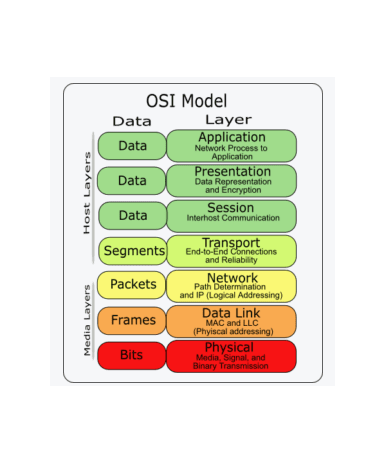
A shipment update that shows up six hours late? Connected, absolutely. Useful for managing a dynamic exception? Not so much. A carrier message missing standard location or timestamp data? Technically transmitted, sure. But can it reliably trigger an autonomous decision? Doubtful. This is why interoperability has ascended from a technical requirement to a strategic imperative. We need systems that don’t just pass messages along, but that preserve the meaning and context of that data as it leaps across platforms, partners, and decision layers. The old OSI model analogy, while useful for framing layers of complexity, now feels a bit like using a sextant when you’ve got GPS. The market is way past asking if systems can talk, and is now laser-focused on if they can enable AI-driven execution.
Consider a simple transportation delay. It’s not just a transport problem anymore. It’s an inventory problem, a production scheduling nightmare, a labor planning headache, a customer commitment breach, and a financial quagmire, all rolled into one. If the domains can’t interoperate, the organization sees fragments. Transportation sees a late truck. Inventory sees a potential stockout. Customer service sees a looming SLA violation. Finance might not even catch the ripple effect for days. The core issue isn’t just fragmented data; it’s the inability to reason across those disparate data points with the speed and agility that AI demands.
A shipment update that arrives six hours late may be connected, but it is not very useful for dynamic exception management.
The OSI Model: Still a Useful Analogy (Sort Of)
The seven-layer OSI model, bless its networking heart, still offers a nifty metaphor for this layered complexity. It reminds us that failure at a foundational layer — like the physical layer where your sensors and robots reside — can cripple everything above it.
At the physical layer, we’re talking about the actual assets: the trucks, the ships, the warehouses, the sensors spitting out data. If those signals are weak or unreliable, your digital world starts with a foggy view.
Then there’s the local communication layer: the RFID scanners inside the warehouse, the machine controls on the factory floor, the IoT devices humming away. If they can’t play nicely with each other within a facility, local execution devolves into chaos.
The network layer? This is where the grand interconnectedness happens – suppliers, manufacturers, carriers, customs agents, customers, all trying to exchange information. APIs, EDI, event streams, digital networks… this is the plumbing that enables the conversation.
But it’s the higher layers – transport, session, presentation, and application – where the magic (and the pain) truly lies for AI. This is where reliability and coordination kick in. Did the message actually arrive? Was it complete? Can the receiving system understand it in the right context?
The AI Imperative
AI doesn’t just need interoperability; it forces it. Imagine an AI trying to optimize inventory levels. It needs real-time demand signals, production status, transit times for incoming goods, and even external factors like weather or geopolitical events. If these data streams are locked in separate, non-communicating systems, the AI is flying blind, making educated guesses instead of informed decisions. This isn’t just an inconvenience; it’s a fundamental constraint on the power and utility of AI in the supply chain. We’re moving from a world of visibility (seeing what happened) to one of prescriptivity (knowing what to do next), and that leap requires data that flows, connects, and makes sense across the entire ecosystem.
The companies that will thrive in this AI-enabled future are those that see interoperability not as a technical chore, but as the very foundation upon which intelligent, autonomous supply chains will be built. It’s the bedrock. It’s the nervous system. It’s the collective intelligence that allows the whole organism to react, adapt, and excel. The future isn’t just connected; it’s conscious. And that consciousness requires data that can truly interoperate.
🧬 Related Insights
- Read more: Iran War’s Fuel Surge and Hormuz Chaos Spike Freight Costs 50%
- Read more: Humanoid Robots in Warehousing: 1.5% Efficiency Gain Spotted?
Frequently Asked Questions
What is supply chain interoperability? Supply chain interoperability is the ability of different systems, platforms, and partners within a supply chain to exchange data and function together in a coordinated and meaningful way, enabling real-time decision-making and execution.
How does AI change the need for interoperability? AI requires a higher degree of interoperability than traditional systems. It needs data to be timely, accurate, contextual, and accessible across multiple sources to enable intelligent analysis, prediction, and autonomous decision-making.
Is EDI still relevant in an AI-powered supply chain? While EDI can still serve as a connectivity method, its limitations in real-time data exchange and contextual meaning make it less ideal for AI-driven operations compared to modern API-based solutions and digital networks.