Skies Above Healthcare
Matternet, the drone delivery outfit with a penchant for the critical path of supply chains, has officially touched down in the UK, and they’re not messing around. Starting operations in Central London for the National Health Service (NHS) isn’t just another route; it’s a declaration of intent. This move signals a profound shift in how we envision the backbone of urban healthcare logistics, moving from congested streets to aerial superhighways.
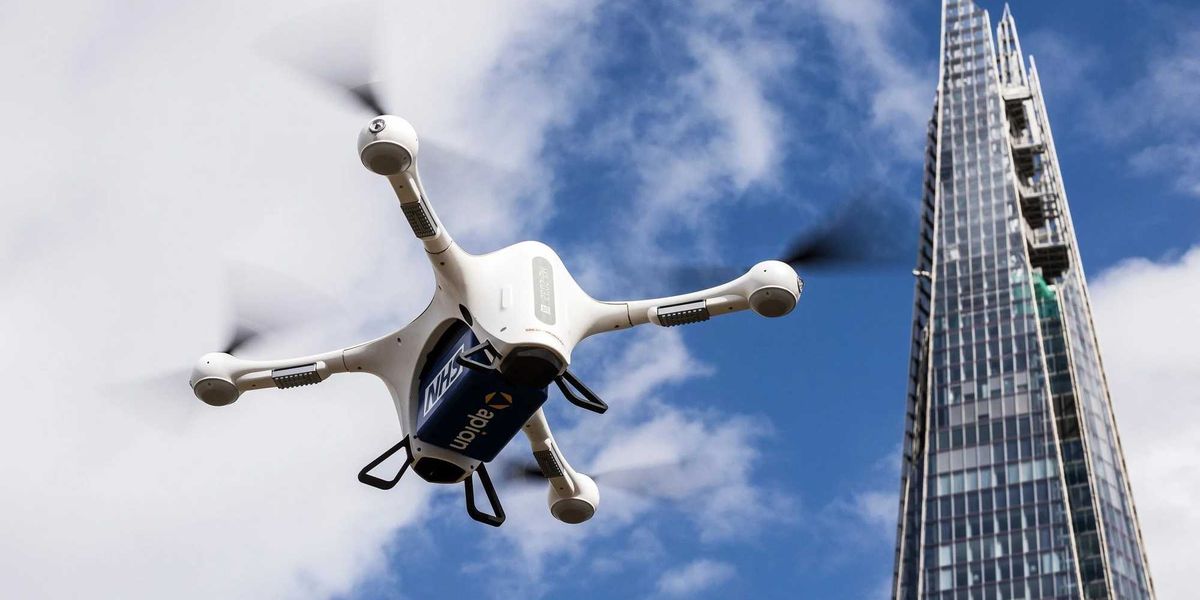
The core of Matternet’s play here is its M2 drone system, a workhorse designed for the urban jungle. It’s now linking two of London’s most trafficked hospital campuses, weaving bi-directional aerial pathways for everything from diagnostic samples and lab specimens to pharmaceuticals. This isn’t about pizza delivery; it’s about shaving precious minutes off critical transit times, minutes that can mean the difference between a patient receiving timely treatment or a lab getting a viable sample. The California-based company claims this approach slashes delays, streamlines hospital workflows, and shores up the resilience of healthcare logistics in one of the world’s most notoriously complex urban sprawls.
“Matternet brings proven, world-class urban drone delivery capability to our platform at an important moment for the NHS,” Alexander Trewby, Co-Founder and CEO of Apian, said in a release. “Together, we are building a new infrastructure layer for healthcare, where autonomous systems move critical items smoothly between sites. In doing so, we are laying the foundations for physical AI to operate at scale in the real world, starting with the NHS.”
The partnership with Apian, a local player focused on autonomous infrastructure for healthcare, is key. It’s not just about the hardware; it’s about the integration. Matternet’s established experience from pioneering medical drone delivery in Switzerland and the U.S. is now being overlaid onto the formidable — and perhaps sometimes bureaucratic — engine of the NHS. This is where the rubber meets the… well, the propeller. The promise: faster, more reliable delivery with a smaller carbon footprint than the typical delivery van battling rush hour traffic.
The Architecture of Urgency
What’s really fascinating here is the underlying architectural shift Matternet and Apian are facilitating. They aren’t just adding a new delivery method; they’re building an entirely new network layer. Think of it less as a courier service and more as a distributed, on-demand logistics fabric woven directly into the hospital ecosystem. This is the kind of infrastructure that, when it works, feels invisible until it’s suddenly indispensable. It’s about moving away from the linear, point-to-point model of traditional logistics and towards a more meshed, responsive system.
The implications for what Apian’s CEO calls “physical AI” are profound. This isn’t about algorithms predicting demand from a server farm; it’s about autonomous physical assets responding to real-time needs in the physical world. The M2 drones, flying predefined but dynamically managed routes, are the tangible manifestation of that. They’re the hands and feet of a system that aims to be both smarter and faster.
And this is just the beginning. Matternet and Apian envision expanding this network to encompass more hospital campuses, a wider array of payload types, and an even broader spectrum of healthcare use cases across the entirety of London. The goal, stated plainly, is to create an autonomous logistics backbone for healthcare. If successful, this could serve as a blueprint for other major urban centers grappling with the same logistical nightmares.
A Skeptic’s Viewpoint: The Real Hurdles Ahead
While the press releases paint a picture of a smooth, almost effortless integration, one can’t help but feel a twinge of skepticism. London’s airspace is notoriously complex, and the regulatory hurdles for widespread drone operations, even for critical services, are immense. Matternet’s M2 system, while proven elsewhere, has to contend with the unique challenges of dense urban environments, unpredictable weather patterns, and the sheer volume of other aerial activities. The ‘proven capability’ touted by the company is one thing; consistent, scaled operation in one of the world’s most challenging airspaces is another entirely.
Furthermore, the integration into existing hospital workflows isn’t just a technical challenge; it’s a human one. Training staff, ensuring security for sensitive medical payloads, and maintaining the relentless operational tempo required by healthcare facilities will be a significant undertaking. The promise of lower emissions is welcome, but the energy demands of charging fleets of drones, maintaining sophisticated command-and-control systems, and the lifecycle impact of the hardware itself will need careful scrutiny as this scales. This isn’t just about flying; it’s about a whole new ecosystem of operations and maintenance that needs to prove its mettle.
Looking Beyond the Drone
This move by Matternet isn’t just about drones flying over London. It’s about the redefinition of infrastructure. It’s about the potential for AI to manifest not just in software, but in autonomous physical systems that reshape how essential services operate. If Matternet and Apian can successfully navigate the complexities of London’s skies and healthcare systems, they won’t just be delivering medical supplies; they’ll be delivering a new paradigm for urban logistics, one that’s faster, greener, and built for the demands of tomorrow. It’s a bold play, one that, if executed flawlessly, could truly set a new standard.
🧬 Related Insights
- Read more: Space Isn’t Sci-Fi Anymore—It’s Your Supply Chain’s Hidden Backbone (and Risk)
- Read more: Autonomous Vehicles in Logistics: Self-Driving Trucks, Drones, and Robots
Frequently Asked Questions
What medical items can Matternet drones deliver? Matternet drones are designed to transport time-sensitive payloads, including diagnostic samples, laboratory specimens, and pharmaceuticals, among other critical medical items.
Will Matternet’s drones replace human delivery drivers in London? The current implementation focuses on critical medical items between hospital campuses, aiming to augment existing logistics rather than replace human delivery networks entirely. Its primary benefit is speed and efficiency for time-sensitive materials.
How safe are drone deliveries in a busy city like London? Matternet emphasizes its M2 system’s proven urban delivery capability and works in coordination with regulatory bodies. Safety protocols for drone operations in complex airspace, including conflict detection and avoidance, are paramount.