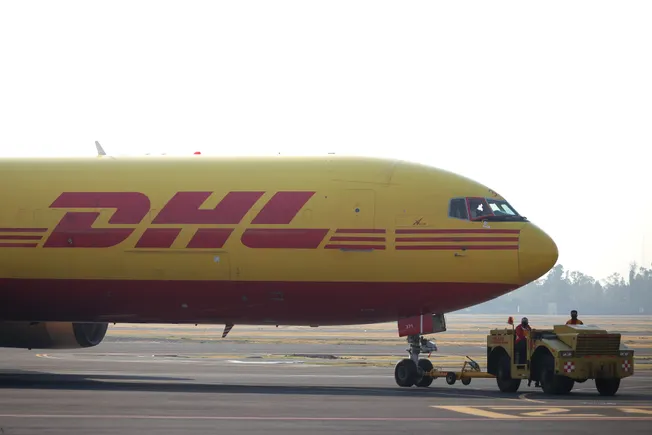
It’s happening. Right now. Planes that should be flying, can’t. Not fully, anyway. DHL Group CEO Tobias Meyer dropped this bombshell on a Q1 earnings call, painting a stark picture: the Iran war isn’t just a geopolitical headline; it’s tightening the screws on jet fuel supply in Asia, and it’s starting to ground operations in ways we haven’t seen before.
Look, we’re talking about a fundamental platform shift here, not just a blip on the radar. AI, for all its digital wizardry, is showing us the fragile, interconnected web of our physical world. When conflict erupts halfway across the globe, its ripples are felt not just in stock markets, but in the very fuel that keeps our global supply chains humming. Meyer was clear: at DHL’s own sprawling hubs, like Leipzig in Germany, they have a stranglehold on fuel availability. They know they can get the juice for their jets. But out in Asia? That’s a different story. Here, DHL is a passenger, relying on the whims of local suppliers, and sometimes, those suppliers just don’t have the goods.
And when they don’t have the goods? Flights get clipped. Meyer admitted to a few situations where fuel simply wasn’t available for additional flights. Regional hops might get enough to make it back, but those critical, intercontinental journeys? Forget it. The planes just don’t have the legs.
The Strait of Hormuz: A Chokepoint for the 21st Century
This isn’t some abstract problem. The Strait of Hormuz, a critical artery for oil transport, is being squeezed by the ongoing conflict. Think of it like a microscopic bottleneck in a giant pipeline. In 2025, a staggering 34% of all crude oil trade flowed through this narrow waterway, with a massive chunk of that destined for Asia. When that flow is disrupted, the entire system feels it. Prices spike, supply dwindles, and suddenly, the fuel that powers our global economy becomes a precious, hard-to-find commodity.
This is where the hype around AI often clashes with the messy reality of our physical world. We talk about algorithms optimizing routes and predicting demand with incredible precision, but what happens when the trucks can’t get gas? Or in this case, when the planes can’t get jet fuel?
“We had a couple of situations where that was the case.”
That’s the kind of understated, almost casual admission from a CEO that sends a shiver down your spine. It signifies a problem that’s not theoretical; it’s operational. Airlines are already scrambling. The International Air Transport Association (IATA) is warning of cancellations in Asia and potentially Europe by month’s end. It’s a domino effect, and we’re only seeing the first few tiles topple.
DHL, in its own PR-speak, is “closely monitoring developments and actively managing fuel supply risks.” They’ve “secured jet fuel uplift at major locations.” Good for them. But Meyer’s veiled reference to “the more bespoke locations” where challenges are mounting hints at a far wider, less controlled situation.
Is this just an airline problem? Or is AI the answer?
The CEO’s comment about a potential shortfall of 10 to 12 million barrels of crude daily is the real kicker. He’s basically saying the system is teetering. And when a system teeters, something has to give. Higher prices are the immediate, obvious consequence. Fuel gets hoarded, sent where the demand is hottest and the wallets are deepest. For carriers like DHL, the immediate sting is softened by passing those costs onto shippers. It’s the classic game of economic hot potato.
But here’s the truly fascinating part, the bit that gets me thinking about AI’s potential beyond predictive analytics: the inelasticity of the industrial value chain. For most businesses, short-term price hikes are just a cost of doing business. They can absorb it, adjust their pricing, and keep the gears turning. It’s the price-sensitive consumer goods that will feel the pinch first. However, what if AI could offer more than just price adjustments? What if it could actively reroute supply chains, not just around traffic jams, but around geopolitical fault lines? What if it could predict these fuel shortages with enough lead time to preposition supply, or even suggest alternative transport methods that are less reliant on volatile fuel markets?
This is the future I believe in. Not just AI that makes existing processes faster, but AI that fundamentally rewrites the rules of engagement. The current jet fuel crisis isn’t a failure of AI; it’s a stark reminder of the physical constraints our digital dreams operate within. It’s a call to action to build AI-powered systems that are not only intelligent but also resilient, capable of navigating the unpredictable currents of global events.
Meyer also noted that while short-term price spikes aren’t a major customer concern yet, higher prices will eventually impact demand. It’s a delicate dance, and the music is starting to play a more ominous tune.
🧬 Related Insights
- Read more: Cargo Thieves Target High-Value Goods: Fewer Heists, Bigger Scores
- Read more: Trump’s NATO Fury: Poisoning the Alliance That Secures Global Supply Lines
Frequently Asked Questions
What does DHL CEO mean by jet fuel supply constraints in Asia? DHL’s CEO is indicating that in certain locations in Asia, there are difficulties in obtaining sufficient jet fuel for airline operations, impacting their ability to refuel planes for all types of flights, especially long-haul intercontinental ones.
How is the Iran war affecting jet fuel supply? The conflict in the Middle East has disrupted oil transport through the Strait of Hormuz, a key global oil chokepoint. This disruption strains global crude oil supplies, leading to higher prices and reduced availability of refined products like jet fuel, particularly impacting regions heavily reliant on these imports, like Asia.
Will this lead to flight cancellations and higher shipping costs? Yes, the lack of available jet fuel is already causing flight cancellations in some parts of Asia, and there’s a risk of them spreading to Europe. These supply issues, coupled with higher fuel prices, are expected to lead to increased shipping costs passed on to customers.