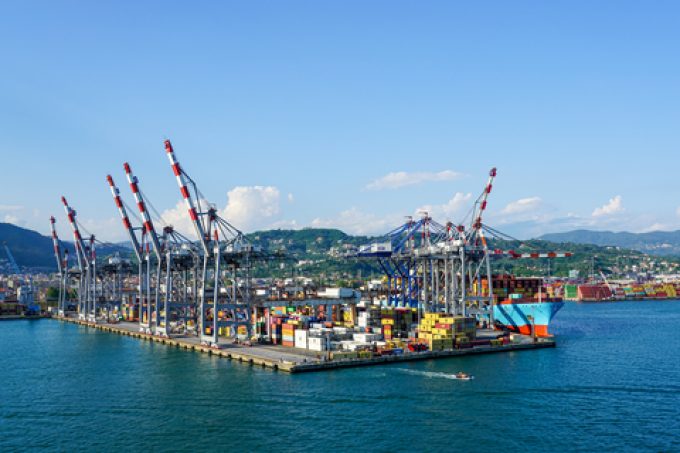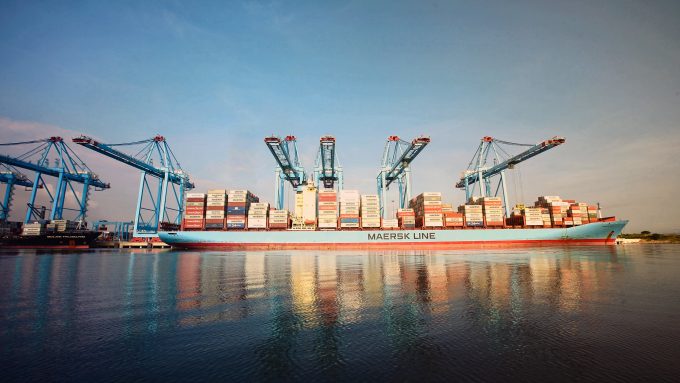
Data breaches and cyberattacks may be the headline grabbers, but down in the trenches of global trade, it’s often something far more prosaic – and maddening – that truly grinds operations to a halt. For Mexico’s Lazaro Cardenas port, the ambition is clear: become a premier Pacific hub, a gateway connecting Asia with the Americas. Over $734 million is earmarked for expansion, with APM Terminals and Hutchison Ports funneling hundreds of millions into bigger quays, advanced tech, and digitization. Maersk itself sees Lazaro Cardenas as a linchpin, a crucial node for regional distribution and East Coast US connections.
But here’s the thing: all this investment, all this strategic vision, is being choked by red tape. Specifically, customs clearance. Operators are reporting containers languishing for up to 30 days. That’s not a hiccup; that’s a full-blown operational paralysis, turning a supposed state-of-the-art facility into a glorified parking lot for cargo.
The Bureaucratic Black Hole
It’s not a secret. The 14th Business Meeting of the Lazaro Cardenas Port Community became an open forum for frustration. The issue isn’t the inspections themselves; it’s the glacial pace and the utter lack of transparency. “How much longer do I have to wait?” is apparently the million-dollar question nobody can answer. And while you’re waiting, the meter’s running. Storage fees kick in after 15 days, adding insult to injury and financial injury on top of missed shipping schedules.
Maersk, a company not known for mincing words when its bottom line is threatened, has been particularly vocal. They’ve warned that these chronic delays are a direct impediment to their hub ambitions. When a carrier of Maersk’s stature sounds the alarm, you don’t just file it away; you pay attention. The port administration acknowledges the problem, nodding that federal customs operations need a serious upgrade – including extending hours closer to 24/7. But acknowledging a problem and fixing it are, as we know, two very different things.
This isn’t a new grievance. Back in September, truckers staged a blockade, protesting wait times that stretched beyond 36 hours. Their complaints were amplified by dismal waiting infrastructure – or rather, the lack thereof. Toilets and food vendors were apparently a luxury beyond their reach. And at the heart of their misery? Customs delays. It’s a potent symbol: massive infrastructure investment undermined by basic procedural inefficiencies.
A National Customs Conundrum
The woes of Lazaro Cardenas aren’t isolated; they’re a symptom of broader national issues with Mexico’s customs regime. The reformed system, implemented on January 1st, has customs brokers up in arms. The new rules heap more responsibility on them and introduce shared liability between brokers and importers. This puts customs in a position to pick and choose whom to sanction for violations – a recipe for inconsistent enforcement and prolonged uncertainty. It’s like giving referees the power to arbitrarily hand out yellow cards based on their mood, not just the rulebook.
Even more bizarrely, Strategic Bonded Enclosures – essentially Mexico’s version of foreign trade zones – are facing a functional stalemate. They’re required to guarantee contributions via customs guarantee accounts or letters of credit, but the financial mechanisms to execute this simply don’t exist. Banks can’t process goods that move in and out of these bonded areas using the prescribed channels. The Association of Strategic Audited Enclosures paints a picture of disconnect: operators, authorities, and the financial sector are all waiting for banks to receive instructions from the authorities on how to even begin solving this mess. It’s a bureaucratic ouroboros, eating its own tail.
Why Does Lazaro Cardenas Matter for Global Trade?
This isn’t just about one port in Mexico. Lazaro Cardenas is positioned as a key node in a reconfigured global supply chain. Its success or failure as a hub has ripple effects. If containers are tied up for weeks due to inefficient customs, shipping lines will look elsewhere. That impacts transit times, costs, and the reliability of the entire network connecting Asian manufacturing to North and South American markets.
My take? The market dynamics are clear: supply chain resilience and speed are paramount. Companies that can deliver goods faster and more reliably win. Lazaro Cardenas has the physical capacity potential, but if it can’t clear cargo efficiently, that potential remains theoretical. This isn’t a complex AI problem or a shortage of chassis; it’s a fundamental breakdown in process and inter-agency coordination. Until Mexico’s federal customs department gets its act together, millions in investment are at risk, and Maersk’s hub ambitions might just remain that – ambitions.
What’s the Real Risk Beyond Delays?
Beyond the direct cost of delays and storage, there’s the intangible but significant risk of reputation. When a port becomes synonymous with inefficiency, cargo will flow elsewhere. This isn’t just about Maersk; it’s about attracting new carriers, new trade lanes, and solidifying Lazaro Cardenas’s place on the global map. The cyberattack on Mexico’s port access platform that was recently revealed highlights another layer of vulnerability, suggesting that operational efficiencies aren’t the only concern. If the foundational systems are insecure, even smooth operations could be jeopardized. It’s a dual threat: operational friction on one side, and potential digital disruption on the other.
This situation at Lazaro Cardenas is a stark reminder that infrastructure is only one part of the equation. The human element – the processes, the regulations, the willingness of government bodies to streamline and adapt – is often the bottleneck. And right now, customs is the bottleneck.