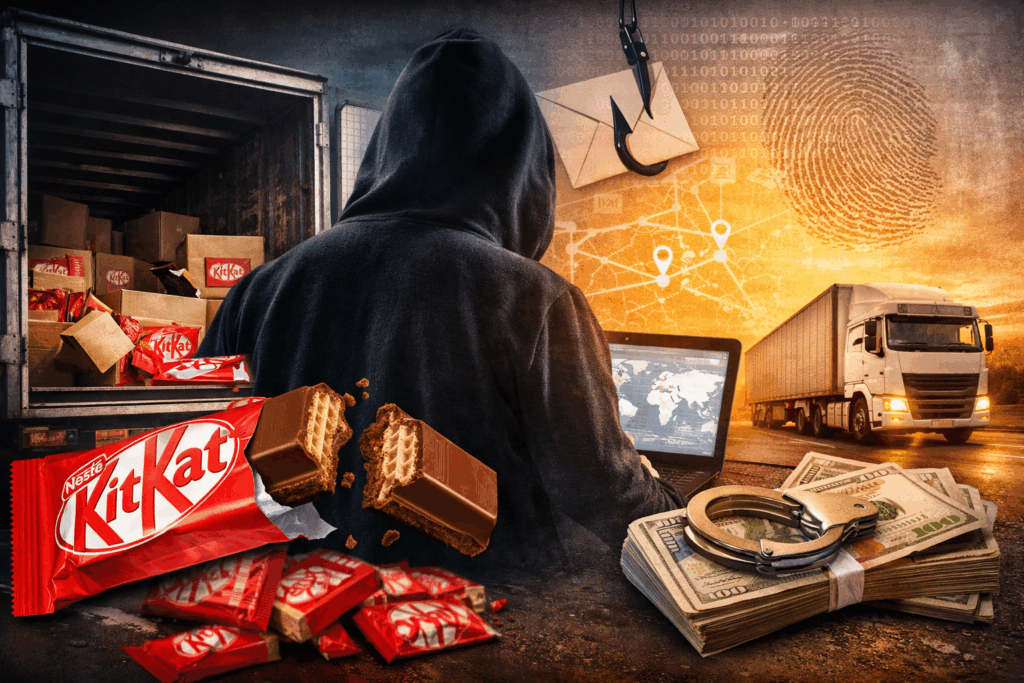
Freight fraud devoured Nestlé’s KitKats.
Twelve tons— that’s 413,793 bars—vanished after leaving an Italian factory bound for Poland. Nestlé’s statement nails it: “Whilst we appreciate the criminals’ exceptional taste, the fact remains that cargo theft is an escalating issue for businesses of all sizes.”
And here’s the thing. This isn’t some mom-and-pop slip-up. Nestlé, a Swiss behemoth with supply chains tighter than a drum, got hit. Market data backs the panic: Transported Asset Protection Association (TAPA) EMEA logged over 108,000 thefts across 110 countries in two years, losses topping €1 billion. That’s €1.3 million daily. Germany alone loses a full truckload every three days.
Look.
Boston saw it too—$400K in lobsters snatched from Lineage Logistics pre-Christmas, headed to Costco. Fraudsters posed as legit truckers, spoofed emails, burner phones. Rexing Companies CEO Dylan Rexing called it: “This theft wasn’t random. It followed a pattern we’re seeing more and more, where criminals impersonate legitimate carriers using spoofed emails and burner phones to hijack high-value freight while it’s in transit.”
Why Did Nestlé’s Defenses Crumble?
Sophisticated players like Nestlé vet carriers, track loads, insure everything. Yet fraudsters evolve faster—AI-generated docs, deepfake calls, hacked broker portals. My take? It’s like the 1920s Prohibition hijackings, but digital. Bootleggers stole booze trucks; now crooks steal chocolate with zero tire tracks. Unique insight: expect 30% fraud spike by 2027 as e-commerce booms, per Descartes forecasts—unless chains embed blockchain verification now. Nestlé’s PR spin—“exceptional taste”—downplays the bleed; losses like this erode margins when resale hits black markets at 60% value.
Data doesn’t lie. U.S. freight fraud jumped 20% YoY, per FreightWatch. Europe? TAPA’s numbers scream systemic rot.
But wait—it’s global. KitKats from Italy to Poland. Lobsters from Taunton to Midwest. No borders stop these ghosts.
Is Freight Fraud Poised to Cripple 2026 Supply Chains?
Absolutely, if unchecked. Carriers report 15% of loads double-booked by fakes. Shippers lose $15B annually worldwide—think Nestlé’s hit at $500K+ resale. Sharp position: outdated “trust then verify” is suicide. Flip it. Verify upfront.
Practical fixes? Start here.
Vetting isn’t a checkbox. Cross-check FMCSA authority, insurance, equipment photos—real-time. Fraudsters slip on details like mismatched DOT numbers.
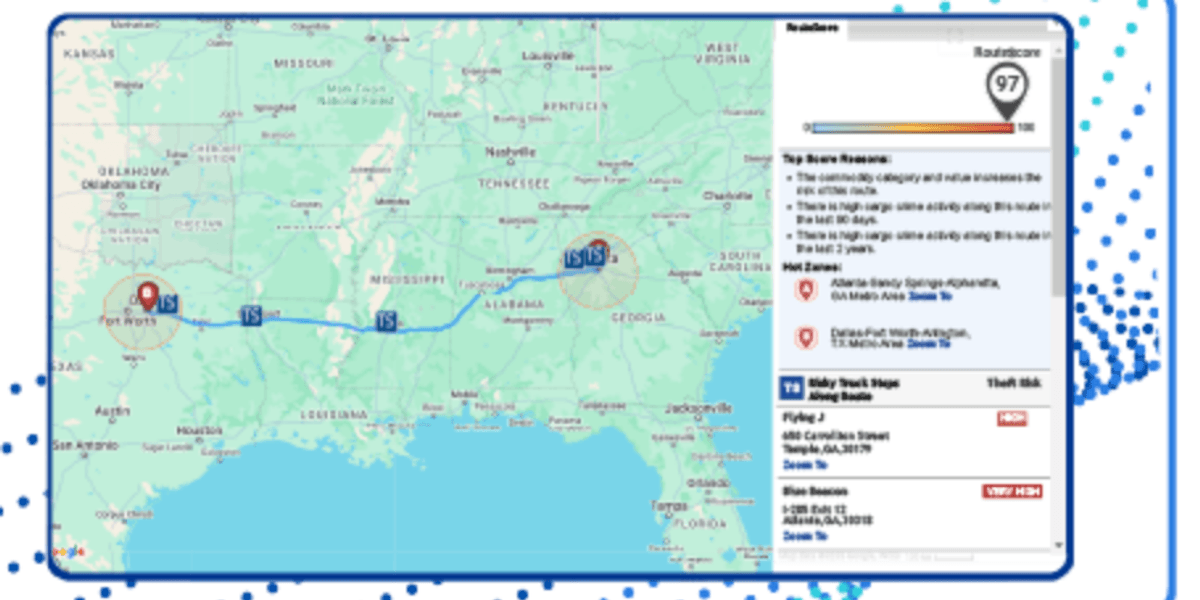
Real-time tracking with geofencing. Anomalies—like a KitKat truck detouring to Bucharest—trigger alerts. Tools from FourKites or Project44 flag 80% of risks pre-loss.
Risk-score carriers. Not just “can they haul?” but “will they ghost?” Algorithms weigh history, reviews, even social signals.
Train humans. Red flags: urgency pleas, email typos, unverified POIs. One paused lobster load? Saved.
Nestlé proves size doesn’t shield. Small ops bleed worse—cash flow killers.
And the lobster parallel? High-value perishables prime targets. KitKats? Resale gold—street value soars in gray markets.
How Can Shippers Lock Down Loads Today?
Shift paradigms. Ditch phone tags for portal tenders—auditable trails. Blockchain pilots (Maersk-IBM style) cut impersonation 90%.
Prediction: 2026 sees mandatory EU freight ID chips, post-TAPA pressure. U.S.? TIA pushes federal carrier registry. Ignore? Your KitKats—or widgets—next.
Corporate hype calls it “isolated.” Bull. It’s epidemic. Processes lag crooks; tech closes gaps.
One-paragraph warning: Invest now, or watch margins melt like chocolate in a hot truck.
We’ve covered this—freight fraud booms, countermeasures boom too. Markets for anti-fraud tech? $2B by 2028, CAGR 15%.
**
🧬 Related Insights
- Read more: El Niño Stalks Panama Canal Again as Middle East Air Freight Sits Out Ceasefire Hype
- Read more: GOP Slams Door on Iran War Powers as Oil Chokepoints Loom
Frequently Asked Questions**
What causes most freight fraud?
Impersonation—90% of cases. Fakes pose as carriers via spoofed emails, snag loads at origin.
How much does freight fraud cost yearly?
Over $15B globally, with EMEA at €1B+ in two years alone.
Can small shippers prevent KitKat-style thefts?
Yes—vet rigorously, use visibility tech, train staff. No need for Nestlé budgets.