Just how much patience do we have for ambitious industrial projects when market conditions get even a little bit choppy?
The question looms large over the Amplify Cell battery manufacturing joint venture in Mississippi, a project now reeling from further delays that are forcing shareholders to take significant financial hits. Daimler Truck, one of the key players alongside Paccar and Cummins’ Accelera, announced it’s taking a hefty 200 million euro ($235 million) impairment charge directly tied to these production holdups. It’s a stark reminder that even the most technologically advanced supply chain plays are subject to the harsh realities of fluctuating demand and economic headwinds.
The Shifting Sands of EV Demand
What’s driving this slowdown? According to Daimler Truck CEO Karin Radstrom, it’s a straightforward case of weaker-than-expected market conditions for battery and fuel cell electric commercial vehicles in North America. The partners are essentially deferring the installation of manufacturing capacity, opting to maintain flexibility rather than push ahead into a market that’s proving less receptive than anticipated. Limited construction will continue, of course, a nod to the long-term strategic importance of battery production, but the immediate push for full-scale output has been shelved.
This isn’t the first hiccup for Amplify Cell. The facility’s original start of production had already been nudged from 2027 to 2028. This earlier adjustment, revealed by Paccar in October, occurred despite persistent optimism from the joint venture partners. They had publicly clung to the 2027 timeline, seemingly undeterred by the slower-than-anticipated adoption rates of battery-electric trucks, a cratering of government support for infrastructure, and a broader freight recession squeezing fleet capital expenditures.
Weaker-than-expected conditions in the battery and fuel cell electric commercial vehicle market in North America mean the partners are deferring the installation of manufacturing capacity.
A Daimler Truck North America representative was tight-lipped about whether the start of production had been pushed back even further following this latest announcement. It’s a classic corporate holding pattern – acknowledge the issue, quantify the immediate financial impact, but offer little clarity on the revised roadmap.
A Grand Vision Facing Reality
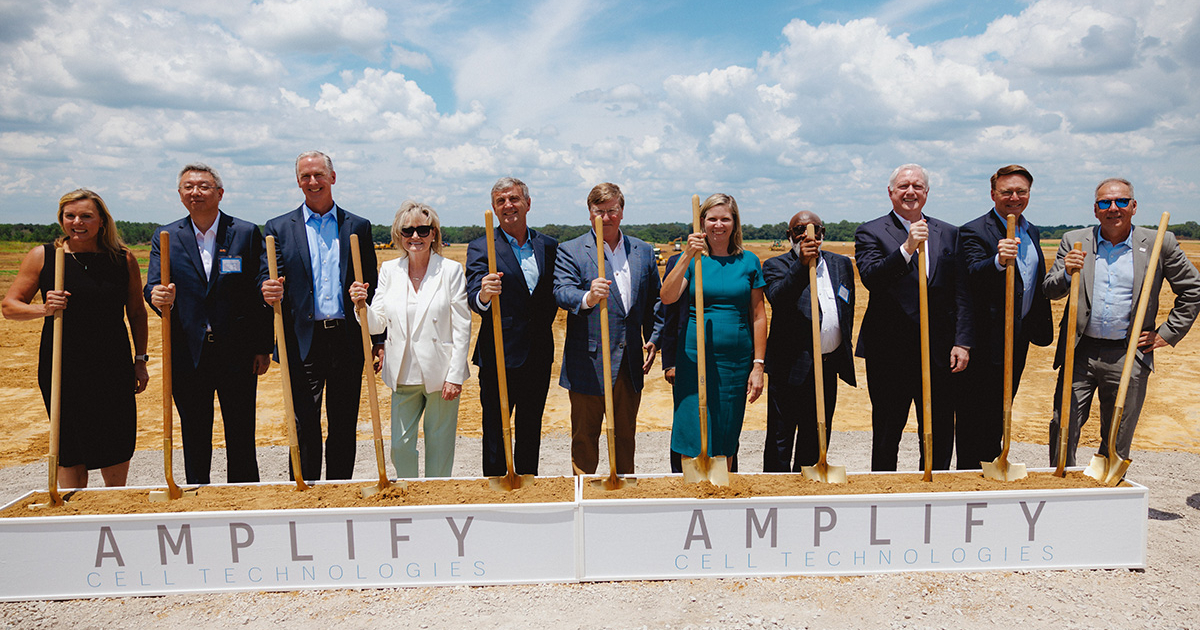
The Amplify Cell project itself was envisioned as a monumental undertaking. The partners had pegged the total construction cost in the $2 billion to $3 billion range. The selection of the Mississippi site in Byhalia was a significant event, beating out 116 other submissions across 24 states. Construction on the 2.6 million-square-foot facility commenced in July 2024. It all sounds impressive, a proof to the industry’s commitment to electrifying the heavy-duty sector. But ambition, as Daimler’s balance sheet now shows, comes with a price tag, especially when the market refuses to cooperate on schedule.
It’s important to remember the context here. The push for electrification in commercial trucking is a multi-year, multi-billion-dollar endeavor. Companies are building out entirely new supply chains, from raw material sourcing to battery cell manufacturing, all while trying to serve existing diesel-powered fleets. The Amplify Cell JV represents a significant capital commitment from three of the biggest names in the trucking industry. Their collective decision to pause capacity installation isn’t a sign of abandonment, but rather a strategic recalibration. Yet, the $235 million charge Daimler is absorbing is a very real, very immediate consequence.
This entire saga offers a fascinating case study in supply chain risk management. The initial plan, announced in September 2023, reflected a forward-looking optimism. The subsequent delays underscore the inherent volatility in forecasting technology adoption and market acceptance, particularly for high-value, capital-intensive assets like electric trucks. The fact that construction is continuing, albeit at a reduced pace, suggests the partners haven’t lost faith in the long-term trajectory of electrification, but they’re clearly adjusting their timelines to align with a more subdued short-to-medium-term outlook. It’s a tough balancing act – investing for the future without jeopardizing the present.
What Does This Mean for the Battery Supply Chain?
For the broader battery supply chain ecosystem, this development is a cautionary tale. It highlights the dependence of upstream manufacturing on downstream demand. The enthusiasm for battery gigafactories in North America, often spurred by government incentives and ambitious corporate targets, needs to be tempered with a realistic assessment of the commercial vehicle market’s ability to absorb new technologies. We’re seeing a similar dynamic play out in the passenger EV market, where production ramp-ups are often ahead of consumer uptake.
The delays at Amplify Cell could signal a more cautious approach from other nascent battery manufacturing ventures. Investors will be scrutinizing business plans more closely, demanding clearer evidence of strong demand signals before committing capital. This doesn’t mean the transition to electric commercial vehicles is dead; far from it. It just means the path will be more circuitous, punctuated by these kinds of strategic pauses and financial adjustments. The question isn’t if electrification will happen, but when and at what pace. Amplify Cell’s current predicament suggests the “when” is looking a bit further down the road than initially hoped.
This situation also brings into focus the strategic importance of diversified market approaches. While North America’s EV truck market is under pressure, other regions might be seeing different adoption curves. Companies with global operations will need to remain agile, shifting investment and production focus as market conditions dictate. The Amplify Cell JV, for now, is a case of North American ambition meeting a temporarily recalcitrant market. We’ll be watching to see if it can weather the storm and emerge as planned, or if further adjustments are inevitable.