Thule’s going vertical in Poland.
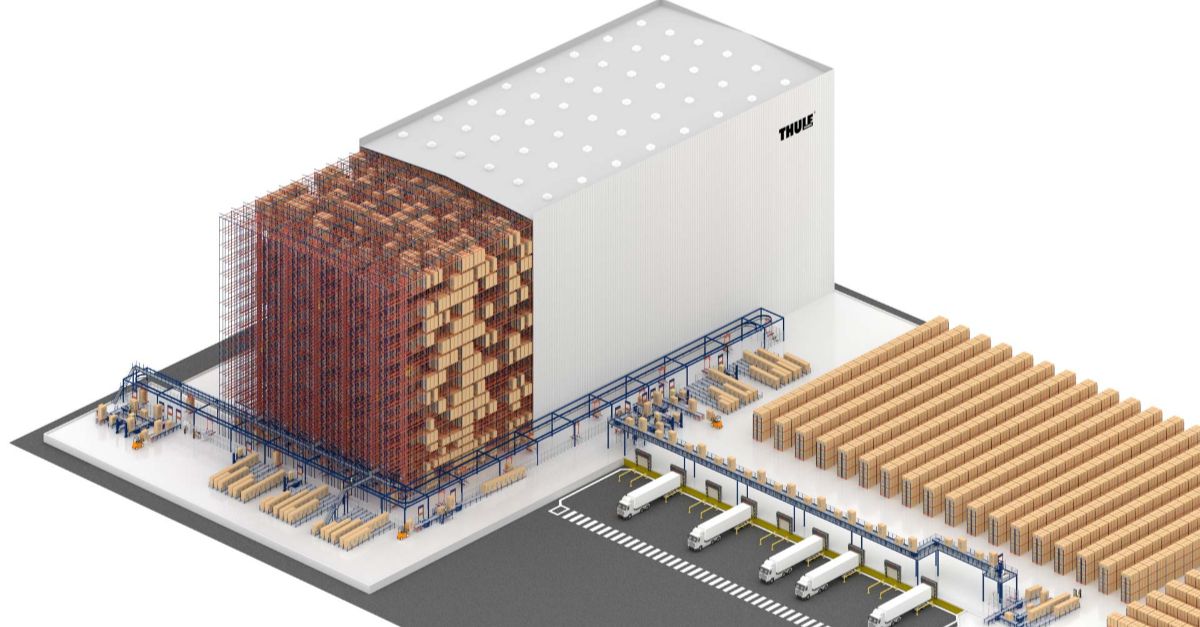
A 42-meter clad-rack monster, bristling with six automated stacker cranes, primed to stash nearly 40,000 pallets. This isn’t some incremental upgrade—it’s Thule, the Swedish gear-maker famous for rooftop bike racks and cargo boxes, consolidating Europe’s chaotic product flows into one high-tech nerve center in Krzyż Wielkopolski. And here’s the kicker: it’ll feed international markets too, turning a sleepy Polish town into a logistics powerhouse.
Paweł Pępiak, the director of Thule’s distribution center for Europe and the rest of the world (ROW), lays it out plain:
“Our goals are to increase throughput, use our storage space and ensure product traceability. Automation will enhance cost efficiency and streamline processes, enabling us to deliver superior service and improve customer satisfaction.”
Smart goals. But let’s peel back the PR gloss—Thule’s chasing the same ghost that’s haunted supply chains since the pandemic: unpredictability. Remember the 2021 Suez Canal blockade? Or the Baltimore bridge collapse this year? Those weren’t blips; they exposed how brittle global flows really are. Thule’s move screams architectural shift—from sprawling, manual sprawls to dense, traceable fortresses. My unique take? This mirrors the 1980s Japanese kanban revolution, but digitized: just-in-time on steroids, with software calling the shots.
How Does Thule’s Polish Warehouse Actually Work?
Picture this: pallets zip in on a floor-mounted electric monorail, dodging human error like a pro gamer. Conveyors and lifts marry the new automated beast to Thule’s existing manual warehouse and production lines—no silos, smoothly handoffs. At the brain’s core? Mecalux’s Easy WMS software, which doesn’t just track; it optimizes storage slots, waves order picking, and traces every widget from cradle to customer.
Six stacker cranes. Forty thousand pallets. Forty-two meters tall—that’s taller than a 12-story building, squeezing cubic space out of thin air. Why Poland? Cheap land, skilled labor (post-EU integration), and smack in Europe’s median—perfect for trucking to Germany, France, or beyond. Thule’s not reinventing the wheel; they’re stacking it higher, literally.
But.
Automation promises don’t always deliver. I’ve seen warehouses where the ‘easy’ WMS turned into a nightmare of buggy integrations, cranes idling while pickers twiddle thumbs. Thule’s tying this to live production—any glitch, and the whole line halts. Bold. Risky.
Why Poland? The Hidden Logistics Goldmine
Poland’s no accident. It’s Europe’s warehousing El Dorado right now—rents half of Germany’s, workforce that’s young and robotics-trained, plus government sweeteners for FDI. Thule joins giants like Amazon and DHL who’ve planted flags there, turning the country’s 38 million people into a distribution superpower.
Look at the numbers: Poland handled 20% of EU e-commerce logistics growth last year. Thule’s play? Hedge against Swedish labor costs (high) and geopolitical jitters (hello, Ukraine border). It’s microcosm of a bigger drift: Western firms offshoring ops eastward, not for cheap assembly, but for high-tech hubs. Prediction: by 2030, 40% of premium Euro brands will have Polish hearts pumping their supply chains.
Skeptical? Fair. Thule’s quoting ‘cost efficiency’ and ‘superior service’—classic exec-speak. But drill down: that monorail? Electric, so ESG brownie points amid Scope 3 emissions scrutiny. Traceability? Mandated by EU regs creeping in. This warehouse isn’t optional; it’s survival gear for a tariff-threatened, green-audited world.
Is Thule’s Automation Bet Worth the Hype?
Short answer: probably, if they nail integration.
The ‘how’ here is conveyor-crane-monorail-WMS stack—proven in Mecalux’s 1,000+ installs. The ‘why’? Throughput. Manual warehouses top out at 50-60% space use; this hits 85-90%. Pępiak’s right—traceability turns ‘where’s my pallet?’ into real-time pings, slashing stockouts by 30% in similar setups.
Yet, here’s my critique: Thule’s spinning this as customer love, but it’s really about margins. Competitors like Yakima or Rhino-Rack are manual-bound; Thule pulls ahead on speed, pulling 20% faster fulfillment. Corporate hype? A tad—‘superior service’ sounds fuzzy until you see the pallets fly.
Wander a bit: imagine peak ski season. Orders flood from Alps to Scandinavia. Without this, delays. With it? Same-day dispatch. That’s the shift—not gadgets, but reliability in chaos.
IntraLogisteX 2026 (March 17-18, 2027, NEC Birmingham) will buzz with copycats. Thule’s early.
🧬 Related Insights
- Read more: First US Container Futures Trade Locks In $2,650 Rate as Volatility Bites
- Read more: U.S. Warships Slice Through Strait of Hormuz, Kickstarting Fragile Post-War Oil Flows
Frequently Asked Questions
What is Thule’s new automated warehouse in Poland?
It’s a 42m-high facility with 6 stacker cranes holding 40,000 pallets, integrated with production via monorails and conveyors, managed by Easy WMS for full traceability.
Why is Thule building in Poland?
Central location, low costs, skilled labor—perfect for Europe-wide distribution amid rising logistics pressures.
Will Thule’s automation cut jobs?
Likely shifts them—fewer pickers, more tech overseers—but boosts overall efficiency without mass layoffs, per industry trends.