This isn’t just another press release about two companies shaking hands. When Tenet Transportation Tech and Crown Data Systems announced their merger, it signaled a quiet consolidation in the freight tech space. What does this mean for the rest of us, those who actually rely on goods moving from point A to point B? It means a potentially more unified — or at least a more comprehensively integrated — layer of software trying to orchestrate the chaos of freight movement, from the loading dock to your doorstep. We’re talking about trying to smooth out the notoriously bumpy ride of first, middle, and last-mile logistics across North America.
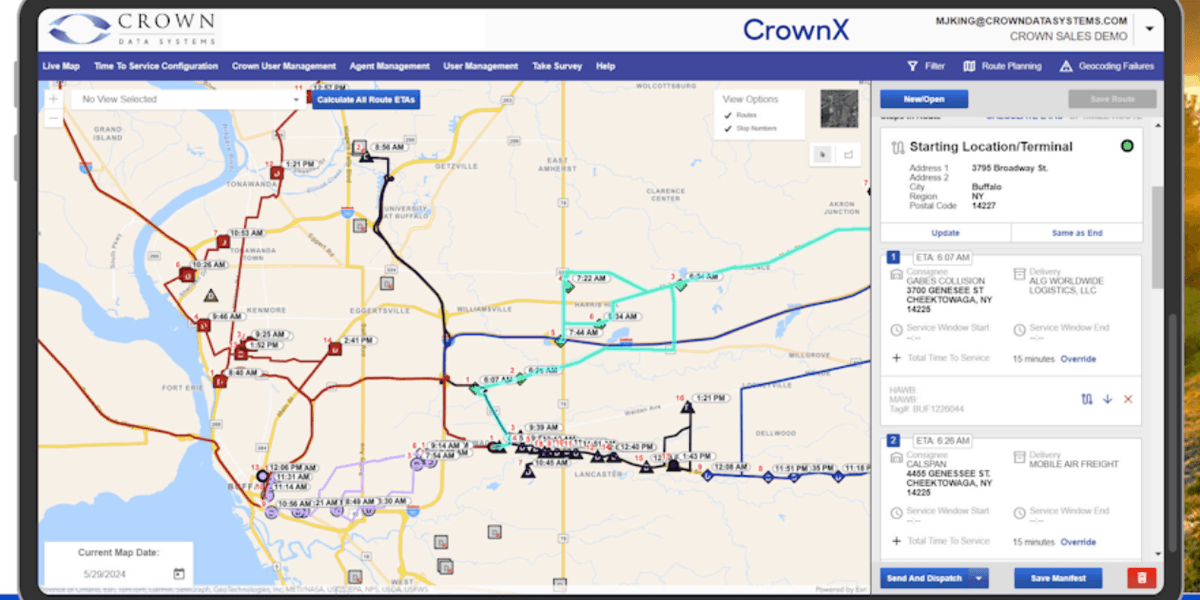
Think about it: Tenet, based out of Miami, has been busy building an operating system for the backbone carriers — the ones handling cartage, expedited freight, couriers, and the often-overlooked drayage and LTL sectors. Meanwhile, Crown, hailing from Buffalo, has been carving out its niche in air freight trucking software. Individually, they’re important. Together? They’re aiming to create a single pane of glass, a consolidated tech stack, for a significant chunk of the freight ecosystem.
The leadership shuffle is as expected as it is telling: Hugh Kirkpatrick, Tenet’s CEO, steps into the top job of the combined entity. Mike King, Crown’s president, will stick around as a strategic advisor. This isn’t about disruption at the top; it’s about integration. It’s about taking two distinct sets of code, two different philosophies on how to manage freight, and welding them together into something… coherent. Offices will remain in Buffalo and Atlanta, and the combined workforce of over 40 employees (a modest number, for sure) will be tasked with expanding a partner ecosystem that’s already servicing over 400 customers and partners across the U.S. and Canada.
Is This a Real Tech Revolution or Just Bigger Software?
Let’s cut through the corporate speak. This isn’t a revolutionary AI breakthrough or a quantum leap in logistics. This is about architecture. It’s about stitching together disparate systems that have historically operated in silos. For years, the freight industry has been a patchwork quilt of specialized software. You’ve got your TMS (Transportation Management System), your WMS (Warehouse Management System), your carrier-specific dispatch software, your accounting packages, your tracking solutions. Each with its own language, its own quirks, its own vendor.
The promise of this merger is a more unified data flow. For a customer of the combined company, it should mean less data re-entry, fewer integration headaches, and a clearer end-to-end view of their shipments. It’s the perennial quest in supply chain tech: to break down those data walls and create a single source of truth. Whether Tenet and Crown can actually deliver on that, or if they’ll just end up with a more complex, albeit larger, Frankenstein’s monster of code, is the million-dollar question.
There’s a historical parallel here, if you squint. Remember the early days of enterprise software? Companies like SAP and Oracle didn’t invent entirely new categories; they integrated them. They bought up specialized players or built modules to offer a more holistic solution. This merger feels like that, but at a more granular, specialized level within freight. It’s about creating a more integrated offering for a specific slice of the logistics pie.
The goal is to offer a single technology solution that supports customers across first, middle, and last-mile operations.
That quote, while straightforward, is the core of their ambition. It’s the holy grail for many shippers: a single, reliable system that doesn’t require constant wrangling. But the devil, as always, is in the details of execution. Can they harmonize their customer support? Can they unify their development roadmaps? Can they ensure that the software feels like one cohesive product, not just two separate ones bolted together with duct tape and hope? The current landscape is littered with mergers that promised integration but delivered only further fragmentation for the end-user.
What’s the Real Impact on Shippers?
For the 400+ customers already on board, this could mean a smoother experience if the integration goes well. Less hassle, better visibility. For those looking for new solutions, it means another option in the crowded freight tech market, but one with a potentially broader feature set. The combined company claims to be beefing up resources, which could translate to faster innovation and better support. That’s the optimistic view.
The skeptical view? More consolidation means fewer choices down the line. It also means that if the combined entity stumbles, it could have a disproportionately large impact on the market segment they serve. And let’s not forget the inherent challenges of merging cultures, systems, and customer expectations. It’s a monumental task, one that many tech companies have fumbled spectacularly.
Ultimately, this merger is a play for scale and comprehensiveness. It’s an attempt to build a more integrated technology offering in a sector that desperately needs it. But the proof will be in the pudding, or rather, in the data packets successfully transmitted and the shipments that arrive on time and on budget. Supply chain technology is rarely about the headlines; it’s about the quiet, often invisible, infrastructure that keeps the world moving.
🧬 Related Insights
- Read more: Manufacturing Delays: It’s Execution, Stupid—Not Forecasts
- Read more: Global Freight Rates 40-65% Lower Than 2008/09 [Real Terms]
Frequently Asked Questions
What freight operations does the merged company cover? The combined Tenet and Crown entity aims to provide technology solutions for first, middle, and last-mile operations, encompassing cartage, expedited, courier, drayage, LTL, and air freight trucking.
Will this merger lead to higher prices for freight technology? The announcement does not specify any pricing changes. Mergers can sometimes lead to economies of scale that benefit customers, but they can also result in increased market concentration, which may impact pricing in the long term.
How will this merger affect existing Tenet or Crown customers? Existing customers may experience a more integrated suite of services if the merger leads to successful technology consolidation. They might also see expanded support and development resources. However, the transition could also present initial integration challenges.