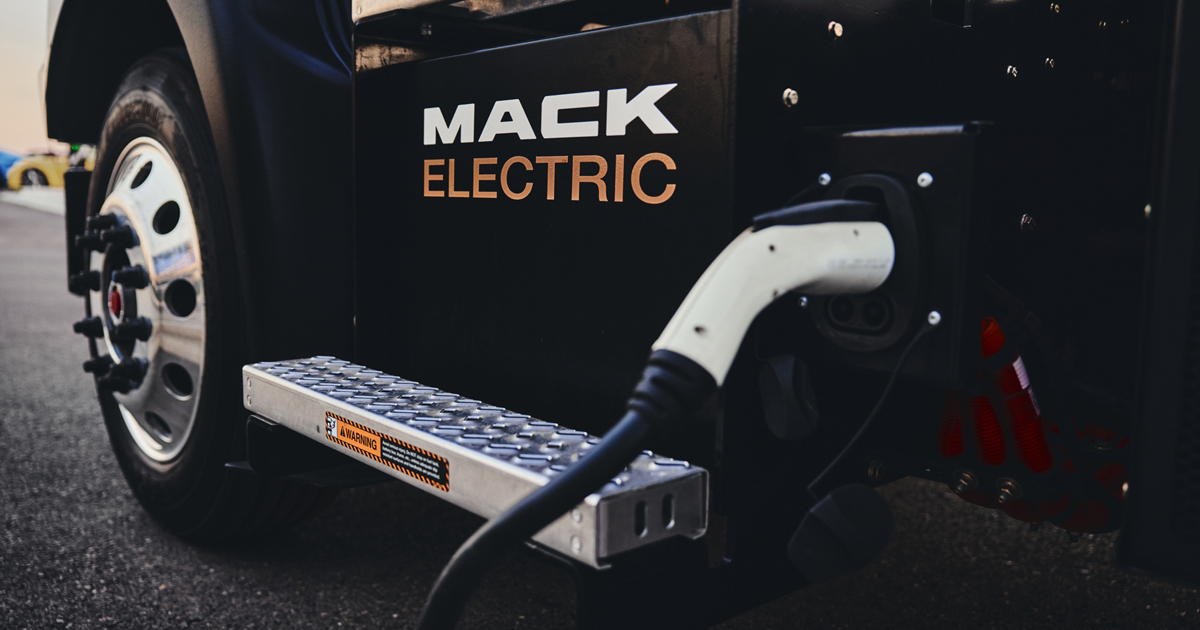
So, everyone and their dog has been yapping about electric trucks for ages. The usual chorus: “Amazing potential!”, “Game-changer!”. Meanwhile, the actual infrastructure? A hot mess. Fleets were staring down a charging desert. Now, Mack Trucks has decided to throw more money at the problem.
They’ve officially doubled the number of companies that can help you set up charging for their electric MD and LR models. ABM and Lane Valente Industries are the new kids on the block, joining InCharge Energy and Heliox. This isn’t just about plugging things in; it’s supposed to be a whole song and dance: site assessment, design, permits, installation, the whole shebang, right through to maintenance. Turnkey solutions, they call it. Sounds fancy.
Is This Enough to Convince Fleets?
This move, announced at the Advanced Clean Transportation Expo, is Mack’s bid to tackle what they openly admit is a massive hurdle: charging. Because, let’s face it, nobody wants to buy a truck they can’t power. Ryan Saba from Mack himself spelled it out: “Charging infrastructure continues to be one of the most significant barriers to commercial EV adoption, and Mack is committed to removing that hurdle for our customers.” He’s not wrong. It’s a classic chicken-and-egg situation, isn’t it?
“By expanding the turnkey solutions program with ABM and Lane Valente, we’re giving fleets access to experienced, full-service providers that can manage the entire infrastructure process — from site assessment through long-term maintenance — so our customers can focus on running their operations,” he added.
Look, the LR Electric, their refuse truck, has been kicking around since 2022. The MD Electric, Class 6 and 7, landed in 2023. They even slapped a subscription model on the MD Electric last October, trying to drum up interest. It’s all part of Volvo Group’s grand plan to snag a quarter of the North American heavy-duty market by 2030. Ambitious, sure.
A Leap of Faith or Just More Smoke?
This isn’t just about current models, though. Mack’s paraded plans for an electric Pioneer over-the-road tractor, set to debut in 2025. That’s the big kahuna for long-haul. The question, as always, is whether this expansion translates to actual, on-the-ground deployments, or if it’s just another line item in a PR press release. Lane Valente’s VP, Nick Angeramov, seems to think it’s go-time: “The commercial EV market is at a critical inflection point, where fleets are moving from early pilots to scaled deployment.” High praise. We’ll see.
My concern? These providers — ABM and Lane Valente — come with impressive stats. ABM boasts over 30,000 ports nationwide. Lane Valente claims more than 20,000 across North America. Solid numbers. But scale is one thing; practical, real-world integration in diverse operational environments is another beast entirely. Will these folks actually deliver when a fleet manager is tearing their hair out because a charger is down during peak refuse collection? Or will it be another bureaucratic headache? That’s the million-dollar question.
It’s easy to double a program on paper. Making it work in the gritty reality of trucking is where the rubber meets the road. Or, in this case, where the charging cable meets the charging port.
🧬 Related Insights
- Read more: Supply Chain Visibility Platforms: How to Track Goods End-to-End
- Read more: Uniqlo’s New Philippine Hub: Hype or Hope?
Frequently Asked Questions
What companies are joining Mack Trucks’ electrification program?
ABM and Lane Valente Industries are joining InCharge Energy and Heliox as infrastructure service providers for Mack’s battery-electric MD and LR Electric trucks.
What does a “turnkey solutions provider” for EV infrastructure do?
These providers handle everything from the initial site assessment and design to permitting, utility coordination, equipment procurement, installation, and ongoing maintenance of charging stations.
Why is charging infrastructure a barrier to EV adoption for trucks?
Commercial electric trucks require significant power and specific charging setups. The lack of readily available, reliable, and properly scaled charging infrastructure makes it difficult for fleets to operate efficiently and reliably.