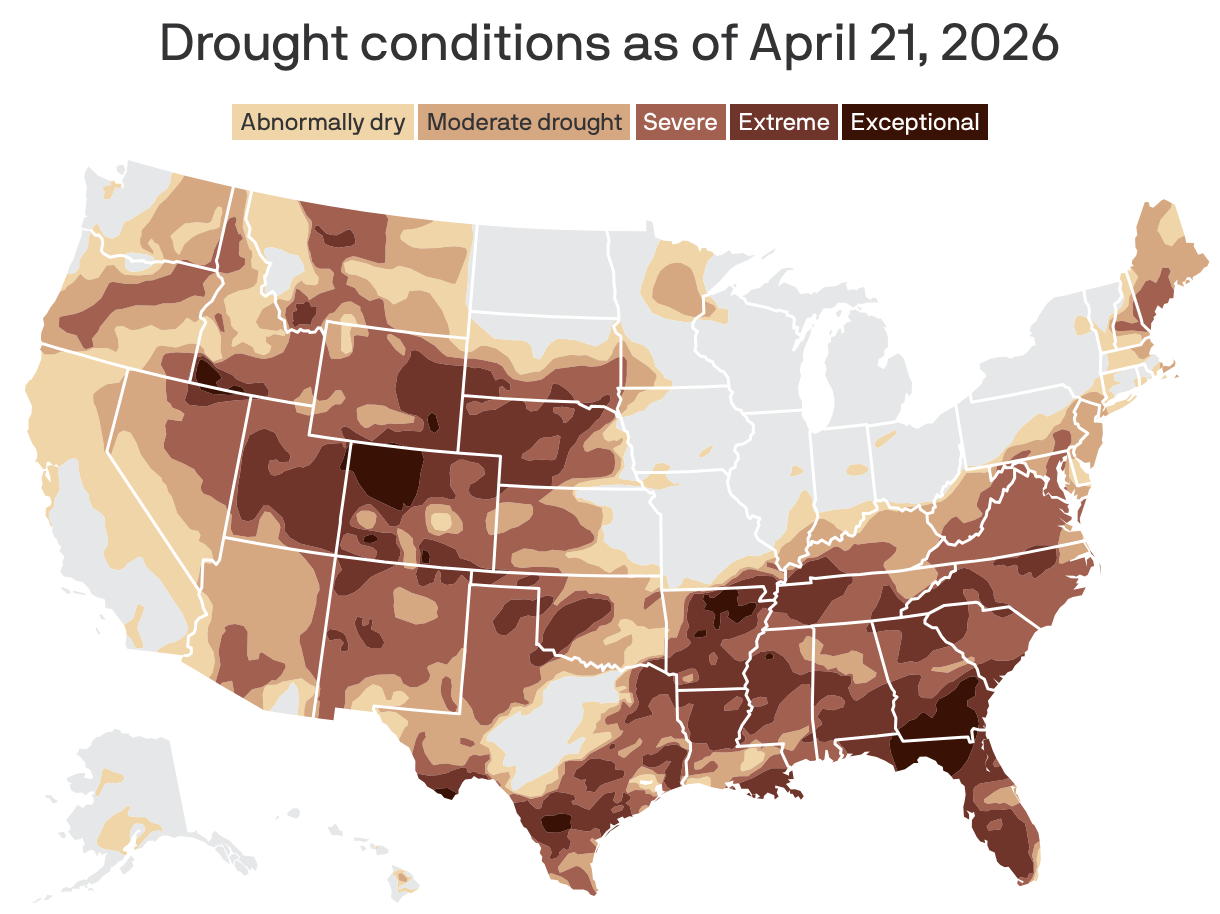
Everyone expected a quiet spring after last year’s storms. Dry spells, sure, but not this. Georgia’s Highway 82 and Pineland Road fires have razed more than 120 homes, whipped up by drought, gale-force winds, and the tangled wreckage Hurricane Helene left behind in 2024. Now? The U.S. Drought Monitor paints a tinderbox nation, abnormally dry from sea to shining sea.
This flips the script. No longer regional flare-ups in California or the Rockies. The South and Southeast join the inferno queue, with severe-to-exceptional drought gripping vast swaths. It’s a platform shift in disaster terms—like going from campfires to forest-devouring blazes overnight.
Why Is America So Dry Right Now?
Precipitation’s been a no-show for months. The West, South, Southeast: all baking under extreme conditions. About 1.8 million acres have burned nationwide as of April 24, per the National Interagency Fire Center. That’s nearly double the 10-year average—and the worst start since 2017.
John Bailey, professor of silviculture and wildland fire at Oregon State University, nails it:
“Over the last few years, different states have set new records for acres burned and acres of high severity fire and homes burned.”
He’s spot on. Three culprits: landscapes choked with excess fuel, homes sprouting in fire zones that ignite like matchsticks, seasons stretching longer, fiercer. Bailey’s book, A Walk With Wildland Fire, lays it bare—no sugarcoating.
Picture this: forests overgrown from decades of suppressed burns, deadwood piling up like forgotten kindling. Add human sprawl—McMansions cheek-by-jowl with wildlands—and you’ve got a recipe for catastrophe. Winds fan the flames; debris from storms like Helene loads the chamber.
It’s not just numbers. Communities shattered. Air choked with smoke that drifts hundreds of miles, fouling lungs and skies.
And here’s the kicker—the unique parallel overlooked in the headlines. This echoes the 1910 Great Fire, when suppressed burns and drought torched 3 million acres across the West. Back then, policy forbade natural fires; now, it’s climate turbocharging the same mistake. We’ve learned nothing, really, but the stakes are planetary.
Will Climate Change Ignite the Whole Country?
Too early to pin Georgia directly on warming. But the patterns scream it. Climate Central charts longer, hotter fire weather—drier fuels, bigger blazes, smoke plumes that blanket cities.
The National Interagency Fire Center’s outlook? Grim. Above-normal risks next month in Arizona, New Mexico, Florida, the Southeast coast. Come June: inland Louisiana, East Texas, western Colorado, southern Utah, Northern California, inland Washington, Oregon. A patchwork of peril.
El Niño’s the wild card. A super one could brew, with Pacific waters steaming hot. That means record temps, warped weather—prime for West Coast hellscapes. As Axios reports, it reshapes globals, amps wildfires, smoke, and climate fights everywhere.
Supply chains? Already fraying. Wildfires snarl trucking routes, torch warehouses, spike insurance. Timber flows halt; food prices climb as California burns again. Ports clog with detours; logistics firms scramble. It’s not abstract—it’s pallets of goods reduced to ash, deliveries delayed by smoke-choked highways.
Bold call: without aggressive fuel management—prescribed burns scaled 10x, zoning laws with teeth—this season eclipses 2020. We’re not prepped. FEMA’s stretched; budgets lag. The corporate spin? “Resilience plans in place.” Please. Most firms treat fire as a West Coast footnote, not a national gut-punch.
Zoom out. Drought Monitor maps show red zones sprawling like a virus. Georgia’s just patient zero this round.
The human toll mounts. Evacuations. Lost legacies in flames. Rebuild costs soar into billions.
What breaks the cycle? Tech to the rescue? AI-driven fire prediction models, already spotting outbreaks hours early via satellite and sensors. Drones dropping retardant. But scaling? That’s the supply chain bet—logistics for fire suppression gear must match the monster.
How Bad Will the 2026 Fire Season Get?
NIFC says elevated through summer. Super El Niño tips it catastrophic. Or La Niña douses it? Forecasts waver.
History whispers: ignore at peril. The 1910 fire killed 87, scorched eight states. Today, with 10x the wildland-urban interface, it’s exponentially worse.
Action now—clear fuels, harden homes, shift power grids underground. Or watch empires of e-commerce crumble under smoke.
Georgia burns. America watches, parch-mouthed.
🧬 Related Insights
- Read more: SoCal Ports Fumble Automation as Panama Canal Drought Looms
- Read more: IMC Logistics Expands to Canada with New President
Frequently Asked Questions
What caused the Georgia wildfires?
Dry conditions, high winds, and Hurricane Helene debris fueled the Highway 82 and Pineland Road fires, destroying over 120 homes.
How many acres have burned in the US this year?
1.8 million acres as of April 24—nearly double the 10-year average.
Is a super El Niño coming and will it worsen fires?
Possible; warm Pacific waters could drive extreme heat and dry conditions, amplifying wildfire risks nationwide.