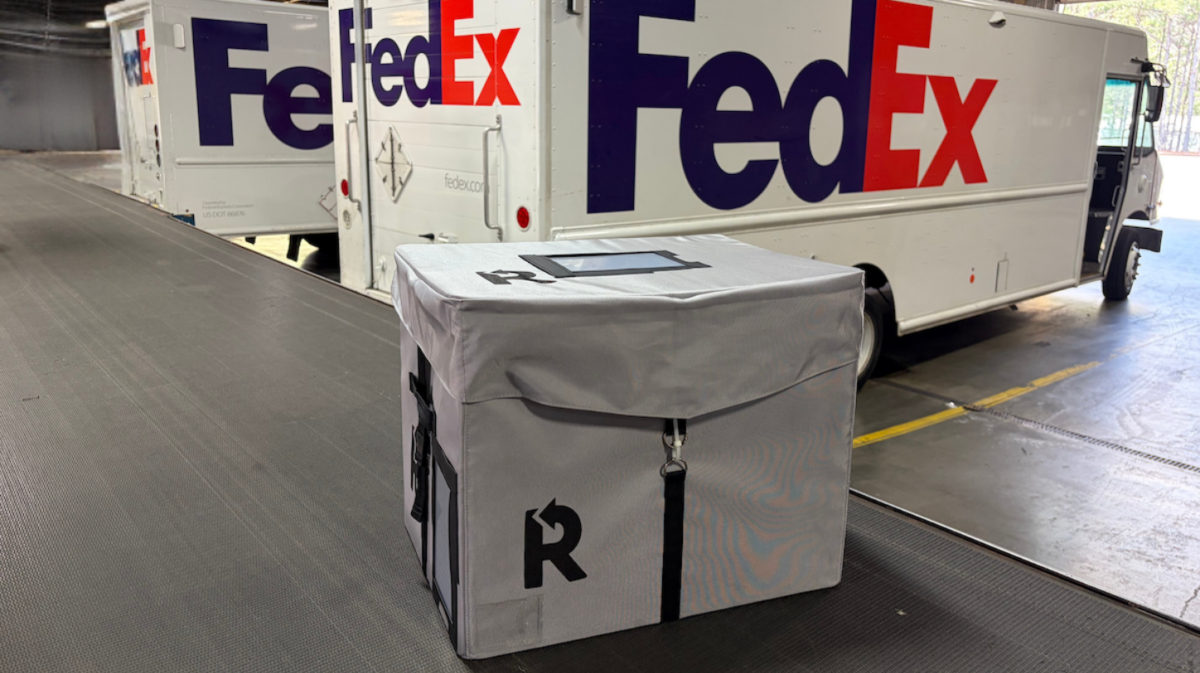
Picture this: a FedEx driver slams open the cargo doors at a bustling Ohio distribution center, revealing not the usual sea of crumpled cardboard but uniform stacks of rigid, FedEx-branded reusables — ready to loop right back into service.
That’s the scene from recent pilots, where these boxes — cooked up with Returnity, the circular logistics whiz — zipped through real B2B workflows. Fulfillment to store shelves. Internal hops between facilities. Even reverse logistics, hauling returns without the trash heap drama.
Shippers loved it. Faster unpacking. Less product damage — think soft goods like apparel arriving pristine. Labour crews restocked quicker, backrooms stayed neater. And zero handling fees for ditching corrugate? That’s the hook.
FedEx Reusable Packaging: Hype or Hidden Efficiency Hack?
But here’s the thing — FedEx isn’t just slapping logos on someone else’s idea. They redesigned the box itself for their network. Durable plastic that nests tight, withstands the forklift tango, and integrates with existing sorters. Returnity handles the pooling: collect, clean, redistribute. FedEx provides the muscle — that global web of planes, trucks, hubs.
Pilots across North America proved it. Multiple B2B clients tested in retail replenishment, proving lower damage rates and speed gains. One shipper saw unpacking times drop by minutes per pallet — multiplies fast in high-volume ops.
“In collaboration with Returnity, we have created the first scalable, reusable box solution for B2B customers, which is especially useful for our soft-goods shippers.
“By pairing Returnity’s durable, easy-to-integrate packaging with our global network, we’re helping retailers unlock meaningful cost savings while reducing environmental impact, all without sacrificing speed or reliability. This new solution supports our vision to make supply chains smarter for everyone.”
— Neil Gibson, FedEx SVP of global customer experience.
Gibson’s got the sales pitch down, but let’s peel back the spin. FedEx frames this as a “first” — bold claim in a world where IKEA’s been looping flats for years, or Amazon toys with returns programs. Yet for B2B parcel carriers like FedEx, yeah, it’s novel at scale. No fees for reusables means they’re eating the integration cost to lure switchers.
Why Does FedEx’s Reusable Packaging Matter for Retailers?
Dig into the why. Corrugated boxes? Cheap upfront, but they pile up — 30% of retail waste, per EPA stats. Landfills groan, recyclers choke on contamination. Reusables flip that: use 50-100 times per box, slashing virgin material needs. For soft goods — apparel, bedding — damage from punctures vanishes.
Labour’s the silent killer here. Unpacking a corrugate pallet? Rip, fold, recycle — chaos. These reusables snap open, stack flat for returns. Pilots clocked efficiency bumps of 20-30%. Backroom org? Night and day.
And costs — ah, the crux. Initial box buy-in stings, but pooling amortizes it. FedEx waives handling premiums (often $1-2 per parcel), so payback hits quick for high-volume shippers. Environmentally? Millions of boxes cycled yearly could dent FedEx’s 20 million tons of annual CO2 footprint. (They’re chasing net-zero by 2040, remember?)
But — and it’s a big but — scalability’s the beast. Pilots were controlled: North America, select partners. What about Asia hubs with monsoon-soaked returns? Or Europe, where regs demand hyper traceability? Contamination’s the gremlin — a leaky ketchup pack ruins a batch. Returnity swears by automated cleaning, but we’ve seen reusable schemes falter (cough, UK’s plastic crate woes).
My take? This echoes the 1950s milk bottle revolution — reusables ruled until single-use plastics seduced with convenience. FedEx might spark a reversal, but only if they brute-force network buy-in. Bold prediction: by 2026, 10% of their B2B volume shifts, forcing UPS and DHL to match — or watch market share erode.
Critique time. FedEx’s PR gushes “smarter supply chains,” but they’re late to ESG — Walmart’s mandated reusables years back. This feels reactive, not visionary. Still, architecture’s shifting: from linear trash-it to circular loops baked into carrier DNA.
Will This Reusable System Actually Disrupt Single-Use Boxes?
Short answer: probably, for niches. Soft goods B2B? Slam dunk. But e-comm parcels? Tougher — consumers shred boxes gleefully. FedEx eyes expansion, but pilots stick to closed-loop B2B.
Underlying shift: data. These boxes embed trackers? Not yet, but imagine RFID for predictive pooling. Why chase trucks for empties when AI routes them? That’s the “smarter” FedEx hints at — architecture moving from dumb freight to orchestrated cycles.
Shippers switching now get priority access, per insiders. No mass rollout date, but North America ramps Q1 2025. Watch soft-goods giants like Nike or Gap — they’re primed.
Skeptics (me included) flag logistics friction. Sorting reusables at hubs? Retrains thousands. Cleaning scale? Returnity’s plants hum now, but FedEx volumes could swamp ‘em. Yet pilots validated — damage down 40% in one test. Numbers don’t lie.
This isn’t greenwashing. It’s pragmatic. Carriers bleed on fuel; packaging’s low-hanging waste fruit. If FedEx nails execution, expect copycats — and supply chains leaner, meaner.
🧬 Related Insights
- Read more: CMA CGM’s Jaxport Gambit: Sidestepping Panama’s El Niño Nightmare
- Read more: Two Boxes’ $3.2M AI Returns Bet: Saviors or Just Another Hype Machine?
Frequently Asked Questions
What is FedEx’s reusable packaging system?
FedEx’s system, built with Returnity, uses durable, custom boxes for B2B shippers — pooled, cleaned, and reused without handling fees, ideal for retail workflows.
Does FedEx reusable packaging reduce costs?
Yes — pilots showed faster unpacking, less damage, and no fees, with ROI via 50-100 uses per box for high-volume ops.
Is FedEx’s reusable packaging good for the environment?
Absolutely — cuts cardboard waste, landfill trips, and virgin material use, aligning with FedEx’s net-zero goals.