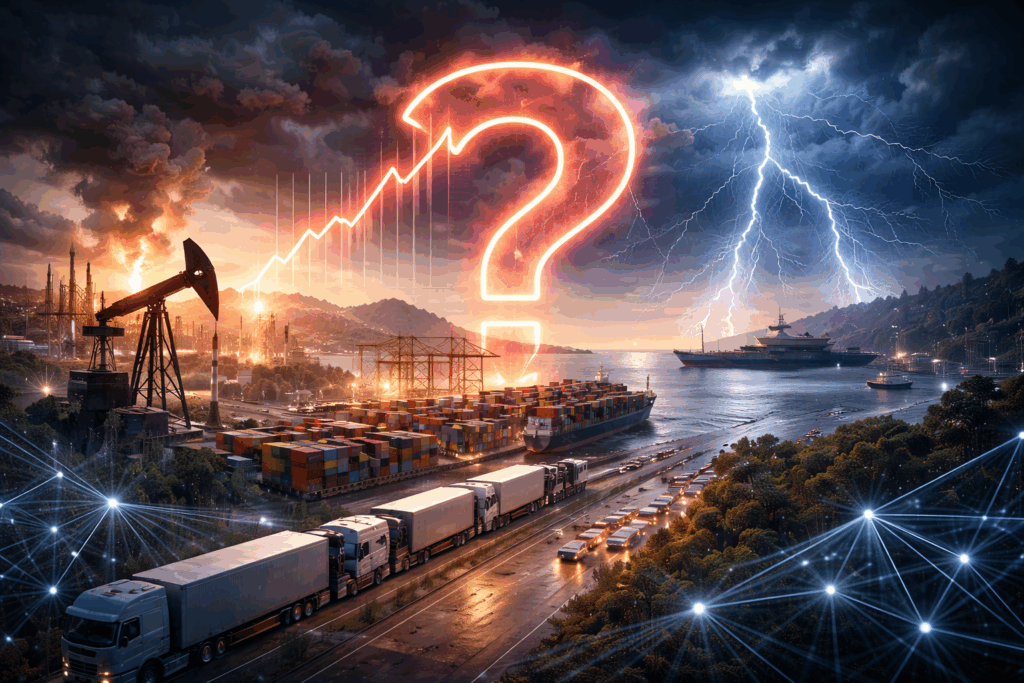
Fifty-seven percent. That’s the number of supply chain professionals who say uncertainty is higher now than three years ago. And honestly, that feels like a serious understatement.
Look, I’ve been swimming in the tech and business news trenches for two decades, and I’ve seen my share of manufactured crises and overhyped solutions. But when nearly six out of ten people directly responsible for moving goods around the planet tell you things are crazier than they used to be, you pay attention. Especially when you consider the past few weeks alone: a Supreme Court whammy on tariffs, a fresh eruption of hostilities in the Middle East cranking up diesel prices (because apparently, we still haven’t decoupled oil from everything), and, of course, AI. Always AI.
This isn’t just a bit of choppy weather. It’s a full-blown squall line, and the data from Indago’s Q1 2026 research paints a stark picture. Leaders are drowning in tariffs, fluctuating costs, regulatory minefields, and the ever-present specter of cyberattacks. The old playbook—just do your job efficiently—is about as useful as a fax machine at a SpaceX launch.
Is Decision Intelligence the New Holy Grail?
We’re told the answer lies in ‘decision intelligence.’ Sounds fancy, right? Corporate jargon bingo, perhaps. But stripped of the buzzwords, it’s about having your data actually talk to you, aggregated from all the dusty corners of your systems, contextualized, and then served up with the right tools so you can actually make a decision, and make it fast. The question they’re posing is, “Where are you on the decision intelligence maturity curve?” Which, if you ask me, is code for “Are you already behind?”
The folks pushing this angle are highlighting their Q1 2026 Talking Logistics posts and Indago research. Apparently, the top conversations this quarter revolved around fuel surcharges (surprise!), import tariffs, whether you should “vibe code” a TMS (whatever that means—more jargon!), what metrics actually matter, the 3PL market (always a popular topic), the baffling humanoid robot hype, ESG readiness, and cyber-attack preparedness. Oh, and technology emerging as a differentiator. Shocking, I know.
Then there are the Indago research reports. Six of them in Q1. And for each one, they donated $825 to charity. Nice touch, but let’s not get distracted. The real meat is in the topics:
- Rising Diesel Prices: How shippers are reacting. Expect more spend, more fuel surcharge gymnastics, and, predictably, challenges.
- Vibe Coding Applications: Are supply chain leaders really going to start coding their own apps? This survey is apparently exploring the drivers and barriers. I’m picturing a lot of confused managers trying to explain what “vibe code” means to their IT departments.
- The Role of 3PLs: Follow-up research on how third-party logistics providers are impacting shipper decision-making amid all this uncertainty. Are they helping, or are they part of the problem?
- Transportation Management in 2026: Priorities, constraints, and the looming presence of AI. Shippers want better costs, service, and resilience. Guess what? AI might be the answer. Or it might be another expensive distraction.
- Leadership in Age of Uncertainty: How are the actual leaders coping? What’s changed in decision-making? Where are the biggest headaches?
- Digital Twins in Supply Chain Operations: Exploring how these virtual replicas are being used. This is the one piece that sounds genuinely intriguing, assuming it’s not just another overhyped tech fad.
Who’s Actually Making Money Here?
It’s easy to get lost in the surveys and the talk. But the underlying current is clear: the supply chain is a mess, and everyone is scrambling for solutions. And where there’s a scramble, there’s a market. The companies producing these reports, the software vendors pushing AI and decision intelligence platforms, the consultants advising on ESG and cybersecurity—they’re the ones seeing the uptick. The end-users, the shippers and carriers, are facing the chaos and footing the bill for the supposed remedies.
This constant drumbeat of uncertainty and the push for new technologies—AI, digital twins, “vibe coding”—reminds me of the dot-com bubble, but with more risk. Back then, it was about eyeballs and potential. Now, it’s about data and efficiency claims. The fundamental question remains: are these supposed innovations actually making the complex machinery of global logistics cheaper, faster, and more reliable for the average business, or are they just creating new layers of complexity and expense?
My money’s on the latter, at least until someone can show me tangible, widespread improvements that aren’t buried in marketing speak. The supply chain is a tough beast to tame, and I suspect the buzzwords will keep flying until the real-world results finally catch up. Or don’t.
And the USMCA talks? That’s just another delicious little appetizer of uncertainty for the rest of the year. Enjoy the ride.