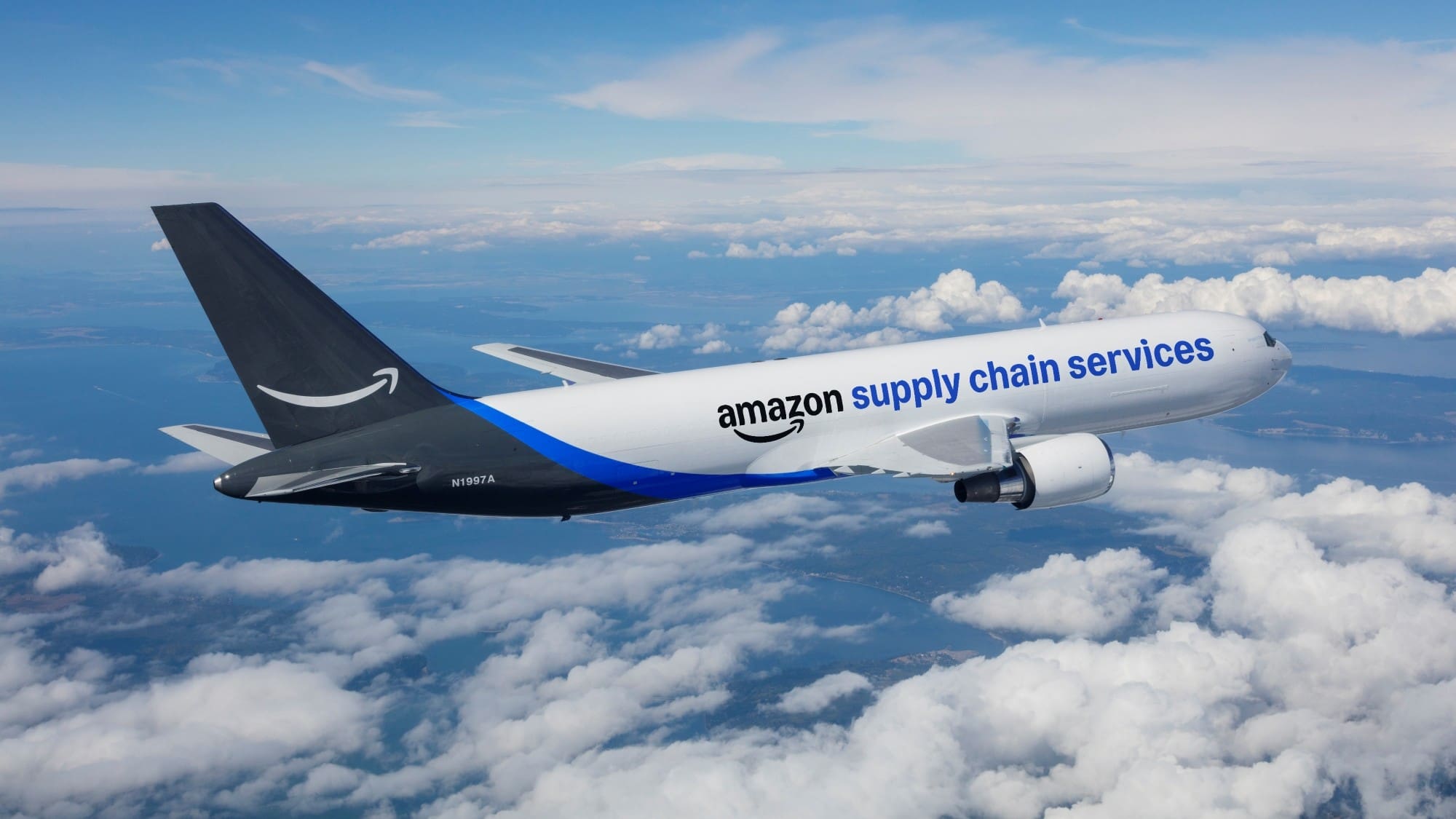
And then there were two. Or rather, now there’s one giant, and a whole lot of others trying to catch up. Amazon’s move to offer its colossal supply chain infrastructure — the same beast that handles an astonishing 13 billion items annually — as a standalone service signals a seismic shift, mirroring its own disruption of cloud computing with AWS.
This isn’t just about Amazon fulfilling orders for third-party sellers anymore. Amazon Supply Chain Services (ASCS) is now available to any business, regardless of whether they hawk their wares on Amazon’s marketplace. Think of it: multimodal freight, automated warehouses, and that famously relentless last-mile delivery network, all accessible via a single, automated interface. Companies like Procter & Gamble, 3M, and Lands’ End are already on board, signaling early buy-in for a service that promises end-to-end visibility and a reported 96.4% on-time delivery rate.
This is a bold play, plain and simple. It’s a direct challenge to traditional third-party logistics (3PL) providers and a stark message to anyone who thought Amazon’s logistics muscle was solely for its own retail empire. The strategy hinges on scale and efficiency, aiming to consolidate fragmented logistics contracts into a unified offering. If ASCS can deliver on its promise of reduced costs and improved performance, it fundamentally redefines what ‘logistics as a service’ looks like, especially for businesses that previously couldn’t afford or access Amazon’s level of operational sophistication.
The Human Element in a Digital Costing World
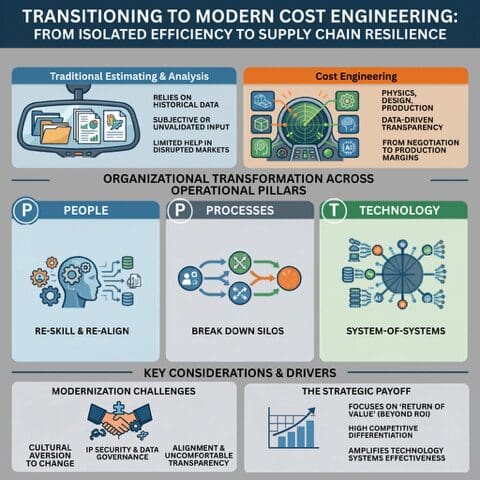
While Amazon is busy building out its logistics utility, the conversation around cost engineering is getting decidedly more human. It’s not just about crunching numbers in an AI model anymore. The real prize, apparently, is workforce transformation. As companies ditch old-school backward-looking estimates for sophisticated “should-cost” methods — think AI and digital twins — the bottleneck isn’t the tech; it’s the people.
Success now hinges on a cultural metamorphosis, moving away from siloed departments toward genuine cross-functional collaboration. The idea is to reskill estimators, turning them into strategic consultants. These folks will need to understand material science, operational constraints, and how to interpret complex data. It’s a move from simply haggling over prices to actively participating in manufacturing improvements, aiming for mutual profitability and, crucially, long-term stability. This feels less like a tech upgrade and more like a strategic HR initiative dressed up in supply chain jargon, but the sentiment is sound: tech alone won’t build resilience.
Geopolitical Shifts Reshaping Energy Corridors
Look, if you’re in the energy sector, you’ve probably spent enough sleepless nights staring at maps of the Strait of Hormuz to last a lifetime. That 20% of global oil and LNG flow through such a narrow, volatile chokepoint? It’s a logistical nightmare waiting to happen. And it’s happening.
Repeated disruptions are forcing a radical rethink. The lowest-cost network design is out; risk-adjusted models are in. Pipelines, storage terminals, and deep-water ports outside the Persian Gulf are no longer just dots on a map. They’re now viewed as high-value strategic assets – the “escape routes” providing the optionality and recovery time needed when chokepoints inevitably fail. This isn’t just about moving barrels; it’s about building in physical redundancy as the primary driver of resilience. The global energy map is being redrawn, and geography matters more than ever.
Ford’s Multi-Energy Pivot: A Manufacturing Reset
Ford’s massive $19.5 billion write-down and restructuring of battery joint ventures tells a story not of defeat, but of pragmatism. The aggressive EV push is being tempered by a healthy dose of capital discipline and a desperate need for supply chain flexibility. Gone are the rigid, single-purpose production lines. In their place? Multi-energy platforms designed to flex with volatile demand for both hybrids and EVs.
But here’s the really interesting part: those battery manufacturing assets in Kentucky and Michigan? They’re being repurposed for stationary energy storage and data center support. That’s a significant pivot. These aren’t just automotive supply nodes anymore; they’re becoming flexible energy infrastructure. Ford’s signaling that the future isn’t just about selling EVs; it’s about managing uncertainty. This strategy emphasizes cross-functional asset utilization and a relentless focus on affordability driven by manufacturing smarts.
FourKites’ AI: From Stockout Detection to Instant Execution
Remember the days of the “manual scavenger hunt” to fix inventory gaps? Spending hours bouncing between ERP systems and carrier portals? FourKites is aiming to make that a relic of the past. Their new unified solution aims to slash resolution times for stockouts from hours to under five minutes.
By integrating its Inventory Twin and Booking Connect AI, the platform uses decision intelligence to flag stockout risks up to six weeks out. It then serves up ranked recommendations — considering cost, speed, and carrier performance — for corrective actions. Planners can then execute optimized shipping options with a single click. This closed-loop workflow directly tackles the immense financial drain of inventory distortion and sidesteps the costly necessity of last-minute expedited shipping. It’s a move toward predictive and prescriptive logistics, turning potential problems into pre-planned solutions.
FAQs
What exactly is Amazon Supply Chain Services (ASCS)? ASCS is a new standalone service from Amazon that offers its extensive logistics infrastructure—including freight, warehousing, and last-mile delivery—to any business, not just those selling on Amazon.
Why is Ford restructuring its EV battery plans? Ford is shifting from aggressive, rigid EV production lines to more flexible multi-energy platforms and repurposing battery assets. This move is driven by a need for capital discipline, adapting to fluctuating hybrid/EV demand, and exploring new revenue streams like energy storage.
How does FourKites’ new solution speed up stockout resolution? FourKites integrates Inventory Twin and Booking Connect AI to predict stockout risks weeks in advance and provide ranked solutions. Planners can then execute recommended shipping changes with a single click, drastically reducing the time spent manually resolving inventory issues.