Here’s the thing about supply chain software: it’s a sprawling, often chaotic mess. Data sits in silos. Decisions get made based on gut feelings, or worse, outdated spreadsheets. So, when Shippeo announces it’s buying a company designed to, get this, link data to decisions, the immediate reaction from anyone who’s spent five minutes in this industry is… skepticism.
Shippeo, which itself deals in real-time transportation visibility, is snapping up a provider whose whole deal is to translate that visibility into something… useful. The idea is to move beyond just knowing where your shipment is to knowing what to do about it. Sounds great on paper. Like a lot of things.
This acquisition, frankly, feels less like a seismic shift and more like plugging another small leak in a very large, very leaky ship. The original article, bless its corporate heart, talks about “enhanced visibility” and “smarter decision-making.” Corporate speak, folks. It’s the digital equivalent of a motivational poster in a breakroom filled with burnt coffee and existential dread.
Is This Really About Smarter Decisions?
The pitch here is simple: more data, better insights. Shippeo wants its customers to stop staring blankly at dashboards and start acting decisively. They’re not just selling tracking anymore; they’re selling… the ability to think. Or at least, the software that pretends to do it for you. The company acquired, though not named in the brief announcement that sparked this, is clearly meant to be the brain to Shippeo’s eyes.
But let’s be honest. We’ve heard this song and dance before. Every software vendor in the supply chain space claims to be the key to unlocking “actionable insights.” It’s become the industry’s favorite buzzword, right after “synergy” (which, for the record, I’m pretty sure just means “we’re going to merge departments and fire people”). The challenge isn’t generating more data; it’s dealing with the tsunami of data we already have. It’s about change management, process redesign, and the sheer human effort required to actually implement a decision, not just generate one on a screen. This acquisition might offer a new tool, but it won’t magically fix broken processes or resistant employees.
“The acquisition will enable Shippeo to offer customers a more integrated solution, further bridging the gap between data and execution.”
Translation: More screens to stare at, more buttons to click. Maybe, just maybe, it will actually help. But I wouldn’t bet the farm on it. We’re talking about supply chains that stretch across continents, involve dozens of partners, and are subject to the whims of weather, politics, and port congestion. One software acquisition isn’t going to untangle that knot. It’s a piece. A single, albeit potentially useful, piece.
The Cosco & CU Lines Fleet Expansion: A Different Kind of Signal
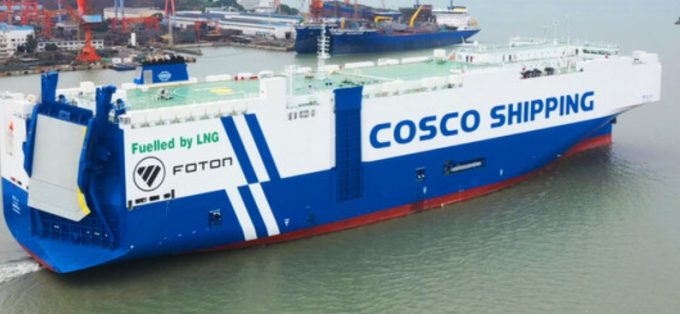
Meanwhile, buried in the same news cycle is a piece about Cosco and CU Lines expanding their fleets with 20 new container ships. Now that’s a signal. While Shippeo is busy trying to make sense of the data, the big players are betting on physical capacity. They’re ordering ships, big ones, at a time when some are predicting a slowdown. It’s a bold move, a gamble on global trade continuing its momentum. This isn’t about sophisticated algorithms; it’s about steel, concrete, and a belief in moving physical goods across oceans. It’s a stark contrast to the software-centric approach, highlighting the dual nature of supply chain evolution: the digital overlay and the foundational physical infrastructure.
This dichotomy—the push for digital decision-making versus the tangible expansion of physical assets—is the story of modern logistics. One side is whispering about AI and real-time insights, the other is building bigger ships and bigger warehouses. Both are necessary, of course. But the sheer volume of ships being added suggests a confidence in the underlying demand that no amount of supply chain software, however adept at linking data to decisions, can truly create or replace. It’s a reminder that at the end of the day, someone still has to build it, move it, and deliver it.