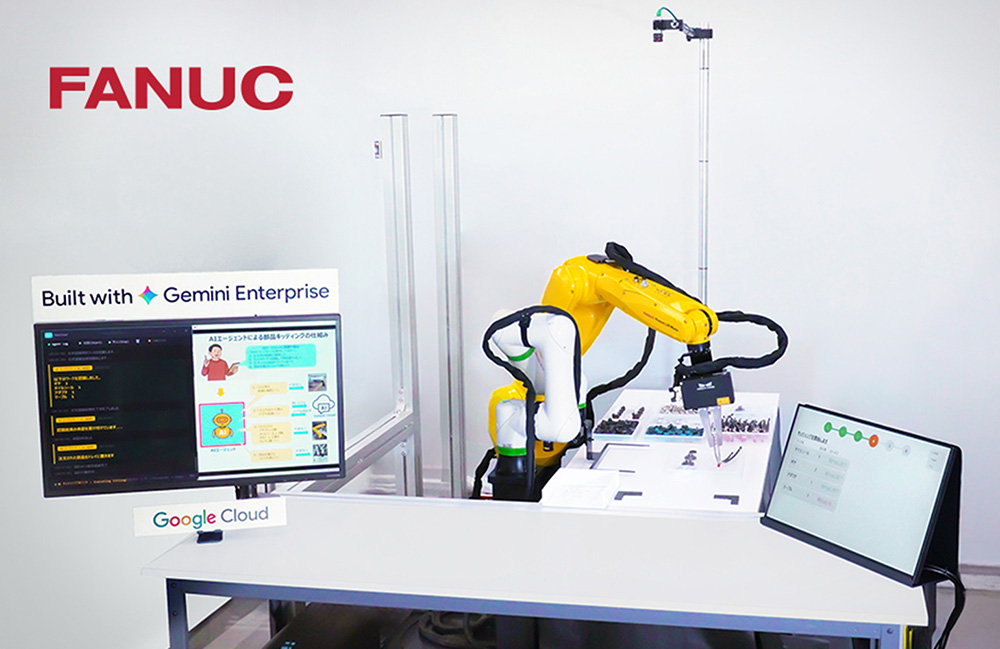
The chatter around artificial intelligence in manufacturing has, for a while now, focused on the ‘whether’ rather than the ‘how.’ Companies have been wrestling with how to integrate AI into their operations, but mostly at a strategic or software level.
Well, FANUC, a titan in the industrial robotics space, just dropped a pretty significant announcement that pivots the conversation. They’ve inked a deal with Google to inject the search giant’s cutting-edge AI tech directly into their robot lineup. This isn’t just about smarter software; it’s about imbuing physical machines with cognitive intelligence to interact with the real world more dynamically. Think of it as upgrading your assembly line robot from a highly skilled but rigid automaton to something with a bit more situational awareness and decision-making chops. It’s a bold move, signaling that the era of truly ‘physical AI’ is here, and it’s landing squarely on the factory floor.
What’s Actually Changing Here?
What does ‘physical AI’ even mean in this context? The company’s press release paints a picture of robots that can perceive their surroundings via sensors, make independent choices, and then execute tasks based on that data. It’s a far cry from the pre-programmed routines that have defined industrial robotics for decades. This partnership use Google’s expertise in AI, particularly in areas like large language models (LLMs), to bring this enhanced perception and decision-making to FANUC’s extensive range of robots – from those handling delicate 3kg payloads to behemoths weighing 2.3 tons.
The big play here is adaptability. Manufacturers are increasingly facing production demands that are more complex and variable. Traditional robots, while incredibly precise and reliable for repetitive tasks, can struggle when dealing with inconsistencies or unexpected changes on the production line. By integrating Google’s AI, FANUC aims to equip its robots with the ability to handle these fluid scenarios, all while maintaining the ironclad reliability that factory floors demand. Mike Cicco, president and CEO of FANUC America, put it plainly:
“By combining FANUC’s industrial-grade robotics with Google’s advanced AI, we’re enabling customers to take on more complex, variable production while maintaining the reliability and performance that production environments demand.”
This isn’t just corporate speak; it’s a roadmap for the future of manufacturing automation. It’s about bridging the gap between raw computing power and tangible, physical interaction in a way that can fundamentally alter production processes.
The ROS Connection: Why It Matters
Now, the ‘how’ behind this integration is just as interesting as the ‘what.’ FANUC has long been an advocate for open standards, and their robots natively support the Robot Operating System (ROS). ROS is, for those unfamiliar, the industry-standard platform for robot control. It’s an open-source framework that allows developers to build sophisticated robot applications without reinventing the wheel every time.
This is where Google’s involvement becomes even more significant. Google, through its Intrinsic robotics AI unit, is a major contributor and maintainer of ROS. This established relationship means the integration is less about building something entirely new and more about deepening an existing synergy. It means that FANUC’s existing open platform capabilities – its Python compatibility for AI development, high-speed communication interfaces, and PLC integration – can now be more readily infused with Google’s AI advancements.
Think of it like this: FANUC provides the strong, industrial-grade hardware and the foundational operating system. Google provides the advanced AI brainpower that can plug into that system more easily due to their shared commitment to ROS. This open approach is key; it allows manufacturers to implement these advanced AI capabilities without getting locked into proprietary silos, making deployment for actual, reliable production far more achievable.
Early Signs of Demand
It’s still early days, but FANUC claims customer interest has surged since they first showcased their physical AI system at the International Robot Exhibition (IREX) in Tokyo last December. They’ve already reported shipping over 1,000 robots for these AI-centric applications. This isn’t just a technology demo; it appears to be a product that’s resonating with the market’s growing need for smarter, more agile automation.
This collaboration isn’t an isolated move either. FANUC also recently announced tighter integration between its ROBOGUIDE simulation software and NVIDIA’s Isaac Sim framework. This layering of partnerships – with Google for AI and NVIDIA for simulation – suggests a strategic push towards creating a comprehensive ecosystem for advanced robotic development and deployment. It’s about building the scaffolding for the next generation of intelligent manufacturing.
My Take: Beyond the Hype Cycle
While many companies are still grappling with the basics of AI implementation, FANUC and Google are pushing the boundaries into what I’d call the ‘embodied intelligence’ phase. The real trick here isn’t just feeding data into a model; it’s about creating a feedback loop where a physical machine can interact with, learn from, and adapt to the unpredictable chaos of a real-world environment. The focus on ROS is particularly smart. By building on an established, open standard, they sidestep the usual corporate PR fanfare and get straight to enabling practical applications.
This partnership could well be a defining moment. It’s not just about making robots ‘smarter,’ it’s about making them more versatile, reducing the need for extensive re-tooling for every new product variation, and ultimately, bringing more manufacturing back to regions where labor costs are high. The implications for supply chain resilience, customization, and efficiency are massive. It’s less about a single product and more about an architectural shift in how we conceive of and build automated systems.
🧬 Related Insights
- Read more: Supreme Court on Broker Liability: Sky Isn’t Falling?
- Read more: USMCA Uncertainty Hits Trucking
Frequently Asked Questions
**What does ‘physical AI’ mean for robots?
Physical AI refers to robots that can use cognitive intelligence to perceive their environment, make autonomous decisions based on sensor input, and execute tasks accordingly, rather than just following pre-programmed instructions.
**Will this partnership make FANUC robots more expensive?
While pricing specifics haven’t been released, the use of open platforms like ROS and leveraging existing advanced AI technologies from Google suggests a focus on broad accessibility rather than premium pricing. The aim is likely to make advanced automation more attainable.
**How does this affect smaller manufacturers?
By building on open standards and aiming for adaptability, this type of AI integration could eventually benefit smaller manufacturers by allowing them to deploy more flexible automation solutions without prohibitive upfront costs or complex integration challenges.